
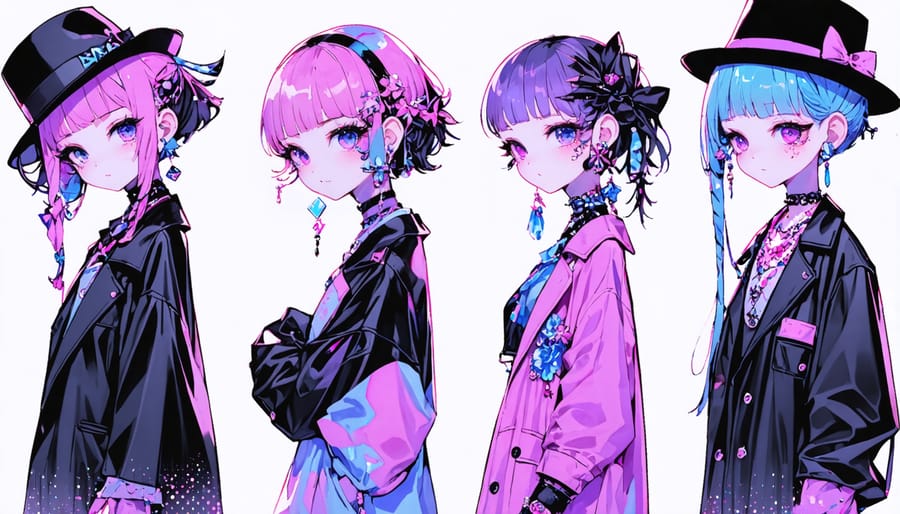
Step into the vibrant world of Japanese street fashion, where rebellion meets artistry and self-expression knows no bounds. From the gothic elegance of Visual Kei to the sweet whimsy of Lolita, Japanese fashion evolution has birthed some of the most creative and boundary-pushing style movements of our time. These distinct subcultures aren’t just about clothing—they’re living, breathing manifestos of individual identity and cultural revolution.
Born from the bustling streets of Harajuku in the 1970s, Japan’s fashion subcultures have transformed from local phenomena into global sources of inspiration, challenging traditional fashion norms and empowering millions to embrace their unique aesthetic vision. Whether you’re drawn to the bold, punk-inspired chaos of Decora, the technological edge of Cyber fashion, or the refined sophistication of Mori Kei, these movements offer something for every fearless fashion explorer.
Join us as we dive into the kaleidoscopic world of J-fashion subcultures, where fashion becomes art, identity becomes revolution, and self-expression becomes a powerful tool for personal transformation. Get ready to discover how these distinctive styles continue to influence and inspire fashion enthusiasts worldwide.
The Birth of J-Fashion Rebellion
Post-War Fashion Renaissance
The post-war economic miracle of Japan sparked a fascinating fashion revolution that would forever change the landscape of youth culture. As the country rebuilt and prospered during the 1950s and 1960s, young Japanese people found themselves with more disposable income and a growing appetite for self-expression through clothing.
Department stores like the iconic Shibuya 109 became fashion meccas, while districts like Harajuku transformed into vibrant style laboratories where young people could experiment freely with their looks. This newfound economic freedom coincided with increased exposure to Western fashion influences through magazines, movies, and music, creating a unique fusion of Eastern and Western aesthetics.
The rise of youth fashion movements during this period wasn’t just about clothes – it represented a broader cultural shift. Young people began breaking away from traditional dress codes and social expectations, using fashion as a tool for self-expression and rebellion. This era laid the groundwork for the explosive emergence of various fashion subcultures in the decades to follow, from the avant-garde street styles of the 1970s to the bold fashion statements we see today.
Harajuku’s Rise as a Fashion Mecca
From a quiet residential district to a global fashion phenomenon, Harajuku’s transformation is nothing short of extraordinary. This vibrant Tokyo neighborhood became the beating heart of Japan’s youth culture revolution in the 1970s, when creative teens began gathering on weekends to showcase their unique style expressions. What started as a grassroots movement evolved into a world-renowned hub for Harajuku street fashion, drawing fashion enthusiasts and trend-spotters from across the globe.
The district’s narrow streets and colorful boutiques became an experimental playground where young people could break free from conservative dress codes and express their individuality. Takeshita Street, in particular, emerged as the epicenter of this fashion revolution, with its eclectic mix of vintage shops, kawaii boutiques, and avant-garde fashion studios.
Today, Harajuku continues to inspire and influence global fashion trends, serving as a creative incubator where traditional Japanese aesthetics merge with contemporary street style. It’s a place where fashion isn’t just about clothing – it’s about self-expression, community, and the courage to stand out.

Iconic J-Fashion Subcultures
Lolita Fashion: Sweet Rebellion
Lolita fashion stands as one of Japan’s most distinctive and empowering style movements, blending elegant Victorian-era aesthetics with kawaii culture to create something uniquely Japanese. Far from being just about frilly dresses and cute accessories, mastering Lolita fashion essentials involves understanding its various substyles, each offering different ways to express individuality.
Gothic Lolita embraces darker themes with black lace and crosses, while Sweet Lolita celebrates pastels and childlike innocence. Classic Lolita channels traditional Victorian fashion with mature sophistication, and Punk Lolita adds rebellious edge to the feminine silhouette. Each style represents more than just clothing – it’s a bold statement against conventional fashion norms and societal expectations.
What makes Lolita truly special is its inclusive community. Whether you’re drawn to the princess-like elegance of Hime Lolita or the storybook charm of Country Lolita, there’s space for everyone to explore their personal aesthetic. Modern interpretations have evolved to embrace diverse body types and gender expressions, proving that this fashion movement continues to grow while maintaining its core values of self-expression and elegant rebellion.
The influence of Lolita fashion extends beyond Japan, inspiring designers and fashion enthusiasts worldwide to embrace its unique blend of historical refinement and contemporary kawaii culture.
Decora: The Art of Excess
Imagine a fashion style that embodies the joy of a candy store mixed with the whimsy of a toy box – that’s Decora for you! This vibrant Japanese fashion subculture takes the “more is more” philosophy to delightful extremes, celebrating self-expression through an explosion of colors, accessories, and kawaii elements.
Decora enthusiasts layer their outfits with an almost dizzying array of items: rainbow hair clips (sometimes 30 or more!), multiple necklaces, countless bracelets, and an assortment of plush toys attached to bags or clothing. The base usually consists of bright, often mismatched clothing pieces, with hot pink, electric blue, and neon yellow being popular choices.
What makes Decora truly special is its rejection of minimalism in favor of unbridled creativity. Practitioners often mix patterns fearlessly – polka dots with stripes, hearts with stars, and any combination that brings them joy. Popular accessories include leg warmers, platform shoes, face stickers, and an endless parade of cute mascot characters.
The beauty of Decora lies in its accessibility and inclusivity – there’s no such thing as “too much” or “too colorful.” This subculture encourages everyone to embrace their inner child and create their own personal rainbow. Whether you’re sporting a few extra hair clips or going full-out with layers of accessories, Decora welcomes all levels of participation with open arms.
Visual Kei: Music Meets Fashion
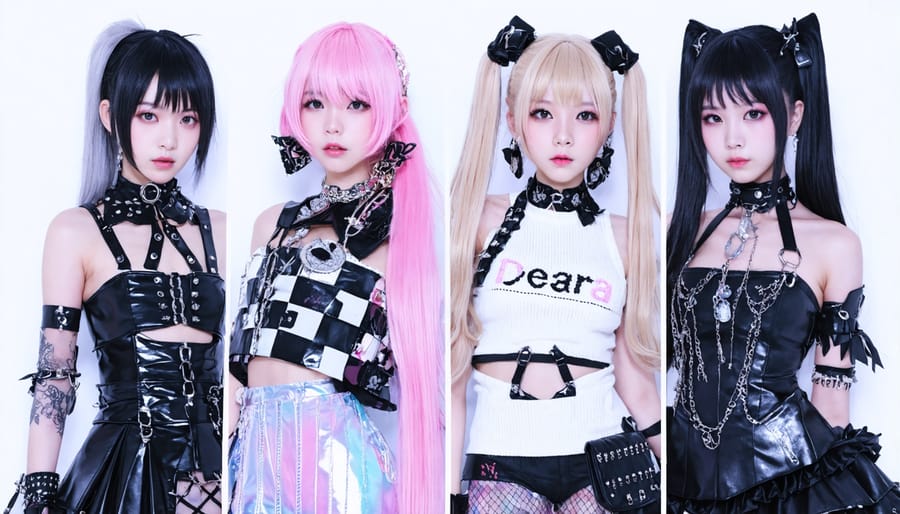
When Japanese rock bands started blending dramatic makeup with avant-garde fashion in the 1980s, they created more than just a music genre – they sparked a revolutionary fashion movement called Visual Kei. Think glam rock meets kabuki theater, with a distinctly Japanese twist that continues to inspire bold self-expression today.
Visual Kei fashion emerged from musicians who believed that the visual presentation was just as important as the sound. Artists like X Japan and Malice Mizer pioneered the look: towering hairstyles in vibrant colors, elaborate gothic-inspired outfits, and theatrical makeup that blurred gender boundaries. This fearless approach to style became a powerful form of artistic expression that resonated far beyond the music scene.
What makes Visual Kei truly special is how it encourages everyone to embrace their inner rock star. The style celebrates dramatic contrasts – mixing delicate lace with tough leather, combining traditional Japanese elements with Western rock influences, and playing with both masculine and feminine aesthetics. It’s not just about copying your favorite band’s look; it’s about creating your own unique visual statement.
Today, Visual Kei continues to evolve, inspiring fashion designers and encouraging people to push creative boundaries. Whether you’re drawn to the classic gothic elements or prefer a more modern interpretation, this subculture reminds us that fashion is the ultimate form of self-expression.
Gyaru: Breaking Beauty Standards
Gyaru fashion emerged in the 1970s as a bold rebellion against Japan’s traditional beauty standards, championing tanned skin, dramatic makeup, and western-influenced fashion choices. What began as a movement of defiance evolved into a powerful statement of self-expression and female empowerment that continues to inspire fashion enthusiasts worldwide.
At its core, Gyaru celebrates individuality through dramatic transformations. Signature elements include bleached hair, false eyelashes, bold eye makeup, and platform shoes, often paired with micro-mini skirts and decorated nails. The style challenges Japan’s conventional preference for pale skin and subtle fashion choices, making it particularly revolutionary in its cultural context.
Throughout the 1990s and 2000s, Gyaru fashion spawned numerous sub-styles, from the sophisticated Onee Gyaru to the edgy Ganguro look, each offering unique ways for women to express themselves. While the height of Gyaru culture has passed, its influence on modern fashion remains undeniable, particularly in its emphasis on confident self-expression and breaking free from societal expectations.
Today’s Gyaru community continues to evolve, embracing diversity and creating spaces where anyone can participate, regardless of background or appearance. The movement’s legacy lives on through social media, where modern fashion influencers draw inspiration from its fearless approach to style and beauty, proving that the spirit of Gyaru – challenging norms and celebrating individual beauty – remains as relevant as ever.
Modern Evolution and Global Impact
Digital Age Transformation
The rise of social media has revolutionized how J-fashion communities connect, share, and evolve across the globe. What once required physical presence in Harajuku or access to niche magazines has transformed into an instantly accessible, vibrant digital ecosystem.
Platforms like Instagram and Pinterest have become virtual streets where fashion enthusiasts showcase their interpretations of Lolita, Decora, and Visual Kei styles. These digital spaces have democratized J-fashion, allowing anyone with an internet connection to participate in the community, regardless of their location.
YouTube has emerged as a particularly powerful platform, with fashion influencers sharing styling tutorials, shopping hauls, and behind-the-scenes glimpses into Japan’s fashion districts. These content creators serve as cultural bridges, making complex style rules and traditions accessible to newcomers while fostering a sense of global community.
Social media has also accelerated the evolution of J-fashion subcultures. Trends that once took months to spread can now go viral instantly, leading to faster innovation and more fluid style boundaries. Digital communities have given rise to hybrid styles and modern interpretations of classic looks, proving that tradition and innovation can coexist beautifully.
Perhaps most importantly, these online spaces have created supportive communities where fashion enthusiasts can find inspiration, share their journey, and celebrate their unique style choices. Through hashtags, group chats, and virtual meetups, J-fashion lovers worldwide have found their tribe, transforming what was once a localized phenomenon into a truly global movement that continues to inspire and empower.
Western Fashion’s Japanese Revolution
The Japanese influence on Western fashion has been nothing short of revolutionary, transforming how designers and fashion enthusiasts approach style worldwide. Since the 1980s, when pioneering Japanese designers like Yohji Yamamoto and Rei Kawakubo first showcased their avant-garde collections in Paris, Western fashion has never been the same.
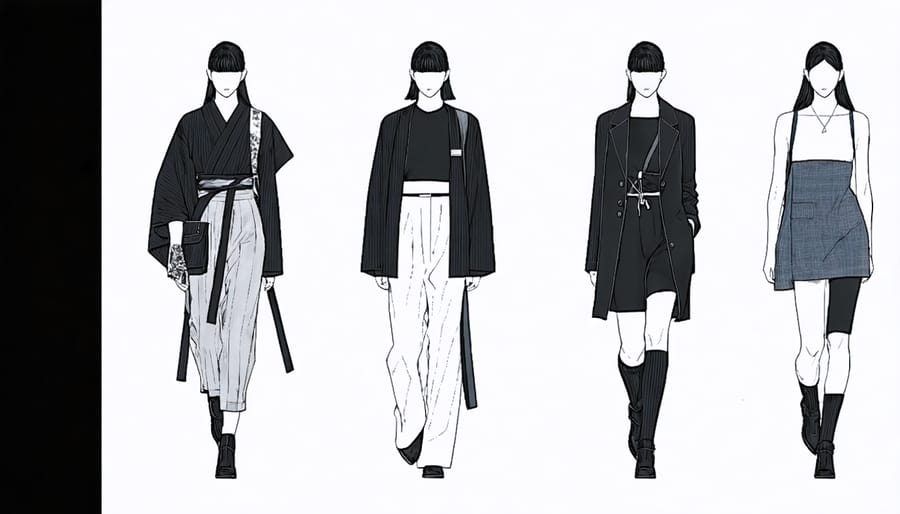
What started as a creative shock wave has evolved into a lasting cultural exchange. Western designers now regularly incorporate elements like oversized silhouettes, deconstructed garments, and asymmetrical cuts – all hallmarks of Japanese design philosophy. Street style in major fashion capitals from New York to London often features kimono-inspired wrapping, architectural shapes, and the playful mixing of patterns that characterized early Harajuku fashion.
The influence extends beyond just aesthetics. Japanese concepts like “wabi-sabi” (finding beauty in imperfection) and “ma” (the artistic use of negative space) have revolutionized how Western designers approach their craft. Fast-fashion giants and luxury houses alike now embrace these principles, creating collections that blend Eastern philosophy with Western sensibilities.
Today’s most exciting fashion innovations often emerge from this cultural fusion. Contemporary designers like Simone Rocha and Craig Green openly acknowledge their debt to Japanese fashion, while streetwear brands consistently draw inspiration from Tokyo’s vibrant street fashion scene. This ongoing dialogue between East and West continues to push fashion forward, proving that style knows no borders and that creativity flourishes when cultures connect.
J-fashion subcultures continue to captivate and inspire fashion enthusiasts worldwide, proving that style is truly a universal language that transcends cultural boundaries. What began as unique expressions of Japanese youth identity has blossomed into a global phenomenon that encourages individuality, creativity, and self-expression through clothing.
These distinctive fashion movements have not only survived but thrived in the digital age, with social media platforms allowing communities to connect, share, and evolve their styles across continents. Today’s J-fashion enthusiasts aren’t just following trends – they’re creating their own interpretations, mixing elements from different subcultures, and adding their personal touch to these iconic styles.
The enduring appeal of J-fashion subcultures lies in their ability to empower wearers to express their authentic selves. Whether it’s the bold rebellion of Visual Kei, the sweet whimsy of Lolita, or the street-smart edge of Harajuku style, these fashion movements continue to offer safe spaces for experimentation and self-discovery.
Looking ahead, J-fashion subcultures show no signs of losing their influence. Instead, they’re adapting to modern sensibilities while maintaining their core essence. New hybrid styles are emerging, sustainable fashion practices are being embraced, and traditional elements are being reinterpreted for contemporary wardrobes. This beautiful evolution reminds us that fashion is not just about clothing – it’s about community, creativity, and the courage to be uniquely yourself.