
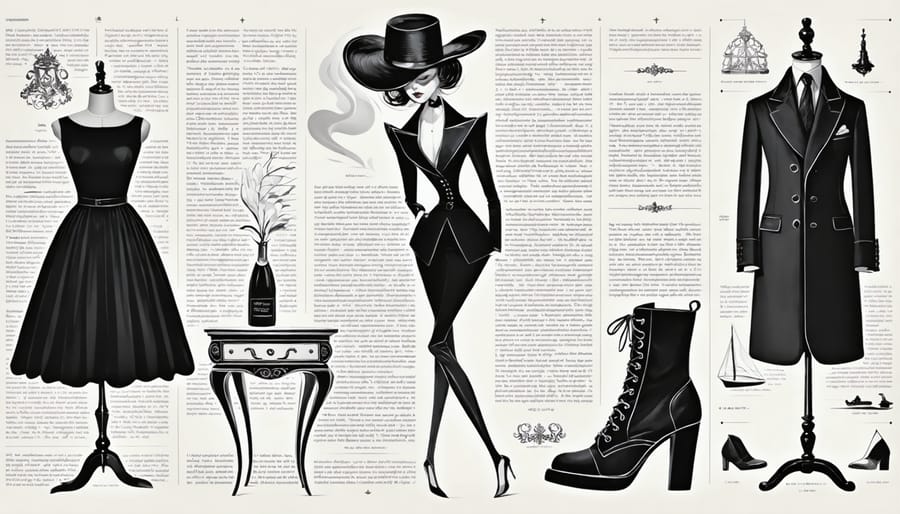
From Coco Chanel’s liberation of the female form to Alexander McQueen’s avant-garde theatrics, fashion designers have revolutionized your wardrobe and transformed the very fabric of society. These visionary creators didn’t just make clothes—they challenged social norms, redefined beauty standards, and empowered generations to express their authentic selves through style.
Throughout history, legendary designers have served as both artists and revolutionaries, from Christian Dior’s “New Look” that celebrated feminine curves in post-war Paris, to Yves Saint Laurent’s groundbreaking introduction of the women’s tuxedo. Their creative genius has shaped not only what we wear but how we view ourselves and our place in the world.
Today’s fashion landscape, rich with diversity and self-expression, stands on the shoulders of these pioneering spirits who dared to dream differently. As we explore their remarkable journeys, we’ll discover how their bold innovations continue to influence modern wardrobes and inspire the next generation of design visionaries.
The Birth of Haute Couture: Early Fashion Pioneers
Charles Frederick Worth: The Father of Haute Couture
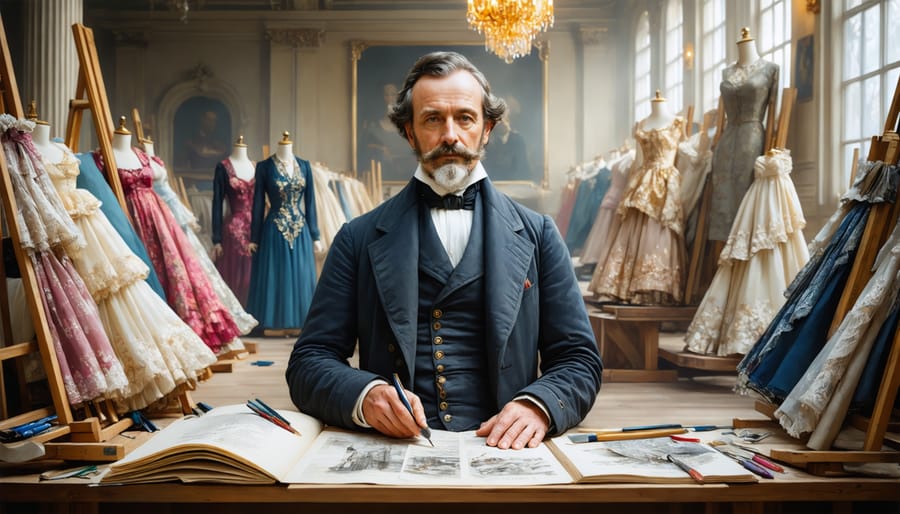
Before the 1850s, fashion was largely dictated by royalty and social elites. Enter Charles Frederick Worth, an English merchant who would forever change how we dress and how fashion is created. Worth didn’t just design clothes; he revolutionized the entire concept of fashion by establishing the first true haute couture house in Paris in 1858.
What made Worth truly revolutionary was his approach to fashion as an art form. Instead of simply following his clients’ wishes, he became the first designer to create complete collections and showcase them on live models (then called ‘mannequins’). This bold move completely shaped modern style and the fashion industry as we know it today.
Worth introduced the concept of seasonal collections and was the first to sew branded labels into his garments – a practice that transformed dressmaking from an anonymous craft into a celebrated art form. His clients included European royalty and American socialites, who would travel across continents just to wear his creations.
Perhaps most importantly, Worth empowered women by introducing them to the concept of personal style. Rather than simply following rigid social dress codes, his clients could now choose from his designs and customize them to their taste. This revolutionary approach to fashion design established the foundation for today’s designer-client relationship and the modern fashion industry.
The Rise of Fashion Houses in Paris
Paris transformed into the epicenter of haute couture during the late 19th and early 20th centuries, as visionary designers established legendary fashion houses that would forever change the landscape of style. The story begins with Charles Frederick Worth, who revolutionized fashion by creating the first true haute couture house in 1858, introducing the concept of seasonal collections and designer labels.
This pioneering spirit sparked a creative revolution, inspiring other talented designers to follow suit. By the early 1900s, iconic names like Jeanne Lanvin, Paul Poiret, and Gabrielle “Coco” Chanel had opened their maisons, each bringing their unique vision to Parisian fashion. These houses weren’t just clothing stores – they were temples of style where art, creativity, and craftsmanship merged to create magic.
The rise of these fashion houses coincided with Paris’s golden age, establishing the city as the world’s fashion capital. They introduced revolutionary concepts like ready-to-wear collections, signature perfumes, and lifestyle branding that we still see today. Each house developed its distinct identity: Chanel with its understated elegance, Louis Vuitton with its luxury leather goods, and Christian Dior with its “New Look” that celebrated feminine curves.
These pioneering establishments laid the foundation for modern fashion as we know it, creating a legacy of creativity, innovation, and excellence that continues to inspire designers and fashion lovers worldwide.
Fashion Revolutionaries of the 20th Century
Coco Chanel’s Liberation of Women’s Fashion
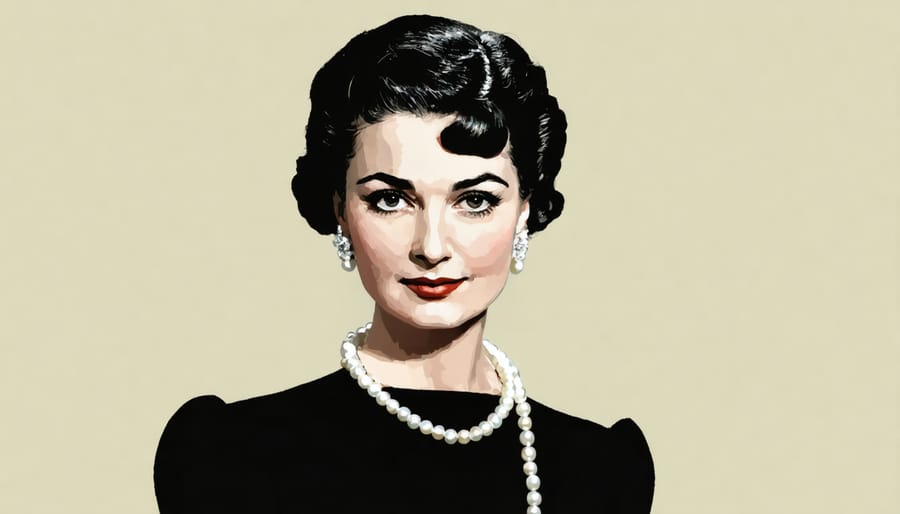
In the early 1900s, Gabrielle “Coco” Chanel sparked a fashion revolution that forever changed how women dress. At a time when corseted silhouettes and restrictive clothing dominated fashion, Chanel dared to prioritize comfort and functionality without sacrificing style. Her groundbreaking approach? Using jersey fabric – previously reserved for men’s underwear – to create elegant, flowing garments that allowed women to move freely.
Chanel’s vision went beyond just comfortable clothing. She introduced the iconic little black dress in 1926, transforming what was once considered a color of mourning into a symbol of chic sophistication. Her revolutionary pants for women challenged social norms and offered practical alternatives to skirts, especially during World War I when women needed practical clothing for work.
The designer’s signature suits, with their clean lines and minimal ornamentation, became powerful symbols of female independence. By eliminating the fussy details and excessive decorations common in women’s fashion, Chanel created timeless pieces that spoke to modern women’s desire for both elegance and practicality.
Perhaps her most enduring contribution was making luxury accessible. She popularized costume jewelry, proving that style didn’t always require precious gems, and created garments that could transition seamlessly from day to evening. This democratic approach to fashion empowered women of various social backgrounds to embrace personal style with confidence.
Christian Dior’s New Look
In 1947, Christian Dior shattered the austerity of post-war fashion with a revolutionary collection that would forever change how women dressed. The “New Look,” as it was dubbed by Harper’s Bazaar editor Carmel Snow, was nothing short of a sartorial rebellion against the utilitarian styles of World War II. With nipped-in waists, full skirts that used yards of luxurious fabric, and softly padded busts, Dior’s designs celebrated feminine curves and luxury at a time when both seemed almost forgotten.
The collection’s star piece, the “Bar Suit,” featured a cream jacket with a dramatically cinched waist and a full black pleated skirt that fell to mid-calf. This silhouette was a complete departure from the boxy, fabric-conserving styles of the war years. While some criticized the designs as wasteful in a time of continued rationing, women worldwide embraced this return to glamour and femininity with open arms.
Dior’s New Look wasn’t just about clothes; it was a symbol of hope and renewal. It marked the return of Paris as the fashion capital and sparked a global renaissance in haute couture. The influence of this collection still echoes through fashion today, inspiring designers who celebrate feminine silhouettes and proving that fashion can be both a reflection of its time and a catalyst for change.
Yves Saint Laurent’s Modern Vision
Yves Saint Laurent didn’t just design clothes; he revolutionized the way we think about fashion and gender. In 1966, he introduced “Le Smoking” – the first tuxedo suit designed specifically for women, challenging traditional dress codes and empowering women to embrace traditionally masculine silhouettes. This bold move sparked a cultural revolution that continues to influence fashion today.
Saint Laurent believed that style should be accessible to everyone, not just the elite. He was among the first designers to embrace ready-to-wear fashion, launching Rive Gauche in 1966 – a boutique line that brought haute couture aesthetics to everyday wardrobes. His collections celebrated diversity, drawing inspiration from street style, art, and global cultures.
What made YSL truly revolutionary was his understanding that fashion could be both powerful and practical. He introduced pantsuits for working women, safari jackets for urban adventurers, and peasant blouses that mixed high fashion with bohemian charm. By breaking down barriers between masculine and feminine dress codes, he created a new language of style that celebrated individual expression.
His legacy lives on in every power suit, in every gender-fluid collection, and in the continuing democratization of fashion. Saint Laurent showed us that true style knows no boundaries – whether of gender, class, or convention.
Contemporary Game-Changers
Alexander McQueen’s Artistic Revolution
Alexander McQueen transformed fashion into a powerful form of artistic expression, pushing boundaries that many thought couldn’t be pushed. His revolutionary shows weren’t just about clothes; they were theatrical masterpieces that merged cutting-edge technology with raw emotion and breathtaking creativity.
From holographic projections of Kate Moss floating like an ethereal goddess to robots spray-painting dresses live on the runway, McQueen’s vision went far beyond traditional fashion presentations. His infamous 1999 show featured model Shalom Harlow being spray-painted by robotic arms, creating a moment where technology and human vulnerability collided in the most beautiful way.
McQueen’s collections told stories of both darkness and light, drawing inspiration from nature, history, and his own Scottish heritage. His iconic “Plato’s Atlantis” collection in 2010 introduced the world to his legendary armadillo boots and digitally engineered prints that seemed to transform models into mystical sea creatures.
What made McQueen truly special was his ability to combine expert tailoring (learned on London’s prestigious Savile Row) with wild imagination. He created pieces that were both wearable art and powerful statements about beauty, gender, and society. His influence continues to inspire designers to think beyond the fabric, proving that fashion can be a medium for technological innovation and artistic revolution.
Stella McCartney’s Sustainable Innovation
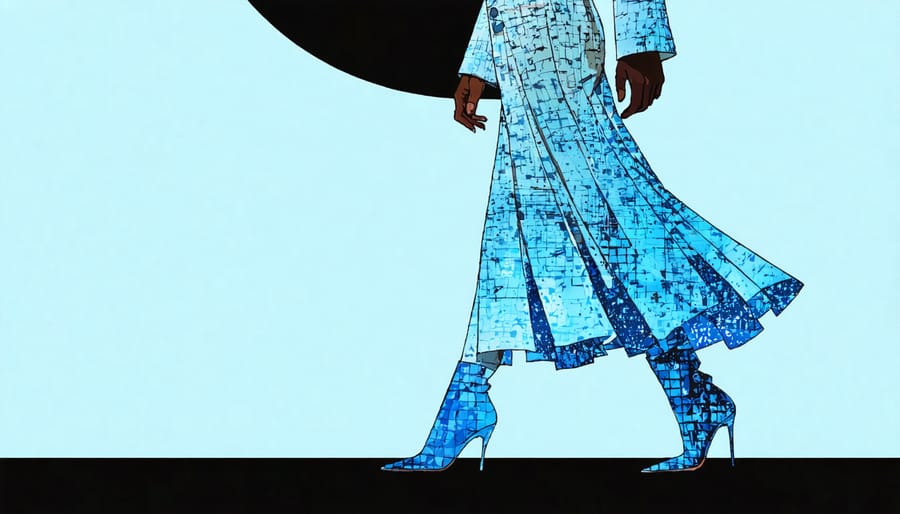
In an industry often criticized for its environmental impact, Stella McCartney emerged as a revolutionary force, proving that luxury and sustainability can go hand in hand. Since launching her namesake brand in 2001, McCartney has consistently championed eco-friendly practices while refusing to compromise on style and sophistication.
A lifelong vegetarian, McCartney’s commitment to cruelty-free fashion led her to develop innovative alternatives to leather and fur. Her pioneering use of materials like Mylo™ mushroom leather and recycled ocean plastics has inspired countless designers to explore sustainable options. The brand’s signature Falabella bag, crafted from recycled materials, became a symbol that conscious fashion could be both chic and desirable.
Beyond materials, McCartney revolutionized production processes by implementing circular economy principles. Her collections feature biodegradable sequins, regenerated cashmere, and organic cotton, while her manufacturing facilities run on renewable energy. She’s also been transparent about her sustainability journey, sharing both successes and challenges to encourage industry-wide change.
McCartney’s influence extends beyond her own brand, as she actively collaborates with scientists and innovators to develop new sustainable technologies. Her partnerships with major sportswear brands have brought eco-friendly materials to mainstream consumers, proving that sustainable fashion can scale successfully.
Virgil Abloh’s Streetwear Impact
Virgil Abloh revolutionized fashion by erasing the line between luxury and streetwear, creating a new language of style that speaks to today’s generation. As the founder of Off-White and the first Black artistic director at Louis Vuitton menswear, Abloh proved that authentic street style influence could reshape luxury fashion’s DNA.
His journey from architecture to DJing to fashion design embodied the multidisciplinary approach that modern creatives celebrate. Abloh’s signature quotation marks, industrial belts, and zip ties became instantly recognizable symbols of a new era in fashion – one where sneakers and hoodies could command the same respect as traditional luxury items.
What made Abloh truly special was his commitment to opening doors for future generations. He didn’t just create clothes; he created opportunities, mentoring young designers and championing diversity in an industry that desperately needed change. His collaborations with Nike, IKEA, and countless other brands showed that great design could be both aspirational and accessible.
Through his work, Abloh proved that fashion didn’t need to choose between high-end luxury and street credibility – it could authentically be both. His legacy continues to inspire designers to break traditional boundaries and create fashion that truly reflects our diverse, interconnected world.
As we reflect on the remarkable journey through fashion history, it’s clear that these visionary designers have done more than just create clothes – they’ve shaped culture, challenged societal norms, and redefined how we express ourselves through fashion. From Coco Chanel’s revolutionary approach to women’s comfort to Alexander McQueen’s boundary-pushing artistry, each designer has contributed unique threads to the rich tapestry of fashion history.
Their influence continues to ripple through contemporary fashion, inspiring new generations of designers to push creative boundaries while honoring the foundations laid by their predecessors. We see Dior’s New Look silhouette reimagined on today’s runways, while Yves Saint Laurent’s gender-fluid approach to fashion feels more relevant than ever in our evolving conversations about identity and self-expression.
These pioneers showed us that fashion is more than just fabric and thread – it’s a powerful tool for social change, personal empowerment, and cultural expression. Their legacy lives on not just in museum exhibitions and fashion archives, but in the way we approach getting dressed each morning, in the confidence we feel wearing a well-cut blazer, and in our growing appreciation for sustainable and inclusive fashion.
As we look to the future, these revolutionary designers remind us that fashion’s greatest power lies in its ability to transform, adapt, and inspire. Their stories continue to empower new voices in fashion, encouraging bold innovation while remaining true to the timeless principles of beautiful, meaningful design.