
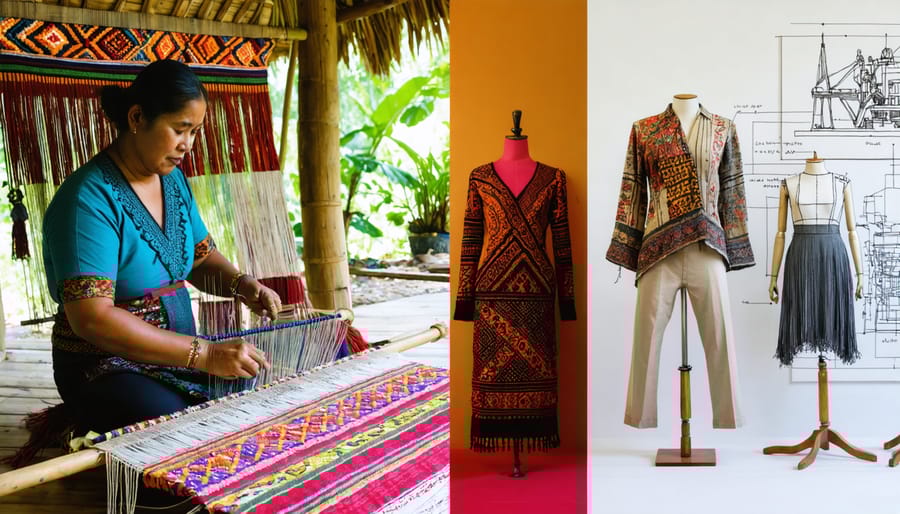
The industrial revolution transformed our relationship with textiles forever, weaving together innovation and tradition in ways that still influence how we dress today. From the humble spinning jenny to the mighty power loom, these game-changing inventions didn’t just accelerate production – they revolutionized society itself. Now, as we witness a renaissance of traditional dress in modern fashion, the lessons of this pivotal era feel more relevant than ever. The marriage of mechanization and craftsmanship during the industrial revolution laid the groundwork for today’s sustainable fashion movement, where ancient techniques meet cutting-edge technology. As we embrace slow fashion and artisanal craftsmanship, we’re not just looking back – we’re revolutionizing fashion once again, this time with a conscious eye toward preserving both our planet and our cultural heritage. The industrial revolution’s textile innovations didn’t just change how clothes were made; they transformed how we express ourselves through fashion, creating ripples that continue to shape our wardrobes and our world today.
When Machines Replaced Hands: The Industrial Revolution’s Impact
Traditional vs. Machine-Made: The Great Divide
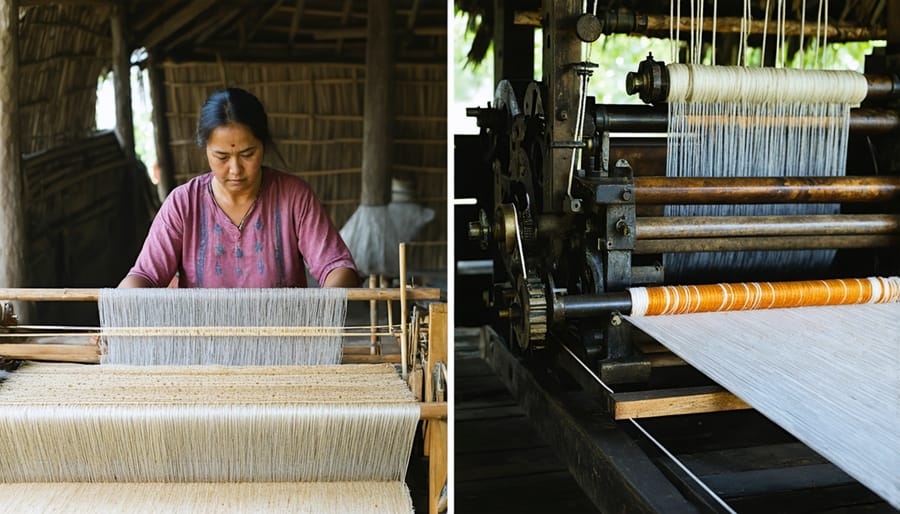
The Industrial Revolution brought a fascinating clash between two worlds of textile production, each with its own unique charm and character. Handcrafted textiles, lovingly created by skilled artisans, carried stories within every thread and embodied centuries of tradition. These pieces often featured slight variations that made each one uniquely beautiful – like fingerprints in fabric form.
Machine-made textiles, however, revolutionized fashion by making it accessible to everyone. While some criticized the uniformity of machine production, it democratized style and allowed more women to express themselves through fashion. The precision of industrial looms created consistently high-quality fabrics at prices that wouldn’t break the bank.
Today, both methods coexist beautifully in our wardrobes. While machine-made pieces form the backbone of our daily wear, handcrafted textiles add those special touches that make an outfit truly memorable. Many contemporary designers are finding innovative ways to blend both worlds, creating collections that honor traditional craftsmanship while embracing modern efficiency. It’s not about choosing sides – it’s about celebrating how both methods contribute to our fashion story.
The Hidden Cost of Mass Production
While the Industrial Revolution brought unprecedented efficiency to textile production, it also introduced environmental and social challenges that we’re still grappling with today. The shift from handcrafted textiles to mass production came with hidden costs that weren’t immediately apparent to our fashion-forward ancestors.
The rapid industrialization of textile manufacturing led to increased carbon emissions and water pollution, as factories dumped untreated dyes and chemicals into local waterways. This practice continues to impact communities worldwide, particularly in developing nations where many modern textile factories operate.
Beyond environmental concerns, mass production also affected cultural heritage. Traditional textile-making techniques, passed down through generations, began to disappear as machines took over. Many indigenous and local textile traditions, each telling unique stories through their patterns and techniques, faced the risk of being lost forever.
The good news? Today’s conscious consumers are driving change. We’re seeing a beautiful revival of traditional textile crafts, with many brands now embracing both sustainable production methods and cultural preservation. By understanding these hidden costs, we can make more informed choices about our fashion purchases and support practices that honor both our planet and our diverse textile heritage.
Indigenous Textile Techniques Making a Comeback
Ancient Wisdom, Modern Appeal
In a beautiful fusion of past and present, today’s fashion innovators are breathing new life into age-old textile traditions. What’s particularly exciting is how traditional craftsmanship is being reimagined for our contemporary wardrobes, creating pieces that tell stories while making bold fashion statements.
Take the revival of handloom weaving, for instance. Modern designers are collaborating with indigenous artisans to create sustainable, uniquely textured fabrics that stand out in a world of mass production. These pieces aren’t just clothes; they’re conversations about heritage and innovation wrapped in style.
What makes this trend so special is its accessibility. You’ll find these reinvented techniques everywhere, from high-street brands incorporating traditional block printing into their summer collections to luxury labels featuring hand-spun khadi in their runway shows. It’s not just about preserving techniques – it’s about making them relevant for today’s fashion-conscious consumer.
The best part? These pieces offer something unique in our fast-fashion world: authenticity. Whether it’s a jacket with traditional embroidery or a dress featuring centuries-old dyeing techniques, each item carries a piece of history while looking absolutely current. It’s proof that sometimes the most forward-thinking fashion comes from looking back and reimagining what’s already beautiful.
Sustainability Meets Style
In an era where fast fashion faces mounting criticism, traditional textile methods are making a powerful comeback, offering a refreshing blend of sustainability and style. These time-honored techniques, passed down through generations, naturally align with eco-conscious values that modern fashion enthusiasts champion today.
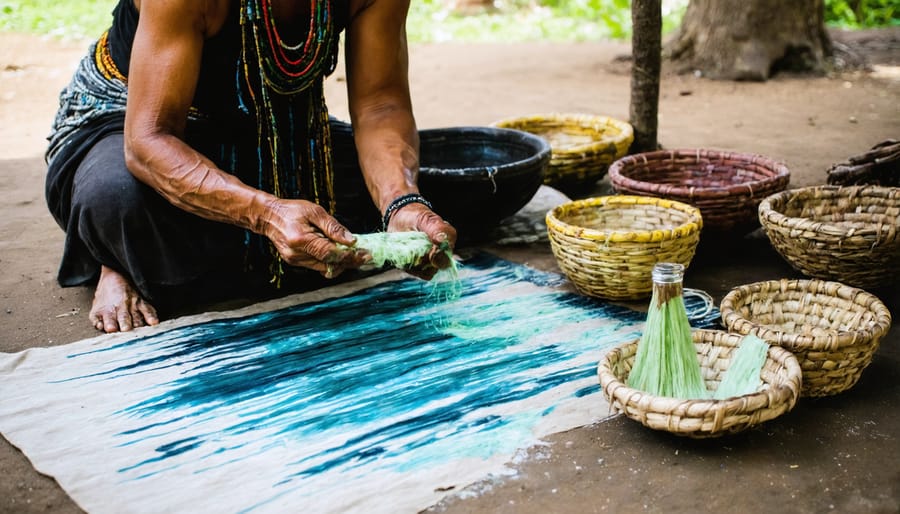
Natural dyeing processes, for instance, utilize plant-based materials instead of harmful chemicals, resulting in unique color variations that tell a story of craftsmanship and environmental responsibility. Hand-weaving techniques not only create durable fabrics that last longer but also consume significantly less energy compared to modern manufacturing processes.
What’s particularly exciting is how these sustainable practices are being reimagined for contemporary wardrobes. Artisanal textile makers are combining ancient wisdom with modern aesthetics, creating pieces that are both environmentally responsible and incredibly chic. From naturally dyed silk scarves to hand-woven cotton dresses, these pieces carry the dual appeal of being kind to the planet while making a bold style statement.
The best part? These traditionally crafted textiles often age beautifully, developing character over time – unlike fast fashion pieces that typically lose their appeal after a few wears. By choosing these mindfully created pieces, you’re not just making a fashion statement; you’re participating in a movement that values both environmental stewardship and artisanal creativity.

Fashion Brands Embracing Indigenous Craftsmanship
In a remarkable fusion of heritage and haute couture, today’s fashion landscape is witnessing a powerful renaissance of indigenous craftsmanship. Leading this cultural revolution are visionary designers who understand fashion’s cultural significance extends far beyond the runway.
Take Gabriela Hearst, whose collaboration with Manos del Uruguay artisans has brought traditional wool-spinning techniques to luxury fashion’s forefront. Her sustainable approach not only preserves centuries-old craftsmanship but also empowers local communities, proving that ethical fashion can be both beautiful and meaningful.
Rising star Isabel Marant has made waves by partnering with Mexican artisans, incorporating their intricate embroidery techniques into contemporary pieces that celebrate both tradition and innovation. Each garment tells a story of cultural preservation while speaking to the modern fashion enthusiast.
Emerging brands like Lemlem, founded by supermodel Liya Kebede, showcase Ethiopian weaving techniques through breezy, contemporary designs. Their success demonstrates how traditional craftsmanship can thrive in today’s market while supporting artisan communities.
The movement isn’t limited to luxury labels. Mainstream brands like Madewell and Anthropologie have launched collections featuring indigenous artistry, making these special pieces accessible to a broader audience. These collaborations often highlight specific techniques like Guatemalan backstrap weaving or Indian block printing, educating consumers about the rich textile heritage behind their clothes.
What makes these partnerships particularly powerful is their focus on fair trade and ethical production. Brands are moving beyond mere aesthetic appreciation to ensure artisans receive proper compensation and recognition for their work. This shift represents a meaningful step toward preserving indigenous craft traditions while creating sustainable economic opportunities for communities worldwide.
As consumers become increasingly conscious of their fashion choices, these collaborations offer a perfect blend of style, sustainability, and cultural appreciation. They remind us that fashion can be a powerful tool for preserving heritage while pushing boundaries into the future.
Wearing Your Heritage: Style Guide
Incorporating heritage-inspired textiles into your wardrobe is a beautiful way of expressing personal style while honoring traditional craftsmanship. Start small with accessories like handwoven scarves or embroidered clutches that add a thoughtful touch to any outfit. When selecting pieces, opt for items that celebrate authentic techniques while fitting seamlessly into your existing wardrobe.
Layer a traditional block-printed kimono over your favorite jeans and white tee for an effortless blend of old and new. Statement pieces like hand-loomed dresses can become the centerpiece of your outfit – just keep the rest of your look simple with minimal jewelry and classic footwear.
Remember to research the origins of your pieces and support ethical manufacturers who work directly with artisan communities. Look for brands that provide fair wages and preserve traditional techniques while creating contemporary designs. Mix textures thoughtfully – pair rough-hewn weaves with sleek modern fabrics for an interesting contrast.
For workplace settings, incorporate subtle elements like ikat-printed blouses or jacquard blazers. These pieces add sophistication while maintaining professionalism. When styling evening looks, don’t shy away from bold patterns – just balance them with solid-colored basics to let the heritage pieces shine.
The key is finding pieces that feel authentic to both the culture they represent and your personal aesthetic. This creates a wardrobe that’s not just fashionable, but meaningful and respectful.
As we embrace the future of fashion, it’s crucial to recognize that the industrial revolution’s textile legacy isn’t just about machines and mass production – it’s about innovation meeting tradition. Today’s fashion landscape offers us a unique opportunity to blend time-honored craftsmanship with cutting-edge technology. By preserving traditional textile techniques, we’re not just safeguarding our cultural heritage; we’re creating a more sustainable and meaningful fashion future.
Whether you’re rocking a hand-woven accessory with your favorite sustainable denim or mixing vintage textile pieces with modern staples, you’re participating in fashion’s beautiful evolution. The magic happens when we appreciate both the efficiency of modern production and the soul of traditional craftsmanship. This balance allows us to express our individual style while supporting artisans and sustainable practices.
Let’s celebrate this fusion of old and new, embracing both innovative textile technologies and time-honored techniques. After all, true style isn’t about choosing between tradition and progress – it’s about creating something uniquely beautiful from both worlds.