
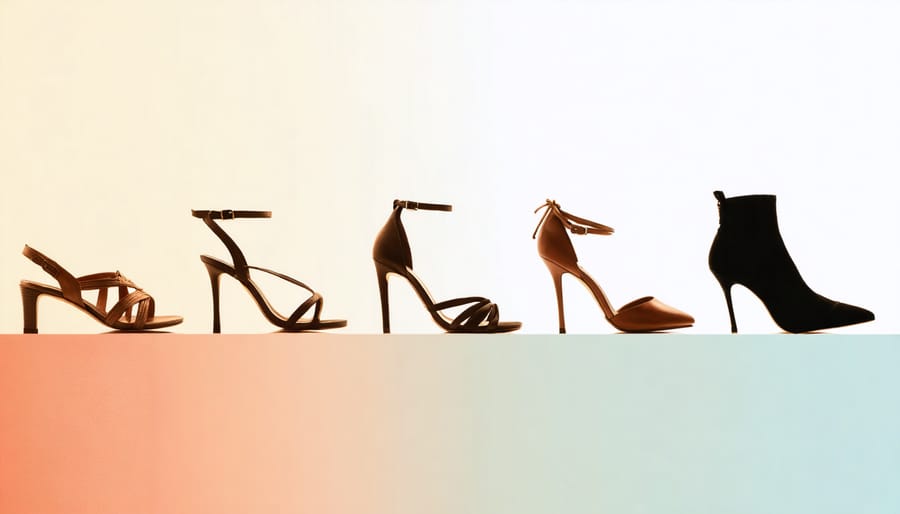
From ancient Egyptian sandals to today’s designer heels, footwear has shaped human civilization in ways that extend far beyond mere functionality. As one of humanity’s earliest inventions, shoes have served as powerful symbols of status, cultural identity, and personal expression for over 40,000 years. What began as simple protection from rough terrain evolved into an art form that reflects our deepest social values, technological advances, and fashion aspirations.
Throughout history, women’s footwear has particularly embodied the delicate balance between practicality and self-expression. From the lotus shoes of imperial China to the platform shoes of the 1970s, each era’s signature styles tell compelling stories of female empowerment, social constraints, and fashion revolution. These evolving designs mirror women’s changing roles in society – from the restrictive corsets and impossibly narrow shoes of the Victorian era to the comfortable sneakers and power heels of modern businesswomen.
Today’s footwear industry stands at the intersection of tradition and innovation, where ancient craftsmanship meets cutting-edge technology. This fascinating journey through shoe history reveals not just the evolution of fashion, but the very path of human progress itself.
Ancient Beginnings: The First Steps in Footwear
Egyptian Sandals and Status
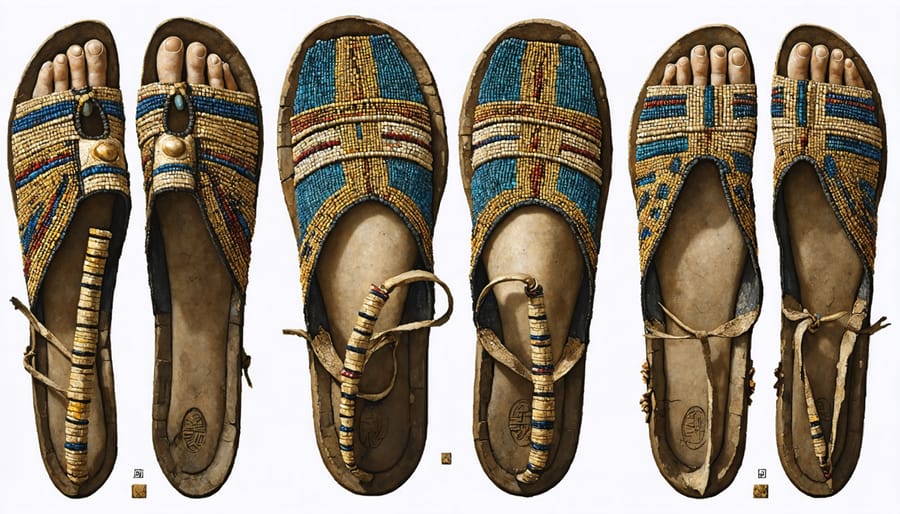
In ancient Egypt, sandals weren’t just practical footwear – they were powerful symbols of status and sophistication. These stunning accessories, often adorned with precious metals and intricate beadwork, played a crucial role in expressing social hierarchy, much like how traditional dress elements influence fashion today.
The most fascinating aspect? The color of your sandals could instantly reveal your social standing. While the general population wore simple palm or papyrus sandals, the elite flaunted gold-decorated footwear. Queen Nefertari’s tomb paintings show her wearing red and gold sandals – a color combination reserved exclusively for royalty.
Even the pharaohs had their special relationship with sandals. Their footwear was often decorated with enemies’ faces on the soles, allowing them to literally “walk all over” their foes with each step. Talk about making a statement! These ancient Egyptian sandals weren’t just accessories; they were powerful tools of self-expression and status declaration – much like how we use designer shoes to make our own fashion statements today.
Greek and Roman Footwear Innovation
The ancient Greeks and Romans revolutionized footwear by introducing purpose-specific designs that went way beyond basic protection. These fashion-forward civilizations gave us the first real taste of how shoes could make a statement about who you are and where you’re going!
Greek women rocked elegant sandals called “krepis,” which featured intricate straps wrapping gracefully up the ankle – a style that still inspires designers today. The Romans took things up a notch by color-coding their footwear to indicate social status. Red shoes? That meant you were part of the patrician elite. Talk about making a statement!
For those special occasions, both cultures developed elaborate party shoes adorned with precious metals and jewels. Roman women particularly loved their “calceus” – closed shoes that could be decorated to match their outfits. They even created different styles for indoor and outdoor wear, proving that versatility in footwear isn’t just a modern concept.
The innovation didn’t stop at style – they also introduced right and left-specific shoes, a game-changing development that would influence footwear design forever. These ancient trendsetters knew that comfort and fashion could absolutely go hand in hand!
Medieval to Renaissance: The Rise of Artistic Footwear
The Chopine Era
Picture this: Venice in the 1400s, where women strutted through cobblestone streets on shoes that could reach heights of 20 inches! These weren’t just any platforms – they were chopines, the ultimate status symbol of the Renaissance era. The higher the chopine, the more fabric required for your dress, and honey, nothing said “I’ve made it” quite like drowning in expensive silk while towering above the crowd.
But these weren’t just about making a fashion statement. Chopines were literally elevating women’s status in society, though not without a price – most noble ladies needed servants just to help them walk! Talk about a power move, right? These architectural achievements in footwear became so extreme that Venice actually had to pass laws limiting their height. Can you imagine being told your shoes were too fabulous for the law?
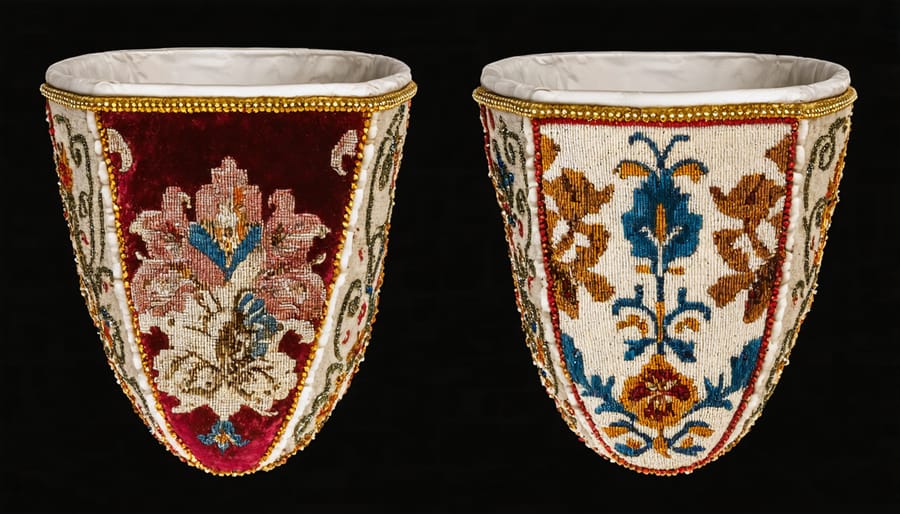
The chopine era wasn’t just about height – it was a bold declaration of wealth, status, and feminine power. These platforms, often decorated with intricate designs and precious materials, transformed their wearers into living art pieces. While they might seem impractical by today’s standards (okay, they were totally impractical), chopines paved the way for future platform shoes and taught us an important lesson: sometimes making a statement means rising above the ordinary, even if you need a helping hand to stay balanced!
Royal Influences
Throughout history, royalty and nobility have been the ultimate fashion influencers, particularly when it comes to footwear. The relationship between power and shoes has been so significant that certain styles were literally “made for royalty” – with laws preventing common folk from wearing them!
Take Marie Antoinette, for instance, whose extravagant shoe collection would make any modern fashionista swoon. Her signature heels, decorated with intricate embroidery and precious stones, sparked a revolution in women’s footwear design that still influences luxury shoes today. Each pair was a miniature work of art, crafted by the most skilled artisans in France.
King Louis XIV, the Sun King, made red-heeled shoes the ultimate status symbol in the 17th century. Standing at 5’4″, he favored elevated heels not just for height but as a symbol of nobility. These red soles were exclusively reserved for court members – sound familiar? Yes, Christian Louboutin’s iconic red soles are a modern nod to this royal tradition!
Queen Victoria played a huge role too, popularizing practical ankle boots that combined comfort with style. When she chose flat, lace-up boots for her wedding in 1840, she started a trend that would influence bridal footwear for decades.
The royal influence continues today, with modern royals like Kate Middleton and Meghan Markle causing specific shoe styles to sell out within hours of public appearances – proving that the monarchy’s power to shape fashion remains as strong as ever.
Industrial Revolution: The Birth of Modern Shoes
The Industrial Revolution didn’t just transform factories and cities – it completely revolutionized how we think about, make, and wear shoes. Before this era, every pair of shoes was a unique masterpiece, handcrafted by skilled artisans who could spend days creating a single pair. But everything changed when the first shoe-making machines whirred to life in the mid-1800s.
Enter the game-changing invention of the sewing machine in 1846, which sparked a fashion revolution that would democratize footwear forever. The introduction of the Rolling Machine in 1845 finally allowed manufacturers to create more durable and flexible leather soles, while the Lasting Machine in 1883 transformed how shoes were shaped and fitted. These innovations didn’t just speed up production – they made shoes more affordable and accessible to everyone.
For women, this was particularly transformative. Suddenly, owning multiple pairs of shoes wasn’t just a luxury reserved for the wealthy elite. Factory-made shoes meant that working women could afford sturdy boots for work, comfortable shoes for daily wear, and even a pair of fancy shoes for special occasions. This accessibility to different styles of footwear gave women more freedom to express themselves through fashion and participate in various activities.
The standardization of sizes also emerged during this period, though it took some time to perfect. Before this, shoes were made to measure or came in very basic size ranges. The development of standard sizing systems made it easier for women to find shoes that fit properly, though we’re still dealing with some of the quirks of these early standardization attempts today!
What’s fascinating is how these industrial changes influenced fashion itself. With faster production methods came the ability to respond more quickly to changing trends. Shoe styles could now evolve seasonally, setting the stage for the fashion cycles we know today. This period truly marked the beginning of footwear as we know it – accessible, diverse, and ready to wear for every occasion.
20th Century Icons: Defining Moments in Shoe Design
The Stiletto Revolution
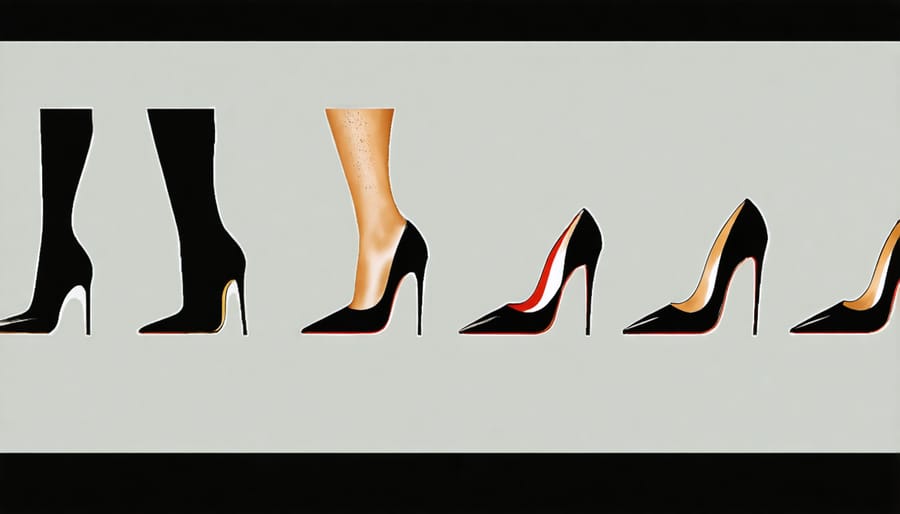
The stiletto heel’s rise to prominence marked a pivotal moment in fashion history, transforming from mere footwear into powerful symbols of status and style. In the post-war era of the 1950s, designers like Roger Vivier revolutionized women’s shoes by creating impossibly thin heels that seemed to defy gravity. These daring designs quickly became associated with confidence, sensuality, and feminine power.
What made stilettos truly revolutionary wasn’t just their sky-high heights or their needle-thin heels – it was how women embraced them as tools of empowerment. From boardrooms to red carpets, stilettos helped women literally and figuratively elevate themselves in spaces traditionally dominated by men. The iconic red-soled Christian Louboutins of the 1990s further cemented the stiletto’s status as a symbol of female ambition and success.
Today’s stiletto revolution continues to evolve, with modern designers creating more inclusive and comfortable versions while maintaining that signature fierce aesthetic. Women are rewriting the rules, wearing stilettos not to conform to beauty standards, but to celebrate their personal style and strength. Whether paired with power suits or evening gowns, these shoes have become a choice rather than an expectation – a powerful testament to how far we’ve come in defining feminine power on our own terms.
Comfort Meets Style
Gone are the days when women had to choose between style and comfort. The modern evolution of everyday footwear has transformed how we think about our shoes, blending fashion-forward designs with revolutionary comfort technology. From memory foam insoles to breathable materials, today’s footwear innovations have made it possible to strut through life with confidence and ease.
The 21st century has witnessed a remarkable shift in women’s footwear priorities. While our grandmothers might have endured pinched toes and aching arches in the name of fashion, contemporary shoe designs celebrate both form and function. Sneakers have evolved from purely athletic gear to coveted fashion statements, while classic pumps now incorporate ergonomic features that make all-day wear actually feasible.
This fusion of comfort and style has given rise to entirely new categories of footwear. Think athleisure shoes that transition seamlessly from morning meetings to evening drinks, or ballet flats engineered with the same technology found in premium running shoes. Sustainable materials and ethical production methods have also become increasingly important, reflecting modern women’s consciousness about their fashion choices.
Perhaps most significantly, this comfort revolution hasn’t compromised on style. Instead, it’s expanded our fashion possibilities, encouraging bold choices and personal expression while keeping our feet happy. It’s a perfect reflection of the modern woman herself – versatile, practical, and unwilling to sacrifice either comfort or style.
Contemporary Footwear: Where Heritage Meets Innovation
Today’s footwear landscape is a fascinating blend of tradition and innovation, where classic silhouettes meet cutting-edge technology. As part of the ongoing modern fashion evolution, designers are reimagining iconic styles while pushing boundaries with sustainable materials and smart technology.
We’re seeing sneakers made from ocean plastic, heels with memory foam cushioning, and boots crafted from vegan leather that looks and feels identical to the real thing. Major brands are embracing 3D printing technology, creating perfectly customized shoes that mold to individual foot shapes. It’s not just about looks anymore – it’s about combining style with unprecedented comfort and environmental consciousness.
What’s particularly exciting is how traditional craftsmanship is being preserved and celebrated alongside these innovations. Artisanal shoemaking techniques are being paired with modern materials, creating pieces that honor heritage while meeting contemporary needs. Think hand-stitched loafers with responsive cushioning or traditionally woven textiles incorporated into athletic shoes.
The democratization of fashion has also transformed how we approach footwear. No longer bound by rigid style rules, we’re mixing and matching with freedom – pairing sneakers with evening wear or combat boots with feminine dresses. This blend of comfort, style, and personal expression reflects our evolving attitudes toward fashion and self-presentation.
Looking ahead, we can expect to see more sustainable innovations, including biodegradable materials and closed-loop manufacturing processes. Smart technology integration will likely expand, with shoes that adapt to our walking patterns or change colors with our outfits. The future of footwear is bright, inclusive, and endlessly creative.
Throughout history, shoes have been more than just protective footwear for women – they’ve been symbols of status, tools of empowerment, and expressions of personal style. From the delicate bound feet of ancient China to the towering platforms of the 1970s, and from suffragettes marching in practical boots to modern CEOs confidently striding in power heels, our relationship with shoes tells a story of liberation, self-expression, and evolving social norms.
Today, this relationship continues to evolve and flourish. Women now have unprecedented freedom to choose footwear that reflects their individuality, lifestyle, and aspirations. Whether it’s breaking barriers in boardrooms wearing elegant pumps, challenging conventions in gender-neutral designs, or prioritizing comfort with fashionable sneakers, our shoe choices have become powerful statements of who we are and who we want to be.
As we step into the future, one thing remains clear: the bond between women and their shoes isn’t just about fashion – it’s about writing our own stories, one step at a time, in whatever shoes make us feel most authentically ourselves.