

Imagine running your fingers across a silk scarf, feeling every delicate texture beneath your fingertips – that’s haptic feedback in its most natural form. In today’s fashion-tech revolution, haptic feedback has evolved into something far more sophisticated: a technology that creates tactile sensations through vibrations, forces, or motions, allowing our clothing and accessories to communicate with us in entirely new ways.
From smart fabrics that adjust their temperature to bags that gently pulse to guide you through city streets, haptic feedback is transforming how we experience and interact with our wardrobes. This groundbreaking technology isn’t just about adding buzz and vibration to our accessories – it’s about creating meaningful connections between our digital and physical worlds through the language of touch.
As fashion embraces this innovative technology, we’re seeing everything from runway pieces that respond to music with subtle vibrations to everyday wear that can send gentle reminders about posture or upcoming meetings. For the style-conscious woman who loves staying ahead of trends while maintaining practical functionality, haptic feedback represents the perfect fusion of fashion and function – where your clothing doesn’t just look good, it actively enhances your daily experience.
What Makes Your Clothes ‘Feel Smart’
The Science of Touch Sensation
Ever wondered how your favorite smart fabrics actually work their magic? It’s all about the fascinating way our skin interacts with these innovative materials. When we touch something, thousands of microscopic sensors in our skin send signals to our brain, creating that familiar sensation of texture, pressure, or vibration.
Haptic feedback in clothing works by mimicking these natural touch sensations. Think of it like tiny, sophisticated massage points woven into your garments. These points can create gentle vibrations, subtle temperature changes, or light pressure – all designed to communicate with your body in a way that feels completely natural and intuitive.
The really cool part? These sensations can be customized to your preferences. Maybe you want a gentle reminder to stand up straighter when your posture slips, or a soft buzz when it’s time for your next meeting. The technology adapts to your lifestyle, making your clothes work harder for you while keeping you stylish and comfortable.
It’s like having a personal stylist and wellness coach wrapped into one smart wardrobe!

Digital Touch Points in Fashion
Fashion is getting a serious tech upgrade, and it’s something you can literally feel! Innovative designers are weaving haptic feedback into everything from workout wear to evening gowns, creating garments that respond to your body and movements in exciting new ways. Imagine a dress that gives you a gentle buzz when you’re slouching, helping you maintain perfect posture at that important meeting, or workout leggings that pulse rhythmically to guide you through your yoga flow.
Smart fabrics with embedded sensors are revolutionizing how we experience our clothes. These digital touch points can help athletes perfect their form, guide dancers through choreography, or even notify you of incoming messages through subtle vibrations. Some designers are creating evening wear that changes texture when you receive compliments on social media – talk about wearing your confidence!
The best part? These innovations aren’t just about the wow factor. They’re making fashion more inclusive, with garments that can guide visually impaired wearers through spaces or help people with mobility challenges better understand their body positioning. It’s fashion that doesn’t just look good – it feels amazing and serves a purpose!
Your Wardrobe’s New Superpowers

Style That Responds to You
Imagine slipping into a dress that doesn’t just look amazing but actually responds to your every move. That’s the magic of haptic feedback in fashion! Think of it as your clothing’s way of having a conversation with you through gentle vibrations and subtle sensations that enhance your style experience.
When you’re rocking that perfect outfit with haptic technology, it’s like having a personal style assistant that knows exactly what you need. Walking into an important meeting? Your blazer might give you a gentle tap on the shoulder, reminding you to stand tall and confident. Dancing the night away? Your dress can adjust its fit to keep you comfortable as you move.
What makes this technology truly revolutionary is how it adapts to your unique style preferences. Whether you’re all about that minimalist chic or love making bold fashion statements, haptic feedback elements can be customized to match your vibe. It’s like having clothes that literally speak your language!
The best part? This isn’t just about looking good – it’s about feeling empowered. Imagine clothing that can remind you to correct your posture during yoga, or a handbag that gives you a subtle alert when you’ve been standing in those killer heels for too long. It’s fashion that doesn’t just serve looks – it serves you, creating a personalized style experience that’s as unique as you are.
Fashion That Fits Perfect Every Time
Imagine slipping into your favorite dress, and it whispers back to you through gentle vibrations, confirming the perfect fit. This isn’t science fiction – it’s the latest revolution in fashion technology! Thanks to haptic feedback, shopping for clothes has become more intuitive and confidence-boosting than ever before.
Today’s innovative digital fitting solutions use haptic technology to create a personalized shopping experience that feels as natural as trying on clothes with your bestie. When you’re browsing online, smart fabric sensors and body-mapping technology work together to give you real-time feedback about how a garment would actually feel on your unique body shape.
Picture this: you’re shopping for your dream wedding dress from home. As you move, stretch, and pose in front of your smart mirror, haptic feedback helps you understand exactly how the fabric will drape, where it might be too tight, and whether it’ll let you dance the night away in comfort. The gentle vibrations and pressure points guide you toward styles that truly celebrate your body, eliminating the guesswork and anxiety that often comes with online shopping.
From inclusive sizing to adaptive fashion, haptic feedback is transforming the way we experience clothes, ensuring that every woman can find her perfect fit with confidence and joy.
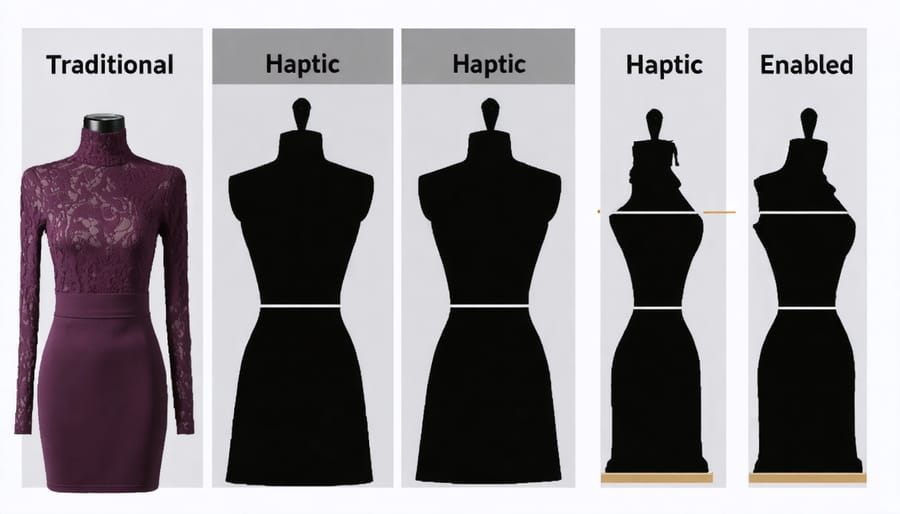
The Fashion Revolution You Can Feel
Brands Leading the Touch Revolution
Several forward-thinking fashion brands are revolutionizing how we experience clothing through haptic technology. Leading the charge is CuteCircuit, whose groundbreaking “Hug Shirt” lets wearers send and receive virtual embraces through embedded sensors and actuators. This innovative piece has opened up new possibilities for emotional connection through fashion.
Luxury powerhouse Ralph Lauren made waves with their smart-powered Olympic uniforms, featuring heating elements that respond to temperature changes and body movement. Meanwhile, Wearable X’s Nadi X yoga pants incorporate gentle vibrations to guide wearers through yoga poses, bringing a personal instructor’s touch to your practice.
The House of Holland and Visa collaboration showcased rings that could process payments through subtle vibrations, proving that haptic feedback can be both stylish and practical. Swedish fashion tech company NEUE is pushing boundaries with their mood-responsive clothing line, which adapts its texture based on the wearer’s emotional state.
Even accessible brands are joining the movement. Uniqlo’s latest smart fabric collection includes temperature-regulating pieces that provide subtle feedback when reaching optimal warmth levels. These innovations aren’t just about technology – they’re about creating more intuitive, responsive relationships between our clothes and bodies.
The future of fashion is increasingly tactile, with these brands leading us toward a more connected and interactive wardrobe experience. Their pioneering work demonstrates that haptic feedback isn’t just a feature – it’s becoming an essential element of modern fashion design.
What’s Next for Sensory Fashion
Get ready to step into a future where your clothes don’t just look amazing – they feel and respond to you in ways we never imagined! The next wave of haptic fashion is all about creating deeper connections between what we wear and how we experience the world around us. Imagine jackets that adjust their warmth based on your body temperature, or dresses that can change patterns when you’re feeling playful or professional.
What’s really exciting is how biometric fashion technology is merging with haptic feedback to create truly personalized experiences. Designers are working on collections that include smart fabrics that can simulate different textures on demand – think silk that can transform into velvet with just a tap on your smartphone!
The fashion horizon is bright with possibilities: workout wear that coaches you through exercises by gentle vibrations, evening wear that creates subtle light shows based on your movements, and accessories that can send loving “touches” to long-distance loved ones. Some brands are even developing haptic jewelry that can translate music into physical sensations, letting you literally feel the rhythm while you dance!
These innovations aren’t just about the wow factor – they’re about making fashion more inclusive and adaptive to everyone’s unique needs and preferences. Whether you’re looking for clothes that help with sensory processing or just want to express yourself in new, dynamic ways, haptic fashion is ready to transform your wardrobe into an experience that’s uniquely yours.
As we step into the future of fashion, haptic feedback technology is revolutionizing not just how we wear clothes, but how we experience them. This exciting innovation is breaking down barriers between our digital and physical worlds, creating opportunities for more inclusive, interactive, and personalized fashion experiences. Whether you’re a tech enthusiast or simply someone who loves expressing themselves through style, haptic feedback is becoming increasingly accessible and relevant to your wardrobe choices.
Ready to embrace this fashion revolution? Start by exploring smart clothing options that incorporate gentle vibrations or temperature changes. These pieces can enhance your daily activities, from workout gear that guides your form to evening wear that responds to your environment. Don’t be afraid to experiment with different haptic feedback experiences – they’re designed to be intuitive and user-friendly.
Remember, you’re not just wearing clothes anymore; you’re participating in the evolution of fashion technology. As more designers and brands incorporate haptic feedback into their collections, we’ll see even more creative and practical applications emerge. This technology isn’t just about following trends – it’s about creating meaningful connections between our bodies and our clothing, enhancing our comfort, and expanding our style possibilities.
The future of fashion is tactile, responsive, and incredibly personal. By embracing haptic feedback technology today, you’re not just staying ahead of the curve; you’re helping shape how we’ll interact with fashion tomorrow.
You may also like
-
Biometric Technology Is About to Change How You Shop for Fashion Forever
-
How Biometric Fashion Is Revolutionizing Your Style Experience
-
Virtual Try-On Revolution: How Digital Fitting Rooms Are Transforming Online Shopping
-
How FIT’s Green Tech Revolution is Reshaping Fashion’s Future
-
How AI is Revolutionizing Your Personal Fashion Experience