
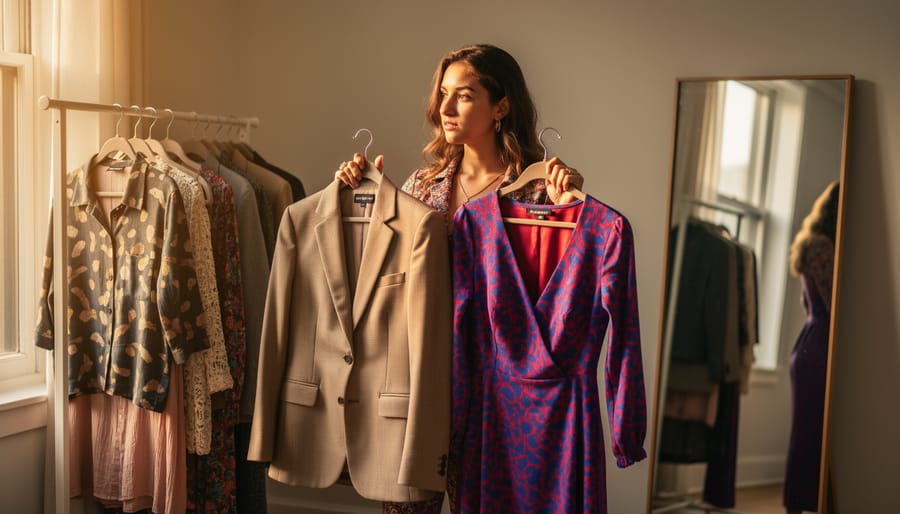
Every morning, you stand in front of your closet making decisions that reach far deeper than hemlines and color palettes. Those choices are actively constructing who you are in the world, signaling your values, your mood, your aspirations. This process, what psychologists call identity formation, happens whether you’re conscious of it or not.
Identity formations aren’t some abstract concept reserved for academic papers. They’re the ongoing, evolving ways we build our sense of self through every interaction, every choice, every phase of life. And few things shape this process more visibly than what we wear.
Think about the last time you tried a completely new style. Maybe you swapped your usual neutrals for a bold print, or finally wore those statement earrings collecting dust in your jewelry box. That flutter of nerves mixed with excitement? That’s identity formation in action. You’re testing boundaries, seeing how a new version of yourself feels, watching how the world responds.
Fashion shapes your identity across every stage of your life. The graphic tees of your teenage rebellion, the polished blazers of your first job, the experimental vintage pieces you discovered while traveling. Each era tells a story about who you were becoming.
This isn’t shallow. It’s profoundly human. We’re visual creatures navigating a visual world, and clothing serves as both mirror and megaphone for our inner selves. Understanding how identity formations work through fashion gives you permission to experiment boldly, to use your wardrobe as the powerful tool for self-discovery it really is.
What Are Identity Formations and Why Do They Matter?
Think about the last outfit that made you feel completely yourself. Maybe it was that vintage band tee paired with tailored trousers, or the bold red lip that gave you the confidence to speak up in a meeting. That feeling? That’s identity formations in action.
Identity formations describe the continuous, evolving process of discovering and expressing who you are. Unlike a fixed personality trait or a checkbox on a form, your identity is something you’re actively creating every single day through the choices you make, the experiences you collect, and how you present yourself to the world. Research shows that identity development is dynamic shifting as we navigate different life stages, relationships, and cultural contexts.
Here’s what makes this concept so powerful: your identity isn’t something you’re born with and stuck with forever. You’re the author, constantly revising and refining your story. That friend who transformed from preppy to punk rock? She was exploring her identity formations. The colleague who started dressing more boldly after a career change? Same thing.
Fashion plays a starring role in this ongoing process because clothing offers an immediate, visible way to experiment with different aspects of yourself. Through fashion psychology we understand that what we wear doesn’t just reflect who we are; it actively shapes how we see ourselves and how others perceive us.
Your style choices become a conversation between your inner world and outer expression. That minimalist capsule wardrobe might signal your values around sustainability. Those statement earrings could represent your cultural heritage or creative spirit. Every morning, you’re making decisions about which parts of yourself to highlight, which versions of your identity to explore.
This matters because recognizing fashion as part of your identity formations gives you permission to experiment, evolve, and embrace change without judgment.
Fashion as Your Personal Identity Laboratory
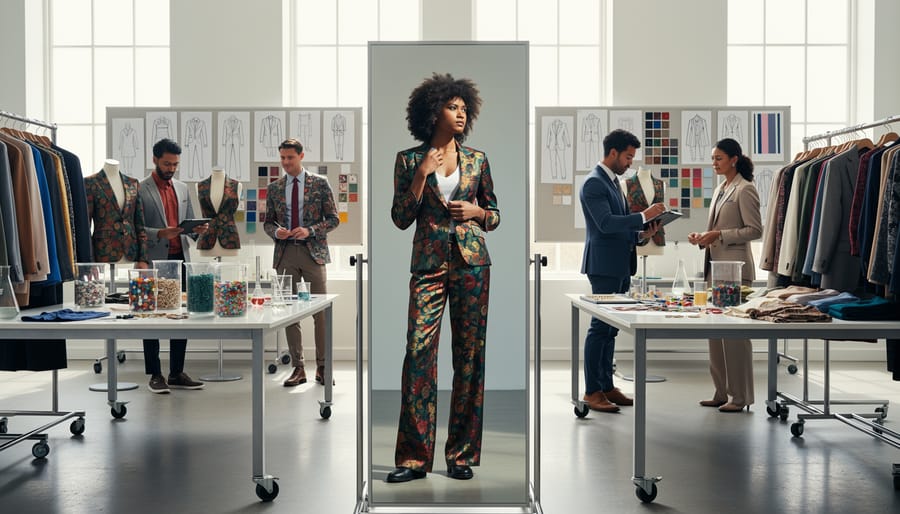
Trying On Different Personas Through Style
Your style identity formation doesn’t happen overnight. It evolves through experimentation, and that means trying on different aesthetics like you’d try on clothes in a fitting room. Some feel right immediately. Others teach you what you’re not.
Think about the girl who spent her teens in all black minimalist pieces, then discovered maximalism and suddenly felt like herself for the first time. Or the one who thought “feminine” meant weakness until she realized that wearing a slip dress with combat boots made her feel powerful in a whole new way. These moments of discovery matter because they reveal authentic parts of who we are.
The beauty of fashion is that it gives you permission to test-drive different versions of yourself without commitment. Want to see if edgy fits your personality? Try a leather jacket and see how you feel walking into a room. Curious about soft romanticism? Slip into something flowy and notice if your energy shifts.
Here’s what many people don’t realize: the styles that resonate aren’t always the ones you expected. Sometimes you think you’re a bohemian free spirit until you put on a structured blazer and discover you love the confidence it brings. Or maybe you’ve been playing it safe with neutrals, then try bold prints and feel genuinely seen for the first time.
Each aesthetic experiment adds another layer to your identity formation. You’re not just picking outfits. You’re collecting evidence about who you actually are, beyond who you thought you should be.
The Mirror Effect: How Others Respond to Your Fashion Choices
Here’s the section content:
Every time you step out wearing something new, you’re not just showcasing your style. You’re entering into a silent conversation with everyone around you. The reactions you receive, whether a compliment from a stranger, a raised eyebrow from a colleague, or enthusiastic approval from friends, become part of how your identity formations take shape.
Think about the last time someone complimented your outfit. That positive feedback likely made you want to wear that piece again, maybe even seek out similar styles. You filed away that information: this works, this reflects who I am. On the flip side, negative reactions can be equally powerful. A dismissive comment about your bold print dress or experimental accessories might make you second-guess yourself, potentially pushing you back toward safer choices.
This mirror effect shapes our self-perception in ways we often don’t recognize. When we repeatedly receive positive reinforcement for certain looks, those styles become intertwined with our sense of self. Your wardrobe shapes your emotions and confidence levels based partly on these external cues.
But here’s where it gets interesting: the people whose opinions we value most deeply influence us differently than casual observers. Your creative friend’s excitement about your vintage finds carries different weight than your conservative grandmother’s concern about your hemline. Learning to filter this feedback, to decide which voices matter in your identity formations process, becomes an essential skill.
The goal isn’t to ignore all feedback or become immune to others’ opinions. Rather, it’s about developing awareness. Use positive reactions as confirmation when they align with your authentic expression, and let negative comments inform without controlling your choices.
Cultural Identity and Fashion: Honoring Your Roots
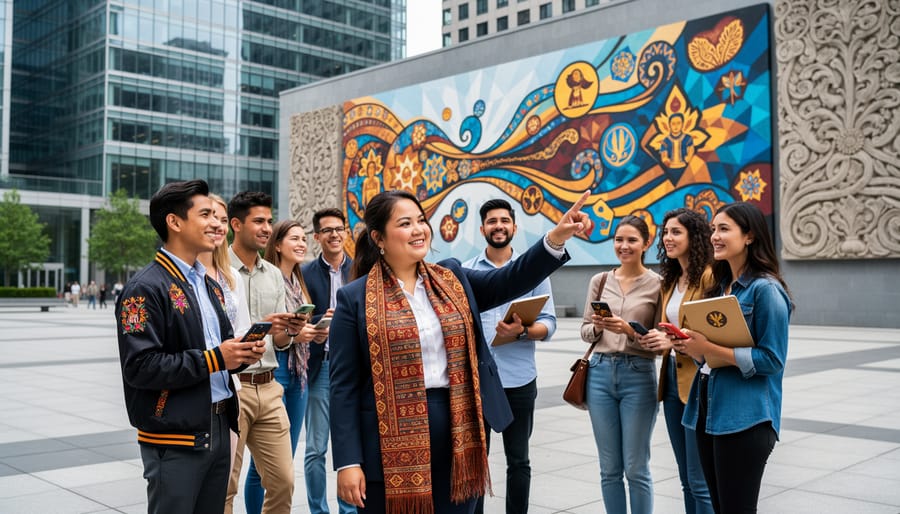
Fashion has always been one of the most powerful ways we carry our cultural heritage into the world. The patterns, colors, and silhouettes passed down through generations aren’t just aesthetic choices. They’re living connections to our ancestors, our communities, and the stories that shaped us. Understanding this relationship is fundamental to identity formations, because when we intentionally weave cultural elements into our personal style, we’re actively constructing who we are in a world that constantly pushes us toward uniformity.
Think about how a dashiki print brings African heritage forward, or how a silk qipao connects to Chinese tradition. These aren’t costumes or relics. They’re dynamic pieces of cultural expression that evolve alongside us. The beauty lies in how we adapt these elements to reflect both where we come from and who we’re becoming. A woman might pair her grandmother’s embroidered huipil with modern jeans, creating a bridge between generations that honors tradition while claiming her contemporary identity.
The cultural identity formations we develop through fashion become even more significant for those living between multiple worlds. Second and third-generation immigrants often navigate complex relationships with their heritage, and fashion offers a tangible way to explore that connection. There’s something deeply affirming about choosing to wear traditional jewelry to a modern workplace or incorporating henna designs for special occasions. These choices say, “I belong to this culture, and I’m proud of it.”
If you’re looking to honor your roots through style, consider these approaches:
- Start with accessories like traditional jewelry, scarves, or headwraps that complement your existing wardrobe
- Learn the stories behind specific patterns or garments so you wear them with understanding
- Support artisans and designers from your culture who are reimagining traditional crafts
- Mix one statement cultural piece with contemporary basics for everyday wearability
- Research the appropriate contexts for sacred or ceremonial items to ensure respectful wear
The key is authenticity over appropriation. Your cultural fashion choices should feel like an extension of your genuine connection, not a trend you’re trying on. This authenticity strengthens your identity formations because you’re not performing culture for others. You’re living it for yourself.
Remember that celebrating your heritage through fashion isn’t about perfect preservation. Cultures evolve, and so should how we express them. That fusion outfit that blends your Indian sari fabric with a Western-style blazer? That’s not diluting your culture. That’s you creating something new while staying rooted in something timeless.
Age and Life Stage: How Identity Formations Evolve
Your wardrobe tells the story of who you’ve been and who you’re becoming. Think about the clothes hanging in your closet right now. That blazer from your first interview. The vintage band tee from your adventurous early twenties. The comfortable jeans that carried you through a major transition. Each piece marks a chapter in your ongoing journey of self-discovery.
During college years, identity formations tend to be experimental and fluid. You might cycle through different aesthetics weekly, testing out punk one semester and preppy the next. This isn’t indecisiveness. It’s exploration. Your style during this phase often reflects the friends you’re making, the ideas you’re encountering, and the versions of yourself you’re trying on for size.
The transition into professional life typically triggers a significant shift in how we dress. Suddenly you’re balancing self-expression with workplace expectations, creating hybrid identity formations that honor both your authentic self and your career ambitions. Maybe you keep your quirky accessory collection but invest in tailored pieces. Or you discover that power dressing actually makes you feel powerful.
Motherhood, if it comes, often reshapes our relationship with fashion entirely. Some women embrace flowing silhouettes and practical pieces, while others deliberately maintain their pre-baby style as a reminder that they haven’t disappeared into their role as a parent. There’s no right answer, just different ways of negotiating multiple identities.
What’s beautiful about these evolving identity formations is that they’re never linear. You might circle back to styles you loved at twenty when you hit thirty-five, but wear them differently now. You’ve changed, so the same leather jacket carries new meaning. Growth doesn’t mean abandoning earlier versions of yourself. It means integrating them into someone richer and more complex.
Your style evolution is proof that you’re alive and changing. Honor every stage.
Breaking Free: Fashion as Rebellion and Self-Discovery
There’s something profoundly liberating about the moment you realize your clothes don’t have to tell anyone else’s story but yours. Fashion becomes rebellion the instant you stop dressing for approval and start dressing for truth. Maybe it’s the day you wear that bright red lip to a corporate meeting, or finally embrace the oversized blazer that makes you feel powerful instead of the fitted dress everyone expected. These aren’t just outfit choices. They’re declarations of independence in your identity formations.
For so many of us, breaking free starts with recognizing the invisible rules we’ve been following. Your family’s conservative dress code. Your workplace’s unspoken uniform. The style advice that never quite fit your body or personality. When you challenge these norms, you’re not being difficult or attention-seeking. You’re actively participating in the most personal form of self-discovery: figuring out who you are when no one else is writing the script.
This is especially powerful as beauty standards are shifting and creating more space for diverse expressions of style. The woman who shaves her head isn’t making a statement about femininity for your benefit. She’s exploring what femininity means to her. The person mixing vintage finds with high-street pieces isn’t confused about fashion rules. They’re writing new ones.
Bold fashion choices create a feedback loop of authenticity. You try something that feels true, even if it scares you. People respond, sometimes positively, sometimes not. But here’s what matters: you learn something about yourself in the process. You discover your non-negotiables. The silhouettes that make you stand taller. The colors that shift your entire mood. The accessories that feel like talismans of your real personality.
This journey isn’t always smooth. There will be days when dressing authentically feels exhausting, when conformity seems easier. That’s normal. Identity formations don’t happen overnight. But every time you choose the outfit that feels right over the one that feels safe, you’re building a more solid foundation of self. You’re teaching yourself that your identity matters more than their comfort. And that realization? That’s where true style begins.
Building Confidence Through Your Wardrobe Choices
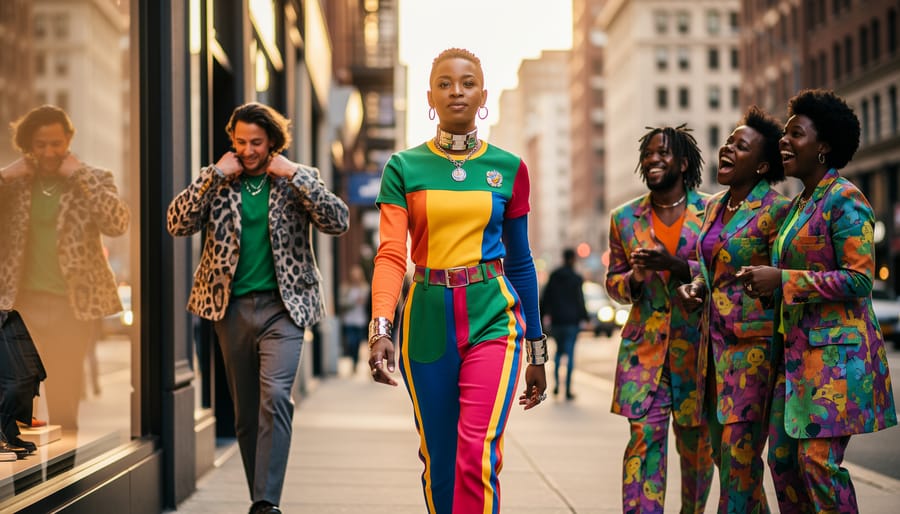
Your wardrobe has always been more than fabric and thread. Every morning when you choose what to wear, you’re making a statement about who you are and how you want to move through the world. That power suit that makes you stand taller in meetings? The vintage band tee that connects you to your music-loving roots? These aren’t superficial choices. They’re active participants in your identity formation.
The psychology here is fascinating. Research shows that what we wear directly influences our cognitive processes and confidence levels. Scientists call it “enclothed cognition,” the systematic influence clothes have on our psychological states. When you slip into an outfit that feels authentically you, your brain responds. Your posture shifts. Your self-talk changes. You literally embody a different version of yourself.
Think about the last time you wore something that made you feel unstoppable. Maybe it was bold red lipstick paired with a leather jacket, or perhaps a flowing dress that made you feel graceful and powerful simultaneously. That feeling wasn’t imaginary. Through intentional style choices you were actively shaping your self-concept and reinforcing the person you’re becoming.
The key is authenticity. Confidence doesn’t come from following trends blindly or wearing what fashion magazines dictate. It emerges when your external presentation aligns with your internal truth. This might mean embracing minimalist neutrals if they make you feel calm and centered, or choosing vibrant patterns if they express your creativity.
Start paying attention to how different pieces make you feel. Not how they look in the mirror initially, but how you carry yourself throughout the day while wearing them. Build your wardrobe around these confidence-boosting pieces. Your clothes should support your growth, not constrain it. They’re tools for becoming who you’re meant to be.
Your style is waiting to tell your story, and the beautiful truth is that identity formations through fashion are never truly finished. They evolve as you do. Every outfit you put together, every piece you choose to wear or leave behind, is part of discovering who you are and who you’re becoming.
So go ahead and take risks. Try that color you’ve always admired from afar. Mix patterns that “shouldn’t” work together. Invest in that statement piece that makes your heart race. The outfits that feel slightly uncomfortable at first are often the ones teaching you something new about yourself.
Your authentic style won’t announce itself in a single epiphany moment. It emerges gradually through experimentation, through noticing what makes you feel powerful, through paying attention to when you catch your reflection and think “yes, this is me.” Some days you’ll want structure and polish. Other days, pure creative chaos. Both are valid chapters in your ongoing style story.
Trust yourself enough to get it wrong sometimes. Fashion is forgiving that way. What feels like a mistake today might spark an insight tomorrow. The point isn’t perfection; it’s exploration. Your wardrobe is a playground for self-discovery, and you have permission to play.