
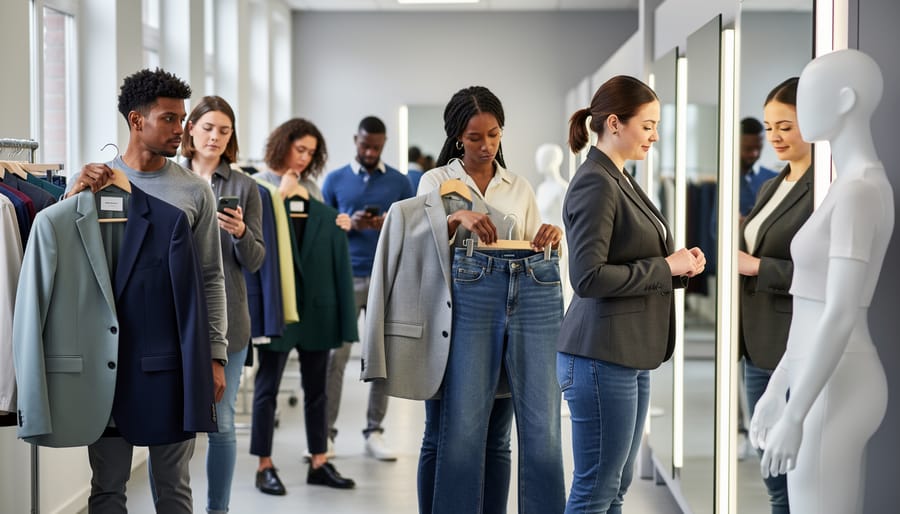
Inclusive sizing means fashion brands offering a full spectrum of sizes that truly fit diverse body types, typically extending well beyond the traditional size 0-12 range to encompass sizes 00 through 32 or higher, with corresponding attention to fit, proportion, and design across every size. In 2026, this approach represents a fundamental shift in how the fashion industry thinks about its customer base, moving beyond token extended sizes to creating collections where every body can find pieces that fit well, feel great, and reflect current trends.
For too long, shopping meant squeezing into clothes designed for a narrow standard or settling for limited options tucked away in separate sections. That era is ending. True inclusive sizing addresses the reality that bodies are beautifully varied, and a size 16 customer deserves the same trend-forward bomber jacket, the same perfectly cut blazer, and the same attention to detail as someone wearing a size 6.
The difference shows up in the details. Brands committed to genuine inclusivity invest in diverse fit models, adjust proportions across the size range rather than simply scaling up patterns, and design with intention for every body. They understand that a great pair of jeans requires different engineering for different frames, and they’re willing to do that work.
This shift gives you real power. You can build a wardrobe that expresses who you are without compromise, shop brands that see you, and wear clothes that actually work with your body instead of against it.
What Inclusive Sizing Actually Means (Beyond Marketing Buzzwords)
Inclusive sizing means offering a complete range of sizes designed to fit different body types from the start, not as an afterthought. It goes beyond simply adding larger numbers to a size chart, it involves creating patterns, cuts, and proportions that actually work for bodies across the full spectrum, typically from size 00 to 30 or beyond.
This differs from extended sizing, which treats anything above a size 14 as an add-on to a “standard” range. Extended sizing often uses the same patterns scaled up, resulting in clothes that don’t fit properly on larger bodies. True inclusivity designs for all sizes with the same care and attention.
- Inclusive Sizing
- A size range designed from the ground up to fit diverse body types, typically spanning size 00 to 30 or higher, with patterns and proportions tailored for each size.
- Extended Sizing
- Additional larger sizes added to a “standard” range, often using scaled-up patterns rather than thoughtful design for different body shapes.
- Size Range
- The complete spectrum of sizes a brand offers, which should reflect the actual diversity of women’s bodies rather than industry-imposed standards.
- Fit Diversity
- Designing clothes to accommodate different body proportions, heights, and shapes within each size, recognizing that bodies vary beyond just numerical measurements.
The term matters in 2026 because the fashion industry finally faces accountability for who it serves. Women are demanding more than token gestures, they want brands that understand a size 18 body has different proportions than a scaled-up size 8, and that inclusive sizing means availability in stores and online, not just a hidden “plus” section.
Real inclusivity also considers that two women wearing the same size can have completely different body shapes. It means designing for height variations, different bust-to-waist ratios, and diverse proportions. When a brand truly gets it right, every woman in their size range should feel the clothes were made for her body specifically.
Why Fashion Took So Long to Get Here
The fashion industry’s resistance to size diversity wasn’t about malice, it was about money, manufacturing, and outdated assumptions that took decades to unravel.
For most of the 20th century, clothing manufacturers built their systems around “standard” sizing based on limited body measurements from the 1940s and 1950s. These standards, developed when the average American woman was considerably smaller and less diverse than today’s population, became locked into production models designed for efficiency and profit. Creating multiple sizes meant more patterns, more inventory, more complexity. In an industry driven by razor-thin margins, brands chose the path of least resistance: design for the middle, ignore everyone else.
There was also a cultural element we can’t ignore. Fashion long positioned itself as aspirational, using a narrow beauty ideal to sell not just clothes but a lifestyle. Exclusivity was the point. Limiting sizes reinforced who belonged in fashion spaces and who didn’t, a deeply problematic approach that treated certain bodies as standard and others as “other.”
What changed? Social media gave women direct voices to call out brands publicly. E-commerce made it easier for inclusive startups to reach customers without needing department store approval. And crucially, brands finally realized they were leaving billions of dollars on the table by ignoring the majority of women.
Understanding this history matters because it shows progress didn’t happen accidentally, it happened because women demanded better and refused to accept being invisible anymore.
The Brands Actually Walking the Walk in 2026
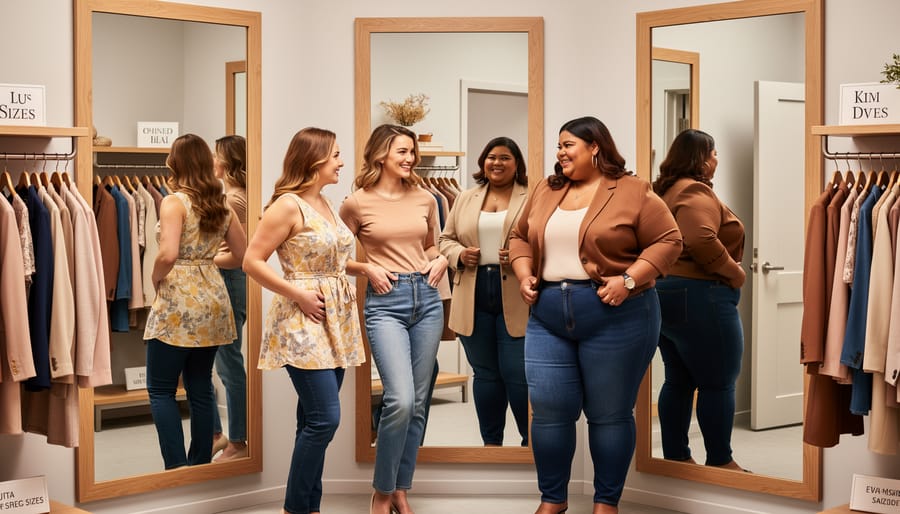
Let me be real with you: plenty of brands slap “extended sizes” on their websites and call it progress. But in 2026, there’s a clear difference between the ones genuinely designing for all bodies and those just checking a box. The brands making style accessible aren’t just adding larger numbers to tags, they’re rethinking everything from fit models to fabric choices.
Universal Standard continues to set the bar with sizes 00-40, but what really matters is how they approach design. They use multiple fit models across their size range, meaning a wrap dress actually wraps on a size 16 body the same way it does on a size 4. Eloquii takes a similar approach, designing specifically for sizes 14-28 rather than scaling up smaller sizes and hoping for the best. The difference shows in details like proportional sleeve lengths and strategic seaming that flatters rather than restricts.
Smaller brands are making noise too. Premme, founded by Gabi Gregg and Nicolette Mason, brings high-fashion aesthetics to sizes 12-30 without compromise. Their pieces mirror runway trends because they’re designed for curves from the start, not as an afterthought. ASOS’s Curve line has expanded to size 30 with genuine variety, not just basics, but statement pieces and experimental cuts.
What separates authentic commitment from marketing spin? Look at their campaign imagery. Parade features unretouched models across their entire size range. Girlfriend Collective doesn’t just include one mid-size model in the back row, they show every style on multiple body types. When brands invest in representing the full spectrum of their customers, that’s how you know they’re serious about the sizing they offer.
How to Find Clothes That Actually Fit Your Body
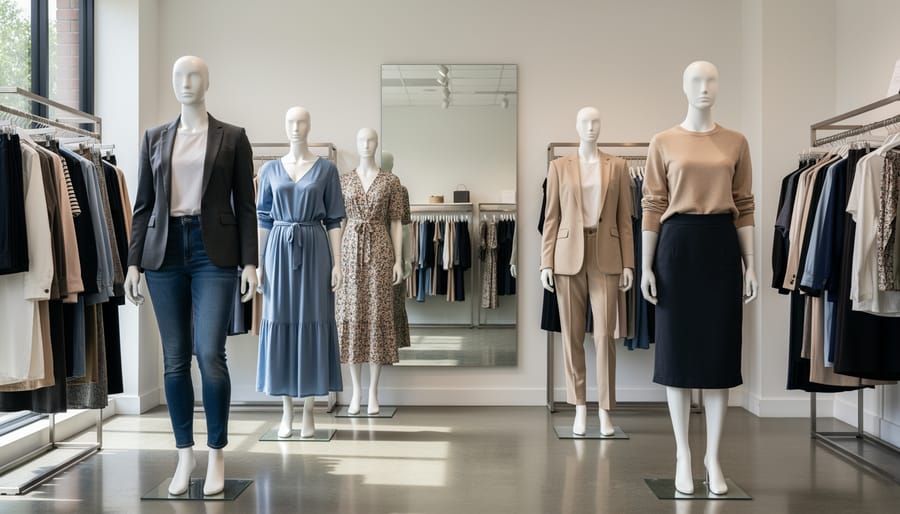
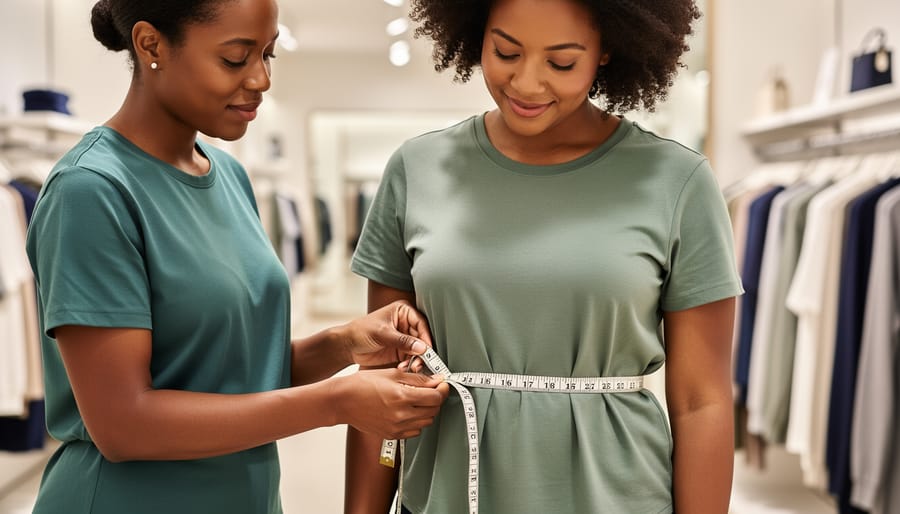
Finding clothes that actually fit your body starts with a mindset shift: the number on the label means nothing. Size 12 at one brand might be a 16 at another, and both could fit you perfectly or terribly depending on how they’re cut. The real key is measurements, your measurements, compared against each brand’s specific size chart.
Start by identifying brands that actually design for your body type rather than simply scaling up or down from a single fit model. Look for retailers that show their size charts prominently, provide detailed fit notes (like “runs small through the hips” or “generous through the bust”), and feature models of genuinely different sizes and proportions in their product photos. Real inclusive brands show you how the clothes drape and move on various bodies, not just one “token” larger size.
When you’re shopping online, read reviews obsessively, but filter them by your size range. What fits perfectly on someone who’s a 6 often has completely different fit issues than what someone who’s a 20 experiences. Pay attention to fabric content too; stretchy materials can be forgiving, but truly inclusive design shouldn’t rely on stretch alone to accommodate different bodies.
For fashion for every body shape seek out brands with size-specific design teams, not just graded patterns. The best retailers offer free returns and detailed garment measurements (not just body measurements), so you can compare a dress’s actual waist measurement to one that already fits you at home. That’s how you find clothes that feel like they were made for you, because increasingly, they actually are.
The Real Impact: Stories from Women Who Finally Found Their Style
The moment Jessica found jeans that actually fit her 6’2″ frame changed everything. “I’d spent years either squeezing into pants that were too short or drowning in styles that didn’t acknowledge I had a waist,” she tells us. “When I finally found a brand with inclusive sizing that designed for tall women specifically, I cried in the fitting room. It sounds dramatic, but that’s what representation feels like when you’ve been ignored for so long.”
Stories like Jessica’s echo across social media, fitting rooms, and friend groups everywhere. Maya, who wears a size 22, describes finally walking into a store and seeing her size hanging on racks alongside every other size. “I didn’t have to ask if they ‘carried my size’ or shop in a separate section. I was just shopping. That dignity matters.”
For Priya, a petite size 00, inclusive sizing meant brands finally acknowledging that bodies exist on both ends of the spectrum. “People assume petite women never struggle to find clothes, but I was constantly drowning in fabric or relegated to the kids’ section. Brands with true inclusive sizing understand that all bodies deserve proper fit.”
The confidence shift runs deeper than clothes. Women describe showing up differently in their careers, dating lives, and friendships when they’re not constantly aware of their bodies in uncomfortable clothing. They talk about discovering personal style for the first time at 35, or rediscovering joy in getting dressed after years of settling.
These aren’t just shopping stories. They’re about women finally seeing themselves reflected in an industry that excluded them, and the freedom that representation creates.
What True Inclusivity Still Needs to Address
We’ve come far, but let’s be real, offering a size 20 doesn’t mean much if it’s poorly designed, priced at a premium, or only shown on a size 4 model. True inclusive sizing means designing for different bodies from the start, not just grading up the same pattern. It means a 3X dress shouldn’t cost £40 more than the XS version of the same style, yet pricing inequity remains standard practice at many retailers.
Representation in marketing still lags behind the size ranges brands claim to offer. Stock availability is another frustration, extended sizes selling out instantly while smaller sizes go to sale suggests brands aren’t investing adequately in production across their full range. Accessibility intersects with sizing too, connecting with movements like adaptive fashion for every body and neurodivergent fashion standards that recognize clothing needs extend beyond numerical sizing.
Fit models, quality testing, and design considerations should include diverse bodies throughout development, not as an afterthought. The good news? Consumers are noticing these gaps and demanding better. Brands listening to this feedback will lead the next phase of inclusive sizing, where accessibility and equity become as important as the numbers on the tag.
How You Can Support and Demand Better
Your voice and your wallet are powerful tools for change. Every time you choose where to shop and how you spend, you’re casting a vote for the kind of fashion industry you want to see.
Start by putting your money where your values are. When a brand offers genuine inclusive sizing, not just a token few extended sizes, support them. Share their pieces on social media, leave honest reviews, and recommend them to friends. When brands get it wrong, tell them directly through email or social media. Be specific: “I love your designs, but your largest size won’t fit most women” hits harder than silence.
Here’s how to make real impact:
- Tag brands in posts about sizing frustrations and wins, public feedback creates pressure
- Support smaller designers building inclusivity from the ground up
- Share your measurements in reviews to help other shoppers navigate sizing
- Call out “inclusive” marketing that stops at size 16
- Amplify voices of plus-size fashion creators and advocates
Build community around this shift. Follow and engage with influencers across the size spectrum. Comment on posts from women rocking styles in bodies like yours. The more we celebrate diverse bodies wearing fashion they love, the harder it becomes for brands to ignore us.
Remember, real change happens when enough people refuse to accept less than they deserve.
Inclusive sizing represents something far bigger than fashion industry progress, it’s about reclaiming your right to express yourself exactly as you are. For too long, getting dressed felt like compromising: choosing between what fit and what felt like you, between comfort and style, between settling and feeling seen.
That era is ending. When you find clothes that actually fit your body and reflect your personal style, something shifts. You stop apologizing for taking up space. You dress for yourself, not despite yourself. The simple act of pulling on jeans that fit perfectly or a dress cut for your proportions becomes an affirmation: you belong in fashion, exactly as you are.
This isn’t about gratitude for brands finally doing what they should have done all along. It’s about celebrating your body, your style, and your presence. Every time you support a truly inclusive brand, you’re voting for a fashion world that sees and serves all women.
Your body deserves beautiful clothes. Your confidence deserves to flourish. And fashion? It’s finally catching up to what you’ve known all along: style has no size limit.
You may also like
-
What Is Fashion Journalism (and How Does It Shape the Industry)?
-
What Is Innovation in the Beauty Industry (and How Is Technology Changing It)?
-
Your Digital Footprint: What It Is, How to Manage It, and Where to Get Support
-
What Is Native American Textile Art (and How Indigenous Techniques Are Being Revived)?
-
What Is This Renewable Resource Made from Rotting Plant Material? (And How It’s Transforming Fashion)