
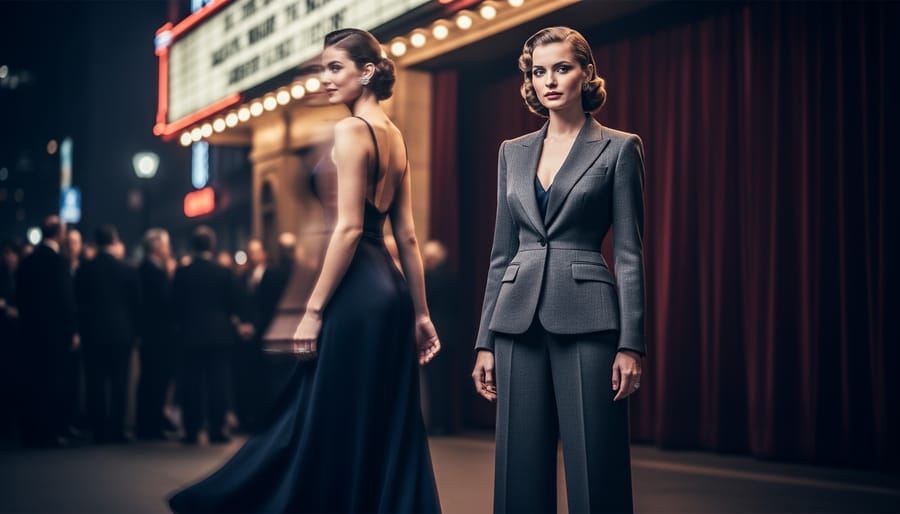
Iconic fashion moments in history are specific instances when a garment, outfit, or styling choice transcends its era to become a cultural touchstone that influences how we dress, think about identity, and express ourselves for generations to come. These aren’t just pretty outfits that happen to photograph well. They’re bold declarations that challenge norms, reflect seismic social shifts, or capture the zeitgeist so perfectly that they become visual shorthand for an entire movement or era.
What separates a memorable outfit from a truly iconic fashion moment? It’s about impact and staying power. When Katharine Hepburn wore trousers in the 1930s, she wasn’t just making a personal style choice. She was reshaping what femininity could look like on screen and in public life. When Princess Diana walked into that gala in her “revenge dress” in 1994, the world saw fashion weaponized as agency and self-expression. These moments linger because they represent something bigger than fabric and thread.
Understanding these pivotal fashion moments gives you more than historical trivia. It reveals how bold style choices can spark conversations, shift culture, and inspire your own approach to getting dressed. Throughout this article, we’ll break down what creates an iconic fashion moment, explore the different types that have shaped our collective wardrobe, and show you how these legendary looks continue to empower women today to embrace their individuality and make their own statements.
What Makes a Fashion Moment Truly Iconic
Not every striking outfit makes history. Iconic fashion moments in history occupy a unique space where clothing transcends fabric and stitching to become a cultural statement that resonates across generations. These aren’t just memorable looks, they’re visual turning points that capture the spirit of their time while continuing to influence how we dress decades later.
Four essential elements separate truly iconic fashion moments from fleeting trends:
- Cultural Resonance
- The fashion moment arrives at exactly the right cultural inflection point, tapping into broader social movements, political shifts, or collective desires that people are already feeling but haven’t yet seen visualized.
- Visual Symbolism
- The look itself carries immediate, powerful imagery that photographs translate into a universal statement, a silhouette, color, or styling choice so distinctive it becomes shorthand for an entire concept or era.
- Democratization of Style
- The message behind the fashion choice speaks to many people, not just an elite few, making it accessible enough to inspire interpretations and adaptations across different communities and economic levels.
- Legacy Influence
- The moment continues to inspire designers, stylists, and everyday dressers long after the original appearance, showing up in runway collections, street style, and popular culture decades later.
These elements work together in a specific alchemy. A suffragette wearing white in 1913 created an iconic moment not just because the dress was beautiful, but because white symbolized purity and righteousness at a precise cultural moment when women were demanding the vote, the imagery was clear enough to unite a movement, and the choice was simple enough for thousands to adopt. That legacy still echoes when protesters wear white today.
The most powerful iconic fashion moments feel both radical and inevitable, shocking in their boldness yet perfectly timed to capture what people were already starting to feel about identity, power, and possibility.
How Iconic Fashion Moments Shape Global Movements
A single fashion moment doesn’t become iconic by accident. It requires a perfect storm of visibility, timing, and cultural resonance to transform from one person’s outfit into a global movement that reshapes how millions dress.
The process starts with the spark, a celebrity wearing something unexpected, a protestor’s deliberate wardrobe choice, or a street style look that perfectly captures a brewing cultural shift. But the spark alone isn’t enough. What happens next determines whether that moment fades or becomes history.
Media amplification acts as the first accelerant. In Audrey Hepburn’s era, a single magazine cover could catapult a look into global consciousness. Today, an outfit photographed at an awards show reaches Instagram within seconds, spawning thousands of recreations before the event ends. The speed has changed, but the principle remains: widespread visibility turns a personal choice into a collective conversation. When enough people see something simultaneously, it stops being just clothing and starts becoming cultural commentary.
Celebrity influence provides credibility and aspiration. When someone already in the public eye makes a bold fashion statement, their existing platform guarantees attention. But the truly iconic moments transcend simple celebrity worship. They tap into something people already feel but haven’t yet seen expressed visually. Princess Diana’s “revenge dress” resonated because it articulated female empowerment through clothes at a moment when women everywhere were claiming their own power.
Social movements create the emotional infrastructure that sustains iconic fashion moments beyond their initial splash. The suffragettes’ white dresses mattered because they represented political action, not just aesthetics. Decades later, protestors wearing those same white ensembles created deliberate visual echoes, showing how fashion moments gain power through reinterpretation across generations.
The fashion industry’s response determines longevity. When revolutionary designers spot an emerging moment, they amplify it through runway collections, making high-fashion versions accessible to broader markets. Retailers follow, mass-producing interpretations at various price points. This commercial adoption ensures the moment doesn’t remain frozen in time but evolves into wearable reality for everyday people, completing the journey from singular occurrence to global style shift.
Categories of Iconic Fashion Moments Throughout History
Red Carpet & Celebrity Catalyst Moments
Red carpets turn clothing into cultural lightning bolts. When millions of eyes focus on a single outfit for a fleeting moment, the right look can rewrite fashion rules overnight. These aren’t just pretty dresses, they’re instant global conversations that ripple through street style, runway collections, and everyday wardrobes for years to come.
Marilyn Monroe’s white halter dress in 1955 didn’t just photograph beautifully; it crystallized an entire vision of Hollywood glamour that still influences red carpet choices today. The image became shorthand for sensuality, confidence, and star power. Decades later, when Billy Porter arrived at the 2019 Oscars in a custom tuxedo gown, he shattered the rigid gender boundaries of formal wear in a single photograph. The velvet ball gown with a structured tuxedo top sparked immediate global dialogue about masculinity, self-expression, and who gets to decide what powerful dressing looks like.
These celebrity moments work because they combine visibility, timing, and cultural readiness. The camera flashes, social media spreads the image worldwide within minutes, and suddenly what one person wore becomes a touchstone for broader movements in how we all think about clothes, bodies, and identity.
Political & Social Statement Fashion
Some fashion moments transcend aesthetics entirely, transforming garments into megaphones for social change. When suffragettes chose white dresses for their 1913 march on Washington, they weren’t making a style statement, they were crafting a visual argument for equality that cameras couldn’t ignore. The color symbolized purity of purpose, and suddenly white became armor, not decoration.
The Black Panther Party understood this power when they adopted black berets and leather jackets in the 1960s. Their uniform wasn’t fashion; it was defiance made visible, a deliberate contrast to the respectability politics that had defined earlier civil rights imagery. The look communicated strength and solidarity, influencing streetwear decades later.
Fast-forward to 2017, and the bright pink pussy hat demonstrated how quickly a garment can unite millions. Knitted by hand in living rooms worldwide, these hats turned women’s marches into seas of coordinated protest, proving that iconic fashion moments in history don’t need haute couture, they need conviction and cultural timing. These pieces work because they compress complex movements into instantly recognizable symbols that photographs carry across borders, turning individual choice into collective voice.
Street Style That Changed the Game
Sometimes fashion’s most revolutionary moments happen on sidewalks, not runways. When Vivienne Westwood and Malcolm McLaren’s punk customers tore their clothes and fastened them with safety pins in 1970s London, they created a visual language of rebellion that luxury brands still reference. Hip-hop culture’s elevation of sneakers from gym gear to status symbols reshaped the entire footwear industry, Run-DMC’s Adidas Superstars and Air Jordans became coveted collectibles worth thousands. Seattle’s grunge scene made thrift-store flannel and ripped jeans a global uniform in the early 1990s, proving that anti-fashion could become high fashion when Marc Jacobs sent grunge down the Perry Ellis runway. Street style from Tokyo’s J-fashion subcultures to New York’s ballroom scene continues to feed designer collections, demonstrating that the most influential fashion moments often emerge from communities expressing identity, not marketing departments selling trends.
Landmark Moments That Defined Decades
The Flapper Dress and Women’s Liberation (1920s)
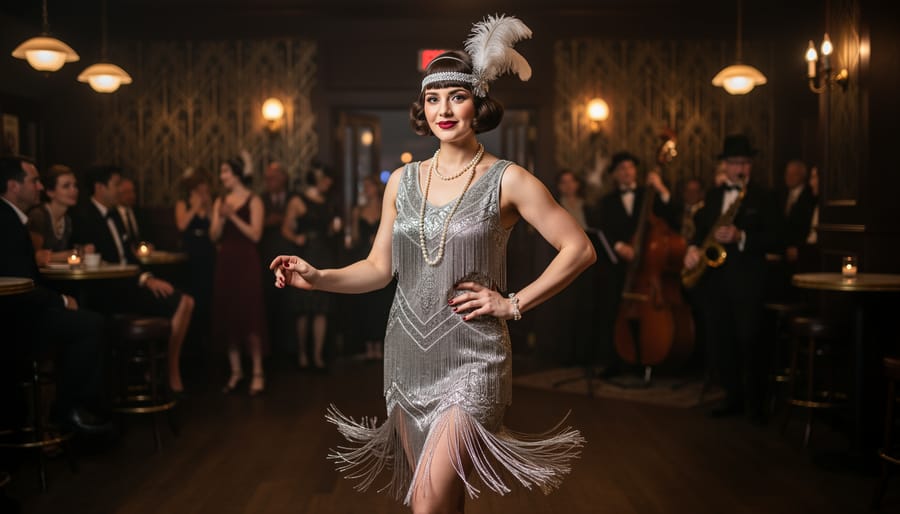
The 1920s flapper dress didn’t just shorten hemlines, it announced a revolution. When women traded corsets for loose, dropped-waist dresses that hit just below the knee, they were claiming physical freedom their mothers never had. These dresses moved with you: dancing, working, living without the restriction of cinched waists and floor-length skirts. The shift reflected seismic changes happening worldwide, women had just won the vote in many countries, were entering the workforce in unprecedented numbers, and were rejecting Victorian ideals of delicate femininity. The flapper silhouette, with its straight lines and exposed arms and legs, became a global symbol of this transformation. It said women could be modern, independent, and unapologetically themselves. This wasn’t just fashion changing, it was women’s roles in society being rewritten, one raised hemline at a time.
Dior’s New Look and Post-War Femininity (1947)
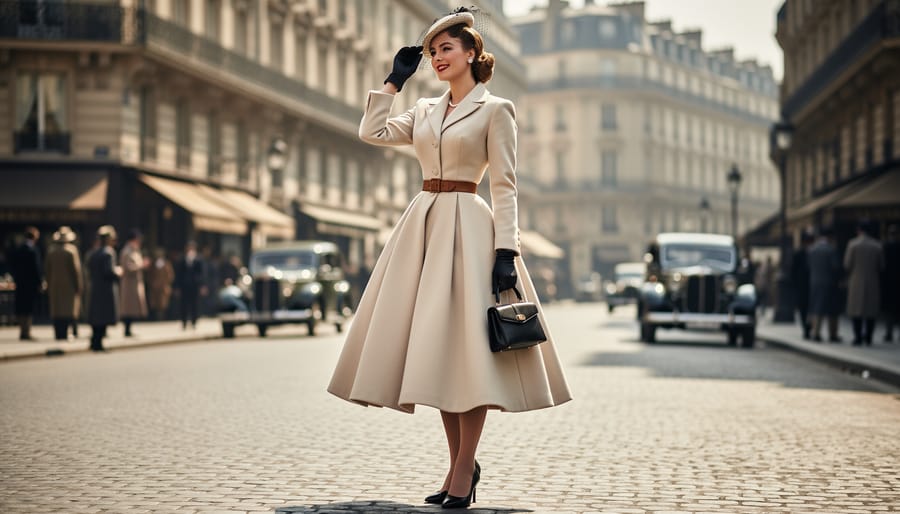
In February 1947, Christian Dior unveiled a collection that transformed global fashion overnight. His dramatically feminine silhouette, featuring nipped waists, full skirts that used yards of fabric, and soft shoulders, stood in direct contrast to the boxy, rationed clothing of the war years. British journalist Carmel Snow immediately dubbed it “the New Look,” and the name stuck. This wasn’t just about pretty dresses. After years of austerity, fabric rationing, and women working in factories wearing practical uniforms, Dior’s lavish use of material and return to curves represented a new outlook after war a conscious embrace of prosperity, femininity, and hope. Women worldwide copied the cinched waist and full skirt, whether through expensive couture or home sewing patterns. The New Look sparked both celebration and controversy (some saw it as regressive), but its influence was undeniable, reshaping fashion for the next decade and establishing the idea that clothing could signal cultural rebirth.
The Bikini’s Debut and Body Liberation (1946)
When French designer Louis Réard unveiled the bikini in Paris on July 5, 1946, he named it after Bikini Atoll, the site of recent atomic bomb tests, because he expected his creation to have an explosive cultural impact. He was right. The two-piece swimsuit, which exposed the navel and significantly more skin than any socially acceptable garment of the time, immediately sparked outrage and fascination across continents. Conservative societies banned it from beaches, the Vatican condemned it, and Spain, Italy, and Australia prohibited it in public spaces for years. Yet the bikini’s radical minimalism represented something profound: women claiming autonomy over their own bodies during a post-war era still heavily governed by rigid modesty standards. By the 1960s, when cultural attitudes shifted and celebrities like Brigitte Bardot and Ursula Andress wore bikinis onscreen, the garment transformed from scandalous to liberating. The bikini became a symbol of body confidence, personal choice, and the gradual dismantling of patriarchal dress codes that dictated how much of a woman’s body she could reveal. Today’s debates around body positivity and beach body acceptance trace their roots directly to this moment when a few triangles of fabric challenged centuries of control over women’s physical presentation.
Twiggy and the Mod Movement (1960s)
When Twiggy Lawson appeared on the cover of British Vogue in 1966, her androgynous 91-pound frame and cropped hair sparked immediate controversy, and a global fashion revolution. The 16-year-old model became the face of the Mod movement, embodying youth culture’s rejection of the hourglass curves that had dominated the previous decade. Her stick-thin silhouette made Mary Quant’s rising hemlines possible on a mass scale; the miniskirt needed a body type that read as rebellion, not sexuality, to survive moral panic. Within a year, the “Twiggy look” had crossed the Atlantic, with American teenagers painting on her signature doe eyes and buying shift dresses that hung straight from the shoulders. This wasn’t just a new beauty standard, it was a visual declaration that young women would define themselves on their own terms, not their mothers’. The shift challenged both fashion’s reliance on mature, curvaceous bodies and society’s expectations of how women should present themselves, making youth and movement the new markers of modern femininity.
Punk Safety Pins and DIY Rebellion (1970s)
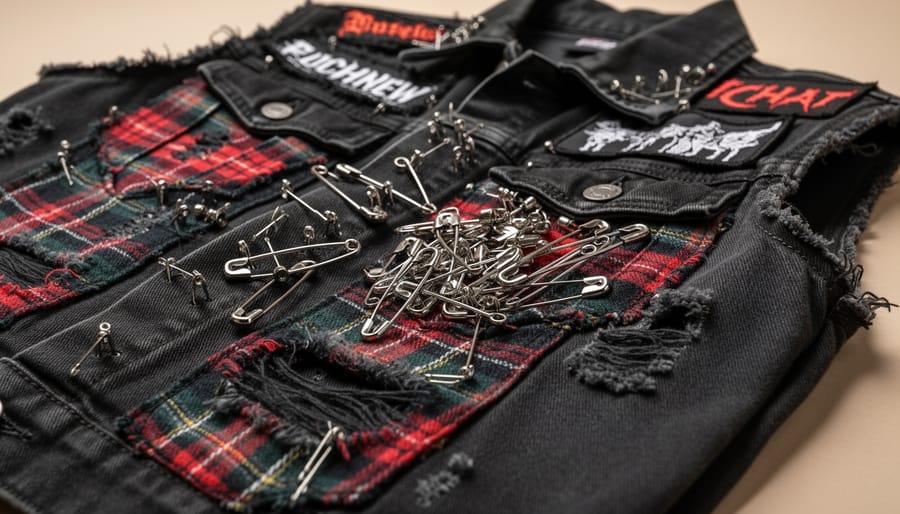
The 70s fashion revolution reached its most defiant peak when Vivienne Westwood transformed London’s King’s Road into ground zero for punk style. Her shop SEX sold torn T-shirts held together with safety pins, bondage trousers, and deliberately ripped fabrics that mocked fashion’s obsession with perfection. What began as a small subculture exploded globally after the Sex Pistols appeared on television in 1976, turning aggressive DIY aesthetics into an international language of youth rebellion. The DIY rebellion 70s punk embodied spread from London clubs to Tokyo streets to American suburbs, proving that intentionally destroyed clothing could carry as much cultural power as couture. Today’s distressed denim, safety pin accessories, and deconstructed fashion all trace their DNA to punk’s radical idea that imperfection itself could be beautiful.
Princess Diana’s Revenge Dress (1994)

On June 29, 1994, Princess Diana attended the Serpentine Gallery summer party in a form-fitting black off-the-shoulder dress by Christina Stambolian, a deliberate departure from her usual soft, demure style. The timing was no accident: that same evening, Prince Charles publicly admitted his infidelity in a televised documentary. Diana’s choice transformed a cocktail dress into armor, a visual declaration that she would not be diminished by scandal or betrayal. Photographers captured her radiant smile and confident posture, and the image circulated worldwide within hours, cementing the dress as the “Revenge Dress” in popular culture. Women everywhere recognized the gesture, using appearance not for vanity but as a reclamation of power and self-worth. The moment redefined how we understand fashion as communication, proving a single outfit could shift public narrative and inspire millions to dress for themselves, not for approval.
How These Moments Continue to Influence Fashion Today
Historic fashion moments don’t just live in museum exhibits or coffee table books, they’re alive and thriving in our wardrods right now. Designers continually mine these pivotal looks for inspiration, translating bold statements from decades past into contemporary collections. Virgil Abloh famously reinterpreted Princess Diana’s sporty-chic combinations for Off-White, while Miuccia Prada regularly channels the mod sensibility of the 1960s into modern silhouettes. These aren’t mere copies; they’re conversations across time, remixing iconic elements with fresh perspectives that speak to today’s cultural moment.
The vintage fashion influence extends beyond designer runways into everyday style choices. Thrift culture has exploded, partly because wearing authentic pieces from transformative fashion eras connects us directly to their rebellious spirit. A genuine 1970s band tee or 1990s slip dress carries cultural weight that reproductions can’t quite capture. Social media amplifies this connection, TikTok challenges recreating Audrey Hepburn’s little black dress or Madonna’s punk-meets-glamour looks introduce younger generations to these moments while adding personal twists that reflect current values around body positivity and gender fluidity.
These historic moments also fuel contemporary movements in unexpected ways. The punk DIY ethos now informs sustainable fashion practices, as creators customize and upcycle clothing rather than buying new. The body liberation sparked by moments like the bikini’s debut shapes today’s conversations around inclusive sizing and diverse representation. Meanwhile, the political statement fashion of suffragettes and civil rights activists provides a blueprint for modern designers and wearers using clothing to advocate for social justice.
- Designer collections featuring direct references to landmark looks, Dior’s Bar jacket reinterpretations or Chanel’s ongoing tweed variations
- Vintage market boom as shoppers seek revived iconic styles with authentic cultural connections
- Social media recreations bringing historic moments to new audiences through modern styling challenges
- Empowerment messaging that frames bold fashion choices as continuation of decades of sartorial courage
What makes these influences particularly powerful in 2026 is how they’ve democratized. You don’t need a designer budget to channel Katharine Hepburn’s trouser revolution or the grunge movement’s anti-fashion stance. The lessons from these moments, dress for yourself, challenge norms, let your clothes tell your story, remain accessible to anyone willing to embrace them. Each time you choose an outfit that feels authentically you rather than safe or expected, you’re participating in the same tradition of fashion as self-expression that made these historic moments iconic in the first place.
Common Questions About Iconic Fashion Moments
What’s the difference between a fashion trend and an iconic moment?
A trend is temporary, a style that gains popularity and then fades within months or years. An iconic fashion moment transcends its era, creating lasting cultural impact and continuing to inspire decades later. While trends dictate what’s in season, iconic moments reshape how we think about clothing, identity, and self-expression.
Do I need to be famous to create an iconic fashion moment?
Not at all. While celebrity moments often gain widespread visibility, some of history’s most influential fashion shifts began with everyday people, punk culture emerged from London streets, hip-hop style originated in the Bronx, and modest fashion movements have been shaped by communities worldwide. Your authentic style choices contribute to fashion’s evolving story, especially when they reflect genuine self-expression or cultural identity.
How can I incorporate historic fashion inspiration into my everyday style without looking costume-y?
Focus on adapting elements rather than recreating entire looks. Borrow the spirit, a 1920s flapper’s confidence, a punk’s DIY ethos, Princess Diana’s polished rebellion, and translate it through modern pieces. Pair a vintage-inspired silhouette with contemporary accessories, or take a historical color palette and apply it to current cuts. The goal is to let these moments inspire your personal expression, not to become a period reenactment.
Why do certain fashion moments resonate across different cultures?
The most powerful fashion moments tap into universal desires, freedom, identity, belonging, or resistance, that transcend geographic boundaries. When a look embodies something people worldwide are feeling but haven’t yet articulated, it becomes a visual language anyone can adopt and adapt to their own context.
Understanding these distinctions helps you engage with fashion history on your own terms. You’re not just consuming these moments as nostalgia or aspiration, you’re recognizing them as part of an ongoing conversation about who we are and how we choose to show up in the world. Every time you make a deliberate style choice that feels authentically you, especially one that challenges expectations or celebrates your identity, you’re participating in that same tradition of using clothing as personal and cultural expression.
How Iconic Fashion Moments in History Is Used
Fashion professionals and enthusiasts use iconic fashion moments in history as a practical toolkit for inspiration, education, and creative direction. Designers regularly reference these moments when developing new collections, you’ll see Dior’s Bar Jacket silhouette reinterpreted season after season, or punk’s safety-pin aesthetic reimagined in luxury contexts. Stylists pull from this archive when dressing clients for significant events, drawing on the visual power of Princess Diana’s revenge dress or Bianca Jagger’s white suit to craft modern statements.
Educators and historians use these moments to teach broader cultural narratives, showing how fashion reflects societal shifts in gender roles, politics, and identity. Fashion writers analyze them to contextualize current trends and predict future directions. On social media, creators recreate iconic looks to connect with audiences, while everyday women use these moments as mood boards for personal style evolution, borrowing the confidence of a power suit or the rebellion of grunge.
Museums curate exhibitions around these pivotal moments, preserving them as cultural artifacts. Marketing teams reference them in campaigns to tap into collective memory and emotional resonance. Even sustainability advocates point to these lasting moments as evidence that truly meaningful fashion transcends fast trends, encouraging investment in pieces with staying power.
Iconic fashion moments in history prove that what we wear is never just about fabric and cut. Each bold choice, from a flapper’s hemline to a street-style innovator’s remix of vintage pieces, becomes part of a larger cultural conversation. These moments document who we were, who we’re becoming, and what we refuse to accept as unchangeable.
You’re not just witnessing this evolution from the sidelines. Every time you choose an outfit that feels authentically you, especially when it challenges expectations or breaks from convention, you’re adding your voice to this ongoing story. The courage it took to wear the first miniskirt or safety-pin a punk jacket is the same courage you tap into when you wear what makes you feel powerful, regardless of the rules.
Fashion history isn’t locked in museum archives. It’s unfolding right now, shaped by the collective choices of women who refuse to let trends, industries, or outdated norms dictate their self-expression. Your wardrobe is your statement, your armor, your art. Wear it like the historical record it will become.
You may also like
-
What Is Fashion Journalism (and How Does It Shape the Industry)?
-
What Is Innovation in the Beauty Industry (and How Is Technology Changing It)?
-
Your Digital Footprint: What It Is, How to Manage It, and Where to Get Support
-
What Is Native American Textile Art (and How Indigenous Techniques Are Being Revived)?
-
What Is This Renewable Resource Made from Rotting Plant Material? (And How It’s Transforming Fashion)