
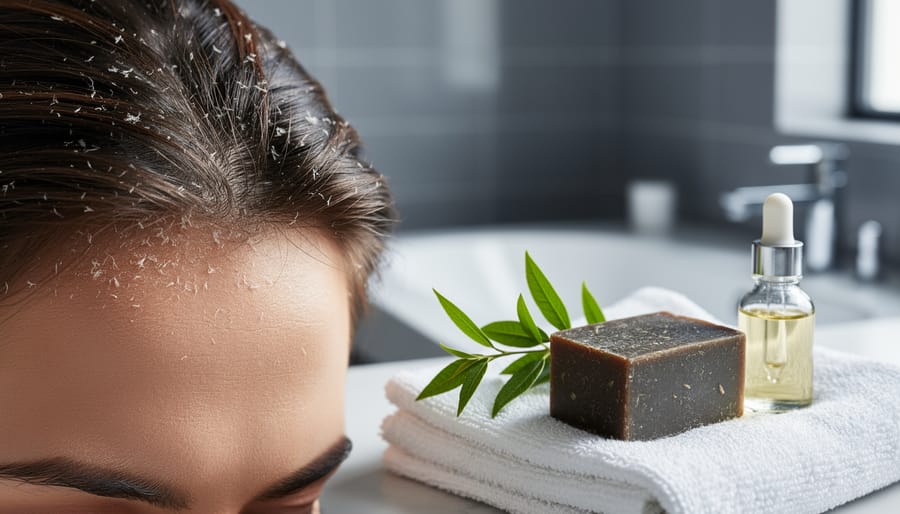
Natural anti-dandruff soaps can effectively treat mild to moderate dandruff for many people, especially when flakes are caused by product buildup, sensitivity to harsh chemicals, or an overly dry scalp. They work by gently cleansing without stripping your scalp’s natural oils, using ingredients like tea tree oil, neem, aloe vera, and activated charcoal to soothe irritation and reduce flaking. Conventional anti-dandruff shampoos, on the other hand, rely on active medicinal ingredients like zinc pyrithione or ketoconazole to target fungal overgrowth and severe scalp conditions, making them more powerful for persistent or stubborn cases.
The choice between the two really comes down to understanding your scalp. If you’re dealing with occasional flakes, product sensitivity, or simply want a cleaner ingredient list that aligns with your values, natural soap bars offer a beautiful, eco-friendly solution. But if you’re battling chronic dandruff, intense itching, or visible scalp inflammation, you’ll likely need the stronger formulation that medicated shampoos provide.
Here’s the truth that beauty brands won’t always tell you: natural doesn’t automatically mean better for everyone, and synthetic doesn’t mean harmful. Your scalp is as individual as your style, and what works for your best friend might leave you scratching (literally). Understanding the science behind both options gives you the power to choose what genuinely serves your hair health, not just what’s trending. Whether you’re exploring شامبو للقشرة or natural alternatives, the right solution celebrates what your scalp actually needs.
Understanding What’s Really Happening on Your Scalp
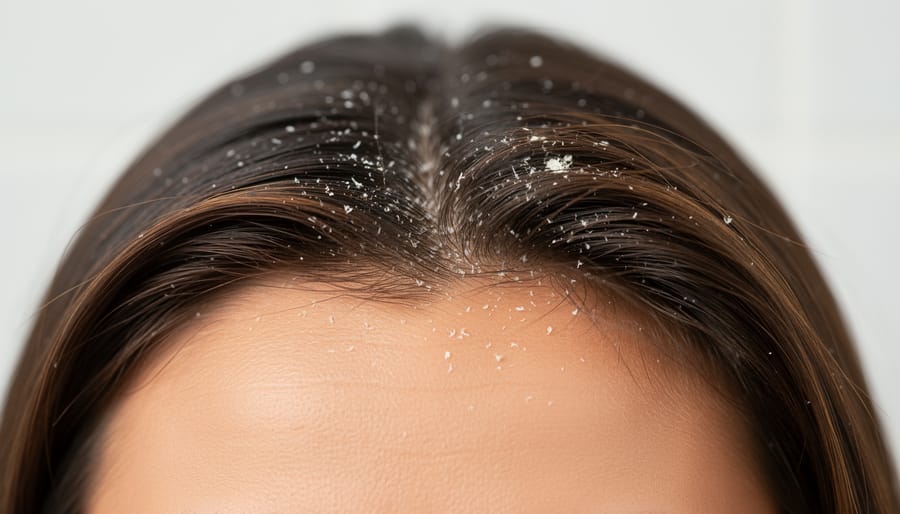
Those white flakes on your shoulders aren’t just annoying, they’re your scalp’s way of telling you something’s off. But before you grab the nearest bottle promising flake-free perfection, it’s worth understanding what’s actually happening up there, because not all flakes are created equal.
True dandruff, medically known as seborrheic dermatitis, happens when a yeast-like fungus called Malassezia goes into overdrive. This fungus lives on everyone’s scalp, feeding on the natural oils your skin produces. For some people, it multiplies too quickly, irritating the skin and speeding up cell turnover. Your scalp sheds skin cells faster than normal, and they clump together with oils to form those visible flakes. These flakes tend to be yellowish or white, slightly greasy, and often come with redness or itchiness.
Dry scalp, on the other hand, is exactly what it sounds like. Your skin isn’t producing enough moisture, so it gets tight, flaky, and irritated, similar to dry skin anywhere else on your body. The flakes are typically smaller, drier, and your scalp might feel rough or look dull.
Why does this distinction matter? Because treating dry scalp with harsh anti-dandruff formulas can make things worse by stripping away more moisture. Meanwhile, gentle natural soap might not pack enough punch to tackle stubborn fungal dandruff. Understanding your specific situation isn’t just beauty nerd territory, it’s the foundation for actually solving your scalp concerns instead of playing product roulette.
The Case for Anti-Dandruff Shampoo
Anti-dandruff shampoos earned their spot on bathroom shelves for good reason, they’re formulated with specific ingredients designed to tackle the root causes of those persistent flakes. If you’ve been dealing with stubborn dandruff that just won’t quit, understanding what these products actually do can help you decide if they’re right for your scalp.
The powerhouse behind most anti-dandruff shampoos is their active ingredients. Zinc pyrithione fights the yeast that triggers flaking, while ketoconazole goes even harder against fungal overgrowth. You’ll also find selenium sulfide, which slows down skin cell turnover on your scalp, and coal tar, which reduces inflammation and scaling. Salicylic acid works differently by breaking down existing flakes so they wash away more easily. These aren’t just marketing buzzwords, they’re clinically tested ingredients that target specific scalp issues.
These shampoos shine brightest when you’re dealing with moderate to severe dandruff, especially the kind caused by Malassezia, the yeast that lives on everyone’s scalp but sometimes overstays its welcome. If natural remedies haven’t cut it, or if you’re seeing thick, yellowish flakes rather than fine white ones, anti-dandruff formulas might be exactly what your scalp is asking for.
Who benefits most? People with oily scalps often see fantastic results because the active ingredients control the excess sebum that yeast loves to feed on. If you live in a humid climate where fungal conditions thrive, these targeted treatments can be game-changers. They’re also ideal when you need results quickly, many people notice improvement within a week or two of consistent use.
Choosing an anti-dandruff shampoo doesn’t mean you’re giving up on gentler approaches forever. It means you’re listening to what your scalp needs right now and responding with a solution that’s backed by research and results.
The Natural Soap Revolution for Your Hair
Natural soap has sparked a genuine revolution in hair care, and it’s easy to see why so many of us are drawn to it. If you’ve been exploring beauty ethics and questioning what we put on our bodies, natural soaps align beautifully with that mindful approach. These plant-based cleansers strip away the mystery ingredient lists and offer something refreshingly straightforward: simple, botanical formulas that have cleaned hair and scalp for generations.
What makes natural soap compelling isn’t just what it includes, but what it leaves out. You won’t find sulfates, parabens, synthetic fragrances, or artificial colors here. Instead, you get oils like coconut, olive, and castor combined with natural hair ingredients that actually support scalp wellness. Tea tree oil brings powerful antimicrobial properties that can address the fungal issues behind many dandruff cases. Neem, celebrated in traditional medicine, soothes inflammation and fights scalp irritation. Rosemary stimulates circulation, while lavender calms sensitivity.
The gentle cleansing action is where natural soap really shines for those with reactive scalps. These formulas clean without stripping every bit of your scalp’s natural oils, which means less dryness and often less rebound oil production. Your scalp learns to regulate itself rather than constantly playing catch-up with harsh detergents.
There’s also something empowering about the eco-friendly angle. Natural soaps typically come with minimal packaging, biodegrade easily, and don’t contribute synthetic chemicals to waterways. For many of us, that alignment between personal care and environmental care matters deeply.
The transition does require patience. Your hair might feel different initially as it adjusts from silicone-coated smoothness to its natural texture. Some people experience a brief adjustment period where things feel waxier or greasier before balancing out. But for those willing to embrace that journey, natural soap offers a return to simplicity that feels both revolutionary and deeply rooted in beauty traditions that have always worked.
Head-to-Head: How They Actually Compare
Let’s get real about what each option brings to your hair care routine. The best choice isn’t about one being universally better, it’s about what aligns with your scalp’s needs and your personal values.
| Criteria | Anti-Dandruff Shampoo | Natural Soap |
|---|---|---|
| Effectiveness for Severe Dandruff | High, targets fungal causes directly | Moderate, works best for mild cases |
| Gentleness on Scalp | Varies, some formulas can be drying | Generally gentle, maintains natural oils |
| Environmental Impact | Higher, synthetic ingredients, plastic packaging | Lower, biodegradable, minimal packaging |
| Price Range | $8-25 per bottle | $6-18 per bar |
| Best For | Persistent flakes, oily scalp, fungal dandruff | Sensitive skin, dry scalp, prevention |
When it comes to tackling stubborn, recurring dandruff caused by Malassezia yeast, anti-dandruff shampoos have the scientific edge. Their active ingredients like zinc pyrithione and ketoconazole are specifically designed to combat this root cause. You’ll typically see results within two to four weeks of consistent use. Natural soaps shine in gentleness and prevention, making them ideal if you’re dealing with occasional flaking from dryness rather than a chronic fungal issue.
Ingredient safety is where personal priorities come into play. Anti-dandruff formulas often contain sulfates and synthetic preservatives that some people prefer to avoid, though they’re generally considered safe by dermatologists. Natural soaps lean on botanical ingredients like tea tree oil, coconut oil, and neem, which appeal to anyone building a clean beauty routine. The trade-off is that natural options may lack the concentrated active ingredients needed for severe cases.
From an environmental standpoint, natural soaps win hands down. They typically come in minimal, recyclable packaging and break down more easily in water systems. Anti-dandruff shampoos, while effective, contribute more to plastic waste and contain ingredients that don’t biodegrade as readily.
Cost-wise, they’re fairly comparable, though natural soap bars often last longer than liquid shampoos, potentially offering better value over time. Ease of use goes to anti-dandruff shampoo if you’re already comfortable with traditional hair washing routines, while natural soap requires a slight learning curve, especially understanding how to rinse thoroughly to avoid residue.
Finding Your Perfect Match
Your scalp is as unique as your personal style, and choosing between anti-dandruff shampoo and natural soap isn’t about right or wrong, it’s about what works for you right now.
If you’re dealing with persistent, thick flakes, scalp redness, or itching that doesn’t quit, anti-dandruff shampoo with proven active ingredients is likely your strongest ally. This is especially true for medium to severe dandruff caused by fungal overgrowth. Your scalp is sending clear signals, and targeted treatment answers them.
Natural soap shines for those with mild flaking, dry scalp, or sensitivity to synthetic ingredients. If you value smart beauty shopping aligned with eco-conscious values, or if your scalp reacts badly to sulfates and parabens, natural formulations offer gentle cleansing without the harsh chemical load.
Your hair texture matters too. Coily and textured hair often benefits from the moisturizing properties of natural soaps, while fine hair prone to oiliness might need the deeper cleansing power of anti-dandruff shampoo. There’s no universal formula, your hair’s needs are valid, whatever they are.
Consider your lifestyle honestly. Do you want a quick, targeted solution, or are you willing to experiment with natural options that might take longer to show results? Both paths are beautiful.
The most empowering approach? Listen to your body. Start with what feels right based on your scalp’s current condition, give it three to four weeks, and adjust from there. You might even alternate between both, using anti-dandruff shampoo when flakes flare up and natural soap for maintenance. Your scalp health journey is yours to design.
Real Talk: What to Expect and When to Switch
Let’s be honest: neither anti-dandruff shampoo nor natural soap works overnight. Most people notice initial improvements within one to two weeks, but real transformation takes a solid month of consistent use. If you’re trying a new approach, commit to at least four weeks before deciding it’s not your match.
Watch for these positive signs: fewer flakes on your shoulders, less itching between washes, and your scalp feeling balanced rather than tight or oily. If you’re seeing gradual improvement, stay the course, scalp healing isn’t linear.
Time to switch? If your dandruff worsens after three weeks, you develop new irritation, or you see no change whatsoever after six weeks of proper use, try the alternative. Sometimes anti-dandruff shampoo users find it stops working after months of success, your scalp might need a break or a different active ingredient. Natural soap enthusiasts might discover their gentle approach isn’t tackling a stubborn fungal issue that needs targeted treatment.
See a dermatologist if you experience severe itching, bleeding, thick crusting, or if dandruff spreads beyond your scalp. Red, inflamed patches or hair loss also warrant professional attention. And honestly? There’s zero shame in getting expert help, ingredient safety and effectiveness matter, but so does your scalp’s health. Finding what works is a journey worth taking, not a test you can fail.
Making It Work: Application Tips for Both Options
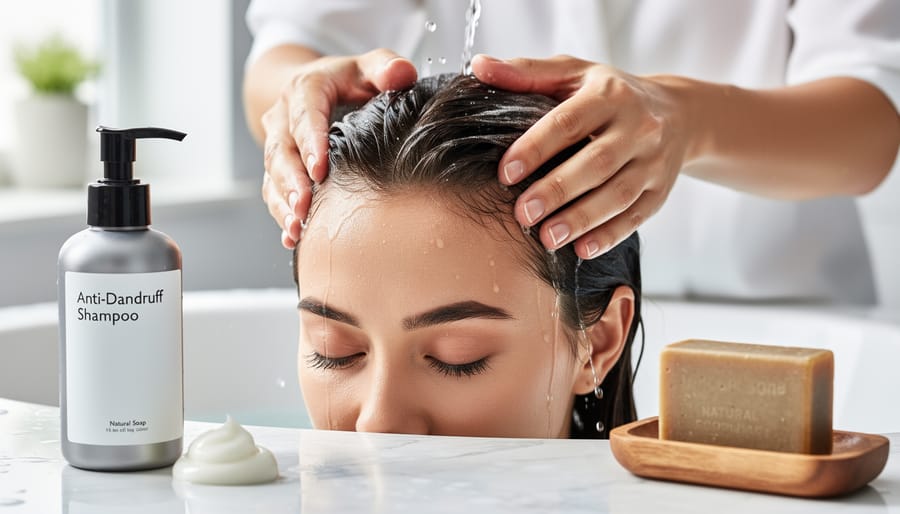
Getting the most from your chosen scalp treatment isn’t just about what you use, it’s about how you use it. Whether you’ve decided on anti-dandruff shampoo or natural soap, these application techniques can make all the difference between lackluster results and a genuinely healthier scalp.
The Five-Step Application Method for Maximum Impact
Here’s how to transform your routine into a proper treatment:
- Wet your hair thoroughly with lukewarm water for at least 30 seconds to open follicles and prepare your scalp.
- Apply your chosen product directly to your scalp, not your hair lengths, using fingertips rather than nails.
- Massage in circular motions for a full two to three minutes, paying extra attention to areas where flakes tend to appear.
- Let the product sit for three to five minutes before rinsing to allow active ingredients (in shampoo) or botanical compounds (in soap) to work their magic.
- Rinse completely with cool water to seal the hair cuticle and remove all product residue that could cause buildup.
Frequency matters too. Anti-dandruff shampoos typically work best when used two to three times weekly, with a gentle cleanser on other days. Natural soaps can be gentler, allowing for more frequent use if your scalp tolerates it well.
The biggest mistake? Scrubbing aggressively or using water that’s too hot. Both can irritate your scalp and worsen flaking. Think of application as a soothing scalp massage, not a vigorous scrub session. And always follow with a lightweight conditioner on your hair ends only, keeping it away from your scalp to avoid clogging pores or adding excess oil where you don’t need it.
You’ve got all the facts now, and that’s what matters most. Whether you lean toward anti-dandruff shampoo or embrace natural soap, you’re making a choice that honors your unique scalp, your values, and your beauty vision. There’s genuine power in understanding what your body needs instead of blindly following trends or marketing hype.
Your scalp health journey is personal, and it deserves the same bold experimentation you bring to your style choices. What works brilliantly for your best friend might not click for you, and that’s perfectly okay. Pay attention to how your scalp responds, trust your instincts, and don’t hesitate to switch things up if something isn’t serving you.
Remember, healthy hair starts at the roots, but your confidence radiates from so much more than what’s happening on your scalp. This is just one piece of your beauty routine, one element of how you present yourself to the world. So choose what makes you feel amazing, experiment fearlessly, and celebrate the fact that you’re taking charge of your beauty on your own terms.
You may also like
-
Guide to Hair Salons in Winter Garden, Florida: Top Picks, Services, and Local Tips
-
What Is a Japanese Head Spa (and What Rituals Are Involved)?
-
How to Choose Personalized Wedding Gifts: A Buying Guide for 2026
-
How to Achieve a Flawless Look with Minimal Makeup
-
15 Mother’s Day 2026 Fashion & Gift Ideas for the Stylish Mom