
Improving your skin microbiome comes down to three core strategies: protecting the beneficial bacteria already living on your skin, feeding them with prebiotics, and avoiding harsh products that strip your skin’s natural balance. In most cases, you’ll see noticeable improvements in texture, hydration, and overall skin clarity within four to six weeks of adjusting your routine.
Your skin is home to trillions of microorganisms that form a living shield against environmental stressors, regulate moisture, and even influence how your skin ages. When this ecosystem falls out of balance (often due to over-cleansing, aggressive treatments, or a disrupted skin barrier), you might notice increased sensitivity, breakouts, dryness, or dullness. The good news? Rebalancing your microbiome isn’t about adding ten new products to your shelf. It’s about working with your skin’s natural intelligence.
Think of your skin microbiome like a thriving garden. You wouldn’t douse it with bleach daily and expect flowers to bloom. The same logic applies here. Modern skincare has taught us that squeaky-clean skin equals healthy skin, but that approach often does more harm than good. The bacteria, fungi, and other microorganisms living on your skin aren’t invaders to eliminate. They’re collaborators that deserve respect and care.
This guide walks you through everything you need to support a flourishing skin microbiome, from selecting the right cleansers and serums to understanding which ingredients feed beneficial bacteria and which ones throw your ecosystem into chaos. You’ll learn how to spot signs your microbiome needs attention and how to build a routine that works with your skin, not against it.
What You’ll Need: Products and Ingredients That Support Your Skin Microbiome
Building a microbiome-friendly routine doesn’t require a complete skincare overhaul or breaking the bank. The key is choosing products that work with your skin’s natural ecosystem rather than against it. Think of these essentials as investments in your skin’s long-term health, and the good news is that effective options exist at every price point.
- Gentle, pH-balanced cleansers (look for 4.5-5.5 pH and sulfate-free formulas)
- Prebiotic products containing ingredients like inulin, oligosaccharides, or oat extract
- Probiotic skincare with live cultures or fermented extracts like lactobacillus or bifida
- Postbiotic serums featuring fermented ingredients such as galactomyces or saccharomyces
- Barrier-supporting moisturizers rich in ceramides, fatty acids, and niacinamide
- Non-stripping hydrators with hyaluronic acid or glycerin that maintain moisture balance
When shopping, scan ingredient lists for terms like “ferment filtrate,” “probiotic complex,” or “prebiotic fiber.” These signal microbiome-aware formulations. You’ll also want to avoid harsh sulfates (SLS, SLES), antibacterial agents like triclosan, and products with extreme pH levels that disrupt bacterial balance.
The beauty of microbiome skincare is that it aligns perfectly with biomimicry skincare principles, working with your body’s natural processes rather than fighting them. Start with one or two core products like a gentle cleanser and a prebiotic moisturizer. Drugstore brands now offer surprisingly effective options, so you don’t need luxury prices to access this technology.
Focus on products that feel good on your skin and fit your lifestyle. A simple, consistent routine beats an elaborate one you’ll abandon. Your microbiome thrives on consistency and gentleness, not complexity.
Important Cautions: What Harms Your Skin Microbiome
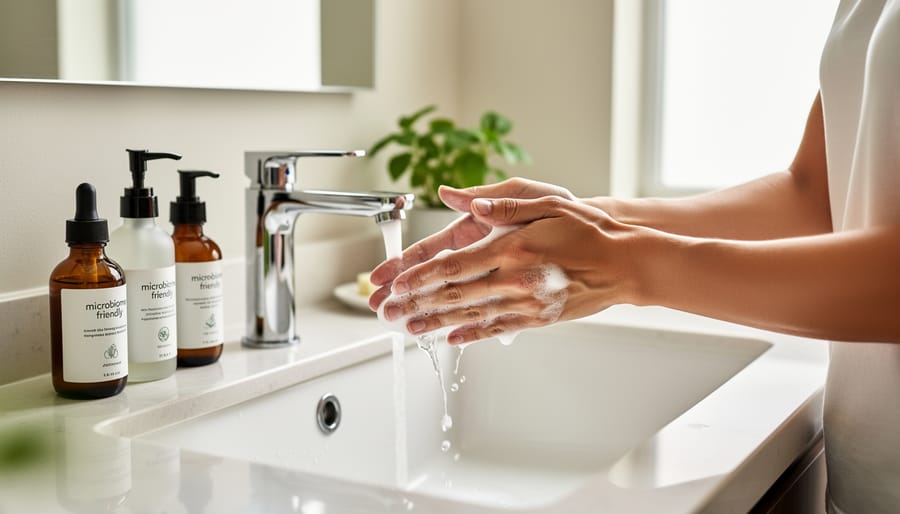
Before you can build a microbiome-friendly routine, you need to know what’s silently sabotaging your skin’s bacterial ecosystem. These common skincare habits might feel productive or even luxurious, but they’re actually working against your skin’s natural defenses.
Over-cleansing is one of the biggest culprits. Washing your face excessively removes the natural oils and bacteria that form your skin’s protective barrier. Research shows harsh soap disrupts microbes and reduces the diversity of your skin’s bacterial community, leaving it vulnerable to inflammation and irritation. Stick to cleansing morning and night unless you’ve exercised heavily.
Physical scrubs and aggressive chemical exfoliants (think daily glycolic acid peels) physically and chemically destroy the delicate microbial layer alongside dead skin cells. While controlled exfoliation can be beneficial, overdoing it creates a hostile environment for the bacteria trying to colonize your skin. Scale back to once or twice weekly at most.
Antibacterial soaps and hand sanitizers belong on your hands when needed, not on your face. These products are designed to kill bacteria indiscriminately, meaning they eliminate the good alongside the bad. Similarly, products with extreme pH levels (highly alkaline cleansers or overly acidic toners below pH 3) create conditions where beneficial microbes can’t survive.
Even beloved actives like retinol, vitamin C, and acids require moderation. Layering multiple active ingredients daily without giving your skin recovery time can overwhelm the microbiome’s ability to regenerate. You don’t need to abandon these treatments entirely, but strategic application matters more than aggressive daily use.
Some emerging ingredients, including certain formulations of nanotechnology makeup may also interact with skin bacteria in ways we’re still studying. The key is balance, not perfection. Your skin microbiome is resilient and wants to support you, it just needs you to stop accidentally sabotaging it.
Step-by-Step: Building Your Microbiome-Friendly Skincare Routine
Step 1: Simplify and Reset Your Current Routine
Start by hitting pause on your current skincare lineup. For the next 2-4 weeks, you’ll use only three essentials: a gentle cleanser, a simple moisturizer, and SPF during the day. This reset period gives your skin’s microbiome breathing room to rebalance after years of potential disruption.
Remove products containing harsh sulfates, antibacterial agents, alcohol denat, and strong actives like retinol or AHAs. Check your bathroom shelf right now and set aside anything that stings, tingles excessively, or leaves your skin feeling tight. That squeaky-clean sensation? It’s actually stripping away protective bacteria your skin needs.
During this reset, your skin might feel different, maybe less “perfectly clean” than you’re used to. That’s normal. You’re allowing your natural ecosystem to recalibrate. Some people notice improvements within days, while others need the full month. Trust the process.
Keep it simple, consistent, and gentle. Your skin’s microbiome has survived disruption before, and it’s ready to thrive again.
Step 2: Choose a Gentle, pH-Balanced Cleanser
Your cleanser sets the foundation for everything else in your microbiome routine, so choosing wisely here makes all the difference. Look for formulas that sit within the skin’s pH optimal range 4.5-5.5 which mirrors your skin’s natural acidity and keeps beneficial bacteria thriving. Scan ingredient lists for gentle surfactants like decyl glucoside or coco-betaine instead of sulfates, which can strip away the protective lipid layer your microbiome needs.
Hydrating additions matter too, seek out glycerin, ceramides, or hyaluronic acid to maintain moisture while you cleanse. When you wash your face, use lukewarm water (never hot, which disrupts the barrier) and work the cleanser in soft, circular motions for 30-60 seconds. Rinse thoroughly but don’t scrub aggressively. One cleanse in the evening is usually enough; morning rinses with just water work beautifully for most skin types and preserve the overnight bacterial balance. You’ll know you’ve found the right cleanser when your skin feels clean but never tight or squeaky, that stripped sensation is actually your microbiome crying out for gentler treatment.
Step 3: Incorporate Prebiotic and Probiotic Products
Once you’ve established a solid cleansing foundation, it’s time to actively feed and replenish your skin’s beneficial bacteria. Start with just one prebiotic or probiotic product, not both at once. Prebiotics tend to be gentler for beginners since they nourish existing bacteria rather than introducing new strains, making them ideal if your skin is sensitive or reactive.
Apply your chosen product to clean, slightly damp skin before heavier treatments. Probiotic serums work best on freshly cleansed skin, while prebiotic essences can layer under your regular routine. Give each new product at least two weeks before adding another microbiome-focused treatment. Your skin needs time to respond and rebalance.
You’ll likely notice calmer, more resilient skin within three to four weeks, fewer random breakouts, less redness after cleansing, and improved texture. Some people see results faster, especially if they’re transitioning from harsh routines. Don’t panic if you experience minor purging initially; it’s often your skin’s ecosystem recalibrating, though persistent irritation means you should slow down or switch products.
Step 4: Layer in Postbiotic Serums and Treatments
Postbiotics are the metabolic byproducts that probiotics create as they ferment, think of them as the beneficial compounds your skin bacteria naturally produce. In skincare, this translates to fermented ingredients like fermented rice water, kombucha, lactobacillus ferment, and bifida ferment filtrate. These deliver ready-made nutrients that calm inflammation, strengthen your barrier, and support the good bacteria already living on your skin.
Start by introducing one postbiotic serum after your prebiotic or probiotic product but before your moisturizer. Apply it to slightly damp skin for better absorption. Korean and Japanese beauty brands have pioneered this category, look for essences or serums featuring fermented ingredients high on the ingredient list.
You can layer multiple fermented products if your skin tolerates them well, but begin with one every other night. Most people notice a plumping effect and reduced redness within two weeks. These products play beautifully with other microbiome-friendly ingredients and rarely cause irritation, making them an accessible entry point for anyone curious about fermented skincare.
Step 5: Seal with Microbiome-Supporting Moisture

Your final step locks in all the microbiome-friendly work you’ve done so far. A good moisturizer creates a protective seal that prevents moisture loss while delivering nutrients to your beneficial bacteria. Look for formulas with ceramides, fatty acids, and ingredients like squalane or jojoba oil that mimic your skin’s natural lipids, these reinforce the barrier without suffocating it.
Humectants like hyaluronic acid and glycerin pull water into your skin, creating a hydrated environment where helpful microbes thrive. For extra barrier support, consider products with CICA for barrier repair or niacinamide, which calms inflammation and strengthens your skin’s defenses.
Customize your choice based on your skin type: if you’re oily, a lightweight gel-cream with prebiotics works beautifully; dry skin benefits from richer balms with plant oils and shea butter. The key is consistency, your skin microbiome flourishes when you maintain steady hydration day and night, so don’t skip this step even when your skin feels balanced.
Lifestyle Habits That Boost Your Skin Microbiome
Your skin microbiome doesn’t exist in isolation, it’s deeply connected to your overall health and daily habits. While topical products play an important role, what you eat, how you manage stress, and even the quality of your sleep all influence the bacterial communities living on your skin. This connection is especially powerful when you consider the gut-skin axis, a biological highway where your digestive health communicates directly with your skin’s appearance and resilience.
What you put into your body matters as much as what you put on it. A diet rich in fermented foods like yogurt, kefir, kimchi, and sauerkraut delivers beneficial bacteria that support both your gut and skin microbiomes. Fiber-rich vegetables and fruits feed these good bacteria, creating an internal environment where healthy microbes thrive. Omega-3 fatty acids from sources like salmon, walnuts, or flaxseed help reduce inflammation that can disrupt microbial balance. Staying properly hydrated keeps your skin barrier functioning optimally, which in turn protects your microbiome from environmental stressors.
Beyond nutrition, several lifestyle factors create the foundation for a thriving skin microbiome:
- Prioritize 7-9 hours of quality sleep nightly, your skin repairs and regenerates its protective barrier during deep sleep phases
- Manage stress through movement, meditation, or whatever practices ground you, chronic stress triggers inflammation that weakens beneficial bacteria
- Limit excessive showering and hot water exposure, which strips away protective oils and microbes
- Spend time in diverse natural environments to expose your skin to beneficial environmental bacteria
- Avoid unnecessary antibiotics and antibacterial products that indiscriminately kill good and bad bacteria alike
These habits work synergistically with your topical routine. You might notice that during periods of better sleep or lower stress, your skin simply glows differently. That’s your microbiome responding to the care you’re showing your whole body. There’s no single perfect approach, what matters is finding sustainable practices that fit your life and honor your body’s unique needs.
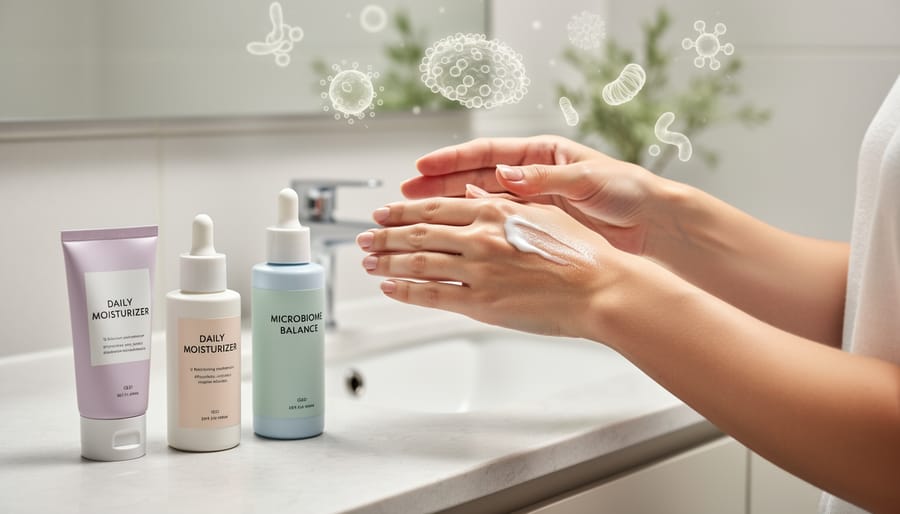
How to Tell If Your Skin Microbiome Is Improving
Your skin won’t announce its microbiome improvements overnight, but within four to eight weeks of consistent microbiome-friendly care, you’ll start noticing meaningful changes. The first sign is often texture, your skin feels smoother to the touch, with less roughness and fewer congested areas. You might catch yourself skipping foundation because your complexion looks more even and refined than it has in months.
Reduced reactivity is another telltale indicator. If your skin previously stung when you applied products or turned red from minor temperature changes, you’ll notice it tolerates things better. That persistent background sensitivity, the feeling that your face is always slightly irritated, starts to fade. Your skin doesn’t throw tantrums anymore over situations that once guaranteed a flare-up.
Moisture retention improves noticeably as your skin barrier strengthens. You’ll find your face stays comfortable longer between moisturizer applications, and that tight, parched feeling after cleansing diminishes. Breakouts typically decrease in both frequency and severity, though this change often follows a pattern of smaller, less inflamed spots rather than an immediate disappearance.
The glow everyone talks about is real, but subtle at first. Your skin develops a healthy luminosity that doesn’t require highlighter, it’s the kind of radiance that comes from cells functioning properly and inflammation calming down. Some mornings you’ll wake up and think your skin looks particularly good for no obvious reason. That’s your microbiome thriving.
Track your progress with weekly phone photos in the same lighting. Write quick notes about how your skin feels, not just how it looks. Progress isn’t linear. You’ll have setbacks during stress, hormonal shifts, or seasonal changes, and that’s completely normal. A few rough days don’t erase the overall improvement, so resist the urge to overhaul everything when you hit a temporary bump. Trust the process and celebrate the small wins along the way.
Common Questions About Skin Microbiome Care
The world of microbiome skincare can feel overwhelming at first, especially when you’re trying to balance it with your existing routine or budget. Here are answers to the questions we hear most often, designed to make this transition feel less daunting and more doable.
Can I use microbiome products with retinol or acids?
Yes, but introduce them carefully. Use your actives on alternate nights from probiotic treatments initially, then layer a microbiome-supporting moisturizer over everything to protect your barrier. Many people find their skin tolerates retinol better once the microbiome is balanced.
Do I need expensive probiotic serums to see results?
Not at all. While luxury brands exist, many affordable options with prebiotics like inulin or postbiotics like fermented ingredients deliver excellent results. Focus on pH-balanced basics first, a gentle cleanser and simple moisturizer can transform your skin without breaking the bank.
Will this work for oily or acne-prone skin?
Absolutely. Balancing your microbiome can actually reduce breakouts by supporting beneficial bacteria that crowd out acne-causing strains. Oily skin often improves dramatically because a healthy microbiome regulates sebum production more effectively than harsh treatments.
How is microbiome skincare different from regular sensitive skin products?
Sensitive skin products focus on avoiding irritation, while microbiome products actively feed and protect good bacteria. This proactive approach strengthens your skin’s natural defenses rather than just removing potential triggers, leading to resilience over time instead of dependency.
Can I combine this approach with other skincare trends?
Microbiome care actually complements most approaches beautifully. It pairs well with minimalist routines, barrier repair protocols, and even advanced treatments like genetic testing-based skincare. The key is building your microbiome foundation first, then layering targeted treatments as needed.
What if my skin gets worse before it gets better?
A brief adjustment period is normal as your skin rebalances, typically lasting one to two weeks. If irritation persists beyond that or worsens significantly, you may be reacting to a specific ingredient rather than the microbiome approach itself, try switching products rather than abandoning the concept.
Remember that your skin’s bacterial ecosystem is as unique as you are, which means your microbiome journey won’t look exactly like anyone else’s. Some people see dramatic changes within weeks, while others notice subtler improvements that build over months. Both experiences are valid and worthwhile. The beauty of this approach is that it works with your skin’s natural intelligence rather than against it, making it one of the most forgiving and adaptable skincare philosophies you can embrace. Start with the changes that feel most accessible to you right now, whether that’s swapping your harsh cleanser for a gentler option or simply being more mindful about over-washing. Every small step you take supports the trillions of beneficial bacteria working hard to keep your skin healthy, balanced, and glowing.
Your skin is home to an entire ecosystem working tirelessly to keep you healthy and glowing. Learning to support your skin microbiome isn’t about buying the most expensive products or following complicated routines, it’s about working with your skin’s natural intelligence rather than against it.
The journey to a healthier microbiome takes time, typically several weeks before you see noticeable changes. That’s perfectly normal. Your skin didn’t lose its balance overnight, and it won’t find it again instantly. Be patient with yourself and celebrate the small victories: a little less redness here, smoother texture there, fewer unexpected breakouts.
Remember, there’s no single definition of healthy skin. Your microbiome is as unique as you are, shaped by your genetics, environment, and lifestyle. What works beautifully for your best friend might not be your skin’s favorite approach, and that’s okay.
Start today with just one change. Swap your harsh cleanser for something gentler. Add a prebiotic serum. Reduce how often you exfoliate. Small shifts create lasting transformation. You’re not fixing broken skin, you’re nourishing an incredible living system that’s been protecting you all along.
You may also like
-
What Is CRISPR Biotechnology in Cosmetic Enhancement (and How Does It Work)?
-
AI Beauty Tech Is Revolutionizing Your Personal Skincare Experience
-
How to Match Human Hair Extensions to Your Natural Hair Color
-
Your DNA Holds the Secret to Perfect Skin: How Genetic Testing is Revolutionizing Skincare
-
AI Beauty Revolution: How Smart Tech is Creating Your Perfect Look