
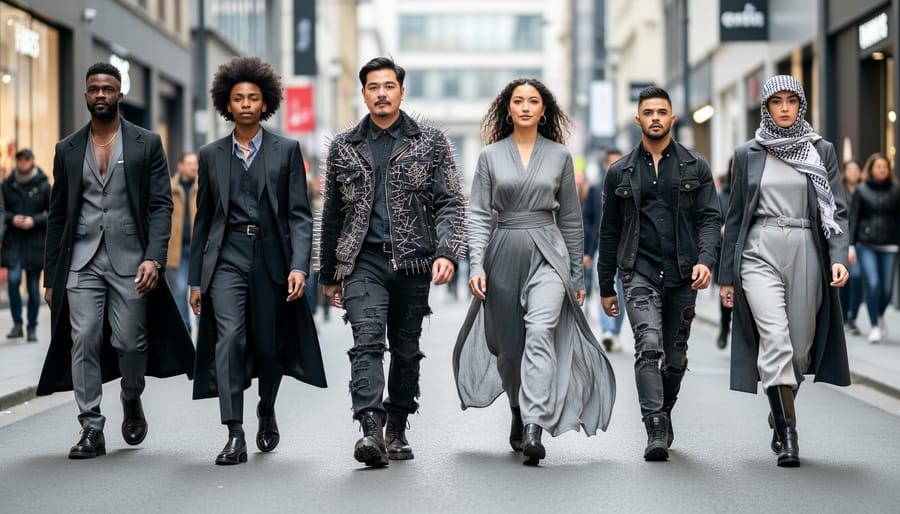
Revolutionary fashion is clothing and style that challenges social norms, disrupts power structures, or signals collective movements for change. It transforms garments from personal choices into powerful statements that reshape cultural conversations about identity, freedom, and belonging.
Throughout history, what we wear has sparked real-world transformation. When women claimed trousers in the 1960s, they weren’t just choosing comfort over convention. They were demanding physical freedom and professional equality. When punk culture tore through London in the 1970s with safety pins and DIY aesthetics, those ripped shirts rejected mainstream consumerism and class hierarchies. Fashion becomes revolutionary when it makes the invisible visible, when marginalized voices dress their resistance, and when style becomes a rallying cry.
But revolutionary fashion isn’t locked in history books. Right now, in 2026, you’re watching it unfold. Gender-fluid collections are dismantling binary dress codes. Sustainable brands are challenging the waste machine of fast fashion. Size-inclusive runways are redefining beauty standards that excluded millions for decades. Every time someone wears their truth despite pushback, they’re participating in fashion’s ongoing evolution.
This article breaks down how revolutionary fashion actually works as a tool for cultural change, explores the major style movements that redefined their eras, and shows you how to recognize and participate in today’s fashion revolutions. Whether you’re drawn to historical style rebellions or ready to wear your values on your sleeve, understanding revolutionary fashion means understanding how personal style connects to collective power.
What Revolutionary Fashion Really Means
Revolutionary fashion isn’t about following the latest runway trends or buying into seasonal “must-haves.” It’s about clothing choices that fundamentally challenge the status quo, disrupt established norms, and create space for new ways of being seen and understood. When you wear something revolutionary, you’re making a statement that reaches beyond aesthetics, you’re participating in cultural conversation, pushing boundaries, and often making others uncomfortable in ways that matter.
- Revolutionary Fashion
- Clothing and styling choices that deliberately break social conventions, challenge power structures, and signal identity or values that mainstream culture has marginalized or rejected.
- Sartorial Rebellion
- The act of using fashion as a form of resistance against societal expectations, whether rejecting gender norms, class distinctions, or beauty standards.
- Cultural Disruption
- When fashion choices become visible enough to shift public conversation, alter industry practices, or inspire broader social change beyond the wardrobe itself.
- Fashion Activism
- Intentional use of clothing to advocate for social justice, environmental sustainability, body positivity, or other causes, transforming personal style into political statement.
The distinction between trendy and revolutionary matters. Trends are cyclical, profit-driven, and designed to keep you consuming. They’re safe because they’ve already been vetted by the industry. Revolutionary fashion, by contrast, often starts as rejection, it makes people stare, question, or even criticize. Think of the difference between buying a blazer because every influencer owns one versus wearing that blazer with nothing underneath because you’re challenging workplace dress codes written for men’s bodies.
Revolutionary style emerges from authenticity and necessity rather than marketing campaigns. It happens when someone needs clothing that doesn’t yet exist, when a community creates visual language for an experience mainstream fashion ignores, or when individuals decide their self-expression matters more than social approval. The flapper dress was revolutionary because it freed women’s bodies for movement and pleasure. Animal prints became trendy decades later, borrowed rebellion, stripped of its original defiance.
How Revolutionary Fashion Works to Transform Culture
Fashion as Personal Empowerment

Revolutionary fashion starts with the most personal act: choosing what makes you feel powerful, not what makes you invisible. When you wear something that genuinely reflects who you are, whether that’s a blazer with ripped jeans, a vintage dress styled your way, or sneakers with a formal outfit, you’re making a quiet declaration that your self-expression matters more than outdated rules.
This personal revolution happens in small, daily choices. Maybe you’re the first woman in your office to wear bright colors instead of safe neutrals. Maybe you embrace your natural hair texture after years of straightening. Maybe you dress for your actual life and body rather than some imagined “ideal version” of yourself. Each choice chips away at the pressure to conform.
The empowerment isn’t about the clothes themselves, it’s about reclaiming authority over your own image. For decades, women were told what was “appropriate,” “flattering,” or “age-appropriate,” usually by industries profiting from our insecurity. Revolutionary fashion flips that script. You become the expert on what works for your life, your comfort, and your confidence.
When you dress authentically, you give others permission to do the same. Your coworker notices your bold print and feels braver about her own style experiments. Your daughter sees you wearing what you love and learns that pleasing yourself matters more than pleasing everyone else. Personal fashion revolutions ripple outward, one confident choice at a time.
Fashion as Social Movement
When groups of people adopt the same bold style choices, their clothing becomes a uniform of solidarity, a visual declaration that they stand together for change. Throughout history, collective fashion statements have amplified social movements, transforming individual rebellion into cultural force.
The suffragettes understood this power instinctively. They chose white dresses, purple sashes, and green accents not just for aesthetics but as a recognizable symbol of their demand for voting rights. When thousands of women marched wearing these colors, their unified appearance made their movement impossible to ignore, turning city streets into political statements.
Decades later, the Black Panther Party used leather jackets, berets, and afros as both practical uniform and powerful symbol of Black pride and resistance. Their coordinated style communicated strength, unity, and refusal to conform to white beauty standards or expectations.
Contemporary movements continue this tradition. Climate activists wearing thrifted clothing reject fast fashion’s environmental destruction while punk-inspired protest wear signals anti-establishment values. The pink pussy hats of the 2017 Women’s March created instant visual cohesion among millions of demonstrators worldwide.
These collective style choices work because they’re immediately recognizable, photographable, and repeatable. When enough people dress their values, fashion stops being personal and becomes political, a shared language that speaks louder than words and outlasts any single protest.
Styles That Changed Everything: Key Revolutionary Fashion Movements
Liberation Dressing: When Women Ditched the Corset
The corset had literally constricted women’s lives for centuries, restricting breath, limiting movement, even reshaping organs, until a wave of revolutionary designers in the early 1900s decided comfort could be chic. Coco Chanel championed jersey fabric and loose silhouettes that let women actually breathe and move, while Paul Poiret eliminated the corset entirely from his designs, creating flowing, high-waisted gowns inspired by Eastern aesthetics. This wasn’t just about fashion, it coincided with women demanding voting rights, entering the workforce, and riding bicycles. The dropped waist, shorter hemlines, and relaxed shapes of the 1920s flapper era represented genuine liberation: women could dance, work, and live without physical constraint. What made this revolutionary wasn’t simply the aesthetic shift but the underlying message that women’s comfort and autonomy mattered more than conforming to restrictive beauty standards designed by and for male approval.
The Power Suit and Professional Revolution
The power suit emerged from the 70s fashion revolution as women entered corporate boardrooms in unprecedented numbers and demanded clothing that commanded respect. Designers like Yves Saint Laurent introduced Le Smoking tuxedo in 1966, but it was the 1970s when women truly claimed tailored blazers, trousers, and structured shoulders as their uniform of professional power. These weren’t mere copies of men’s suits. Women adapted the silhouette with fitted waists, varied fabrics, and bold styling choices that said, “I belong here, and I’m doing it my way.”
By the 1980s, shoulder pads grew exaggerated and power dressing became armor for breaking glass ceilings. Today’s professional revolution looks different. Contemporary women mix blazers with jeans, style suits with sneakers, or choose fluid, unstructured pieces that reject the idea that authority requires masculine lines. The revolution continues as each generation redefines what power looks like in their own image, proving that claiming space has always been as much about confidence as cut.
Punk, Grunge, and Street Style Rebellions
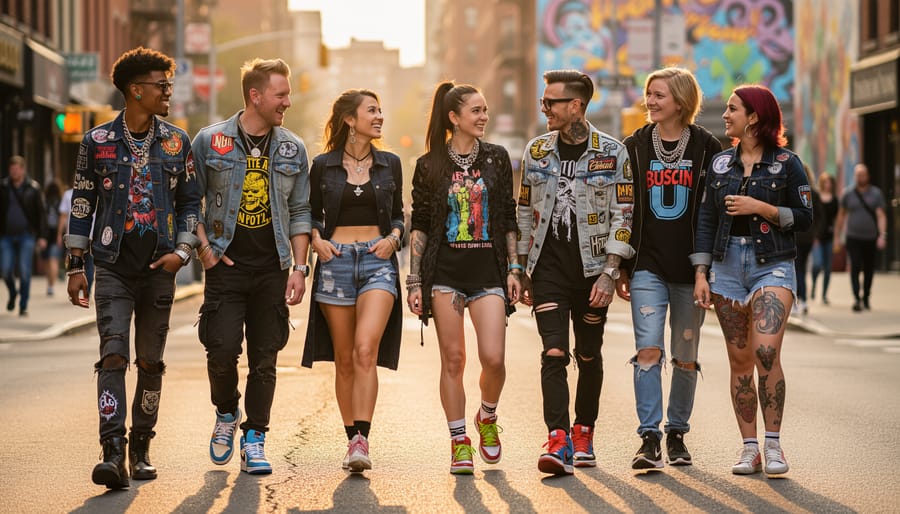
Punk exploded in the 1970s as a middle finger to mainstream fashion’s polished veneer. Safety pins, ripped fishnets, leather jackets scrawled with band names, these weren’t wardrobe malfunctions but deliberate declarations. Vivienne Westwood and Malcolm McLaren turned rebellion into wearable art, proving that fashion didn’t need runway approval to make a statement.
Grunge followed in the early 1990s, dragging thrift-store flannel and combat boots from Seattle basements onto magazine covers. Kurt Cobain’s cardigans weren’t styled; they were lived in. This anti-fashion fashion told luxury brands that authenticity couldn’t be manufactured, only borrowed and cheaply replicated.
Street style continues this legacy today, from skateboard culture’s oversized silhouettes to hip-hop’s remix of sportswear and high fashion. J-fashion subcultures like Harajuku took DIY further, layering contradictions into cohesive personal statements. These movements share common DNA: they started in youth communities, rejected what was expensive and expected, and proved that the most revolutionary fashion often costs nothing but courage.
Gender-Fluid and Non-Conforming Fashion
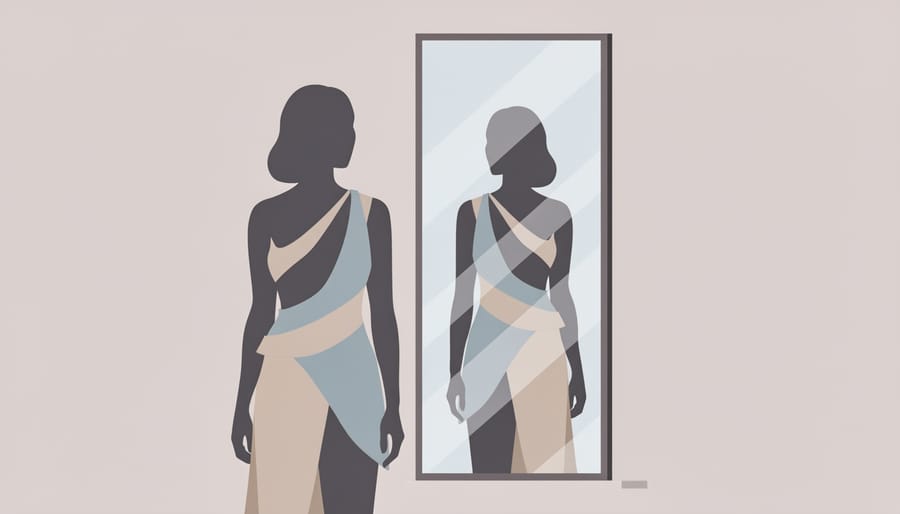
Gender-fluid fashion represents one of today’s most significant style revolutions, dismantling centuries of rigid dress codes that dictated what men and women should wear. Designers like Harris Reed, Palomo Spain, and Alessandro Michele during his Gucci tenure have created collections that deliberately reject masculine-feminine categorization, featuring flowing silhouettes, ornate details, and unexpected combinations that work for any wearer.
This movement isn’t just runway theater. It’s fundamentally reshaping retail, with major brands launching unisex lines and eliminating gendered departments. Style icons like Billy Porter, Ezra Miller, and Harry Styles have normalized boundary-pushing red carpet looks, gowns, pearls, and traditionally feminine pieces worn with complete confidence.
What makes this revolutionary isn’t novelty. Throughout history, from David Bowie to Marlene Dietrich, individuals have challenged these arbitrary rules. The difference now is scale and acceptance. Gender-non-conforming fashion has moved from fringe to mainstream conversation, giving people across the gender spectrum the freedom to dress authentically rather than according to outdated binary expectations.
For those exploring this territory, start where curiosity leads you. Try one piece that speaks to you regardless of which department it came from. Revolutionary fashion has always been about wearing what feels right, not what’s expected.
Body Positivity and Inclusive Sizing
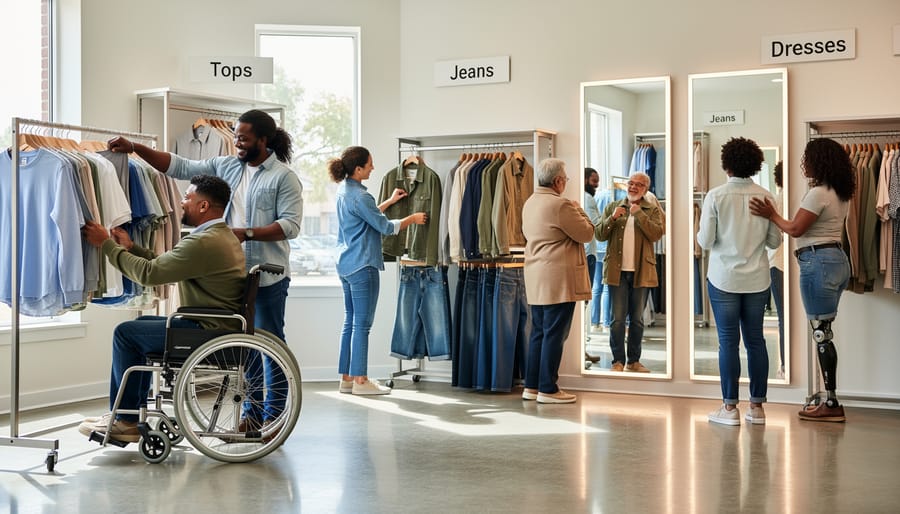
The fashion industry’s narrow definition of the “ideal” body has crumbled under pressure from activists, influencers, and everyday consumers who refuse to accept size 0-4 as standard. This revolution goes beyond adding a few larger sizes, it’s demanding proportional grading, diverse runway representation, and designs created for different body types rather than reluctantly adapted from sample sizes. Brands like Savage X Fenty and Universal Standard have shown that inclusive sizing is profitable and possible, while plus-size influencers have built massive platforms celebrating curves without apology. Today’s body positivity movement insists that revolutionary fashion means everyone gets to participate in trends, statement pieces, and high fashion, not just basics in limited colors. This shift challenges fundamental industry practices, from sample-size culture to retouching standards, making visible what was long excluded.
How You Can Apply Revolutionary Fashion Principles Today
Finding Your Own Fashion Revolution
Your fashion revolution doesn’t require a manifesto or a spotlight. It starts with one honest question: which “rules” have you been following that don’t actually serve you?
Maybe you’ve avoided bright colors because someone told you redheads can’t wear pink. Perhaps you’ve dismissed an entire category of clothing as “not for your body type” or “too young for your age.” These invisible boundaries shape your closet more than you realize, and challenging even one can shift how you move through the world.
Start by noticing what you admire but dismiss. When you scroll past an outfit and think “I love that, but I could never,” pause there. What’s the but really about? Fear of standing out? An outdated rule from a magazine you read fifteen years ago? Often, the styles we’re drawn to reveal the conventions we’re ready to outgrow.
Consider which fashion rebellion resonates with your life right now. If you’re tired of dressing for an imagined audience, experiment with pieces that feel authentically you, even if they don’t match current trends. If you’ve absorbed limiting messages about your body, try silhouettes you’ve avoided. If you love vintage fashion but worry it’s costume-y, wear it anyway.
Your revolution doesn’t need to be visible to everyone else. It just needs to be real to you. Start with one piece that makes you feel powerful, not polished. That’s where transformation begins.
Revolutionary Fashion Icons Who Changed the Game
Some individuals didn’t just wear revolutionary fashion, they became it. Their bold choices reshaped what was possible in style and culture, proving that one person’s wardrobe can spark lasting change.
Josephine Baker scandalized 1920s Paris with her daring performances and even more daring fashion. She embraced her Black identity at a time when Eurocentric beauty standards dominated, wearing minimal costumes that celebrated her body and pairing them with slicked-down hair and dramatic makeup. Her famous banana skirt wasn’t just provocative, it was a deliberate artistic statement that challenged both racial and sexual taboos. Baker showed that fashion could be theatrical, sensual, and unapologetically Black.
Katharine Hepburn made trousers a battleground. In 1930s Hollywood, when women wearing pants could still cause outrage, she wore wide-legged trousers to studio lots and public events. Paramount Pictures reportedly once removed her slacks from her dressing room to force her into a dress, she walked around the lot in her underwear until they returned them. Her commitment to comfortable, menswear-inspired clothing helped normalize women in pants and challenged the notion that femininity required skirts.
Grace Jones transformed the 1980s by making androgyny avant-garde. Her severe flat-top haircut, sharp-shouldered suits, and angular aesthetic rejected every soft, feminine convention of the era. She didn’t ask permission to be both masculine and feminine, neither and both. Her collaborations with designers like Jean-Paul Gaultier created a visual language of power that influenced everyone from Madonna to contemporary pop artists.
More recently, Billy Porter has shattered the red carpet’s gender rules. His Christian Siriano tuxedo gown at the 2019 Oscars made a statement about masculinity and fashion freedom that resonated far beyond one event. He consistently chooses designs that celebrate femininity as part of masculine identity, showing that revolutionary fashion remains a powerful tool for visibility and change.
These icons share a common thread: they wore what felt true to them, regardless of consequence. Their courage created permission for others to experiment, to push boundaries, to see new possibilities in their own closets. Revolutionary fashion starts with individual boldness, but its impact ripples outward through generations.
Common Questions About Revolutionary Fashion
Is revolutionary fashion only political?
Not at all. While some revolutionary fashion movements are explicitly political, many are personal acts of self-expression that happen to challenge norms. Choosing what makes you feel authentic, whether that’s bright colors after 40, comfortable shoes with a dress, or mixing masculine and feminine pieces, can be revolutionary without any political agenda.
Can anyone participate in revolutionary fashion?
Absolutely yes. Revolutionary fashion isn’t about your budget, body type, or access to designer pieces. It’s about wearing what feels true to you rather than what society says you should wear. Your personal style revolution might happen at a thrift store or through rearranging pieces you already own.
How is revolutionary fashion different from trends?
Trends are temporary market cycles driven by the fashion industry, while revolutionary fashion represents genuine cultural shifts that challenge existing norms. A trend might last a season; a revolution changes how entire groups of people think about clothing and identity. Revolutionary fashion often starts as rebellion and sometimes becomes mainstream over time.
Do I need to dress dramatically to be revolutionary?
No. Revolutionary fashion can be quiet and subtle. Simply refusing to hide your body, wearing what makes you comfortable instead of what’s deemed appropriate for your age, or rejecting gendered color rules are all revolutionary acts. The drama comes from the choice itself, not necessarily from the clothes.
How do I know if my fashion choices are empowering or just following trends?
Ask yourself whether you’d still wear it if it went out of style tomorrow. Empowering fashion makes you feel more like yourself, while trend-following often makes you feel you’re performing for others. If you’re dressing from a place of joy and authenticity rather than fear of being left behind, you’re likely in empowering territory.
These questions reflect what many women wonder when they first encounter the idea of using fashion as personal revolution. The beauty of this approach is that it removes barriers, you don’t need permission, a manifesto, or even a clear political stance to dress in ways that honor who you really are.
The ongoing conversation around revolutionary fashion in fashion journalism continues to evolve as more voices join the discussion. What seemed radical ten years ago might feel commonplace now, and that’s exactly the point. Each generation redefines what fashion rebellion looks like based on the constraints they face and the freedoms they’re claiming.
Your participation doesn’t require grand gestures. Sometimes revolution looks like showing up as yourself in spaces that expect you to shrink, blend in, or conform. The clothes are simply tools that help you do that with confidence.
Revolutionary fashion isn’t reserved for runways or history books, it’s happening right now, in your closet, every time you choose to dress for yourself rather than someone else’s expectations. The corset-breakers, power-suit pioneers, and gender-norm challengers we’ve explored weren’t trying to make fashion history. They were simply claiming the right to dress authentically, and that’s exactly what made them revolutionary.
Your daily style choices matter more than you might think. When you wear what genuinely reflects who you are, ignoring the “rules” about age-appropriate hemlines, acceptable body types, or feminine enough silhouettes, you’re participating in fashion’s ongoing revolution. You’re showing other women that authenticity beats conformity every time.
The most powerful thing about revolutionary fashion? It doesn’t require a dramatic wardrobe overhaul or a manifesto. It starts with one bold choice: that vintage blazer society says is too masculine, those bright colors you’ve been told clash with your skin tone, that crop top you love despite not having a “crop top body.” Each time you dress with intention and courage rather than compliance, you’re reshaping what’s possible.
Fashion revolution happens in increments, woman by woman, outfit by outfit. The question isn’t whether you can participate, it’s what conventions are you ready to challenge today? Your closet is waiting, and the revolution is yours to wear.
You may also like
-
How Fashion’s Revolutionary Designers Transformed the Way We Dress
-
How Vintage Fashion Shaped Modern Style: A Global Journey Through Time
-
How 70s Fashion Changed Forever: The Designers Who Sparked a Cultural Revolution
-
Japanese Street Style Revolution: How J-Fashion Subcultures Shaped Global Fashion