
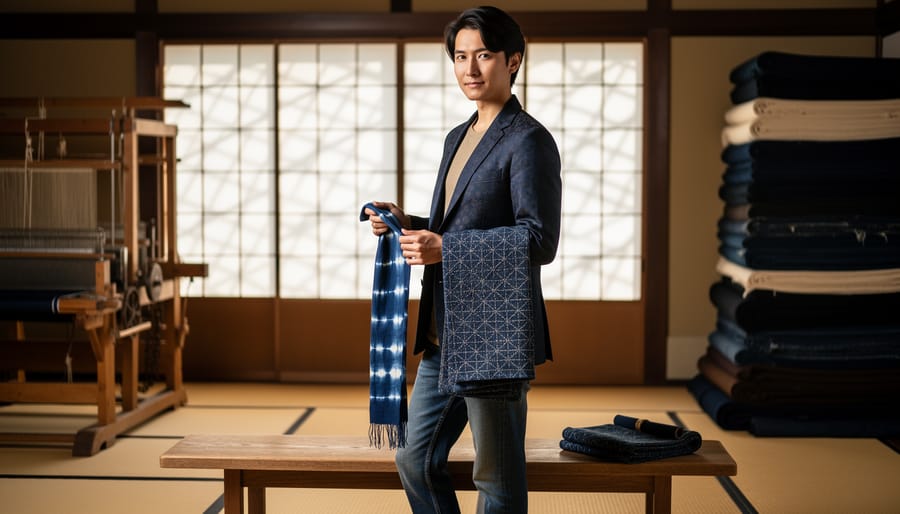
Discover Japanese traditional fabrics and you’ll unlock centuries of artistry that can transform your everyday style into something extraordinary. These aren’t museum pieces gathering dust—they’re living textiles that deserve a place in your modern wardrobe, whether you’re drawn to minimalist aesthetics or bold statement looks.
Japanese fabrics like indigo-dyed shibori, delicate chirimen silk, and textured sashiko cotton carry stories of master craftspeople who’ve perfected their techniques over generations. When you choose these materials, you’re not just buying fabric—you’re wearing heritage, supporting artisans, and making a conscious choice that celebrates slow fashion over fast trends. The beauty lies in their versatility: a vintage kimono silk can become a stunning blazer, while contemporary brands are reimagining traditional weaving methods for everyday pieces that feel fresh and relevant.
Understanding these fabrics empowers you to make styling choices that reflect your values and personality. You don’t need to wear a full kimono to appreciate Japanese textile traditions. Start by incorporating one piece—perhaps a haori jacket over jeans, an obi belt cinching your favorite dress, or accessories featuring traditional patterns. The integration of traditional textiles in modern fashion proves that honoring craftsmanship doesn’t mean sacrificing contemporary style—it enhances it, giving your wardrobe depth, meaning, and that unmistakable touch of artistry that mass-produced fashion simply cannot replicate.
The Soul of Japanese Fabric: Understanding the Craft
There’s something profoundly beautiful about watching a Japanese textile artisan at work. Each movement is deliberate, each thread chosen with intention. This isn’t just fabric production—it’s a meditation, a practice where the maker’s respect for materials transforms simple fibers into something extraordinary. Understanding the difference between handcrafted versus mass-produced fabrics becomes crystal clear when you witness this centuries-old dedication firsthand.
Japanese textile makers approach their craft with what they call “monozukuri”—the art of making things with heart and soul. It’s a philosophy that sees the fabric as a living conversation between creator, material, and wearer. The cotton listens, the silk responds, and the artisan’s hands guide this dialogue with patience that our fast-fashion world has almost forgotten. This mindful approach means nothing is rushed, nothing is wasted, and every piece carries the energy of intentional creation.
When you work slowly with respect for the material, the fabric remembers that care and carries it forward to whoever wears it.
This reverence for craft speaks directly to our growing hunger for meaningful consumption. In a world drowning in disposable fashion, these textiles offer us a different path—one where quality triumphs over quantity, where stories matter more than logos. Research shows that traditional handcrafting promotes sustainability through reduced waste and longer-lasting products, making these ancient techniques surprisingly relevant for our eco-conscious generation.
Choosing Japanese traditional fabrics isn’t about being precious or exclusive—it’s about honoring the hands that made them and embracing a more thoughtful relationship with what we wear. It’s empowerment through conscious choice, declaring that you value authenticity and craftsmanship. These fabrics invite you into a legacy of makers who believed that creating beauty was worth the time, and wearing them connects you to that powerful tradition.
Meet the Fabrics That Tell Stories
Silk That Whispers Elegance
Let’s talk about silk that doesn’t just look expensive—it feels like poetry against your skin. Japanese silk fabrics like Chirimen and Rinzu are the secret weapons of anyone ready to elevate their wardrobe from “nice” to “unforgettable.”
Chirimen, a gorgeous crepe silk, has this beautifully textured surface that catches light in the most flattering ways. Unlike flat silks that can sometimes feel too formal, Chirimen moves with you. It drapes like a dream on every body type, creating fluid lines that celebrate your natural shape rather than fighting against it. Whether you’re petite, curvy, or somewhere in between, this fabric knows how to make you look effortlessly chic.
Rinzu damask takes elegance up another notch with its subtle woven patterns that reveal themselves as you move. The beauty here is in the restraint—no loud prints, just sophisticated texture that whispers rather than shouts. Picture a Rinzu slip dress catching the light at dinner, or a vintage-inspired blouse that makes jeans feel like a statement.
These silks aren’t just for special occasions. The modern approach? Mix them into your everyday rotation. That’s where the magic happens—when traditional craftsmanship meets your bold, personal style.
Cotton With Character
Let’s celebrate the everyday heroes of Japanese textiles—cotton fabrics that prove traditional doesn’t have to mean formal. These pieces were born from resourcefulness and have evolved into statement-makers for modern wardrobes.
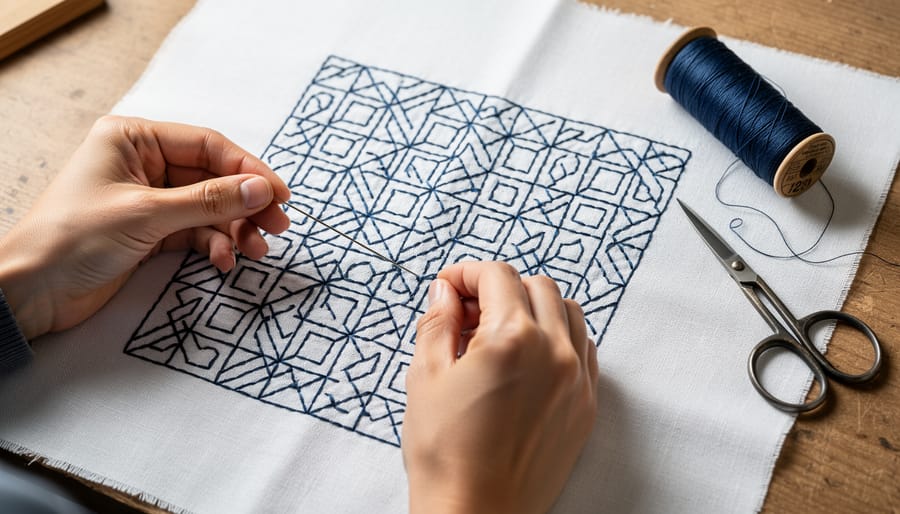
Sashiko, with its mesmerizing white running stitches on indigo cotton, started as a practical technique to repair and reinforce clothing for working-class families. Today, it’s your secret weapon for adding texture to casual looks. Picture a sashiko-stitched denim jacket or a geometric-patterned tote that sparks conversations at coffee shops. The beauty lies in its imperfection—each stitch tells a story of patience and craft.
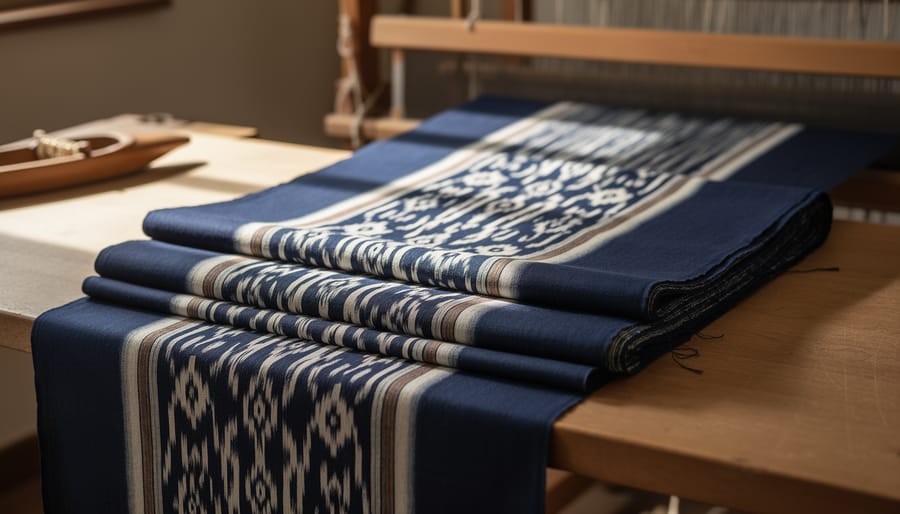
Kasuri, Japan’s answer to ikat, creates those gorgeous blurred patterns through resist-dyeing individual threads before weaving. The slightly fuzzy edges give pieces an organic, artistic vibe that feels effortlessly cool with everything from white sneakers to ankle boots.
And indigo-dyed cotton? It’s the ultimate chameleon. This deep, rich blue develops character with every wear and wash, becoming uniquely yours. Layer an indigo shirt under blazers for work, tie-dye it into weekend looks, or rock indigo-dyed jeans that actually get better with age. These cottons don’t just dress you—they grow with your journey.
Hemp and Linen: The Sustainable Stars
Long before sustainability became a fashion buzzword, Japanese weavers were already championing eco-friendly fabrics that work beautifully with your body and the planet. Meet Asa (hemp) and Ramie—the breathable, naturally antimicrobial fabrics that have kept Japanese summers bearable for centuries.
These plant-based fibers are part of Japan’s sustainable textile traditions, requiring minimal water and zero pesticides to grow. Hemp fabric, once worn by samurai and monks, has a beautifully crisp texture that softens with each wear—think of it as the ultimate investment piece that gets better with age. Ramie, often called “grass linen,” offers an elegant drape perfect for flowing summer dresses and wide-leg trousers.
What makes these fabrics truly special is their ability to wick moisture while staying incredibly durable. They’re naturally resistant to mold and UV rays, making them ideal for everything from vacation wear to everyday basics. If you’re building a capsule wardrobe that aligns with your values, these sustainable stars deserve a prominent place in your closet.
The Art of Patterns
Japanese traditional fabrics tell stories through their patterns, and honestly, that’s what makes them so powerful for self-expression today. Take the iconic wave motif, or seigaiha, which represents resilience and continuity—perfect when you’re navigating life’s ups and downs. Cherry blossoms, or sakura, celebrate beauty in fleeting moments, reminding us to embrace change rather than fear it. Then there are geometric designs like asanoha (hemp leaf), traditionally worn to wish for strength and growth, especially for children.
What’s beautiful about these traditional fabric patterns is that they’re not just decorative—they’re intentional. When you choose a fabric with cranes, you’re channeling longevity and good fortune. Chrysanthemums speak to nobility and rejuvenation. Even bold stripes and checks carry meaning, historically representing merchant class pride and sophistication.
Here’s the empowering part: you get to decide what these patterns mean for you. Maybe waves represent your love for the ocean, or geometric designs match your minimalist aesthetic. Wearing these motifs isn’t about following rules—it’s about connecting with symbols that resonate with your personal journey and expressing that boldly through fashion.
How These Ancient Fabrics Are Stealing the Runway
The fashion world has fallen head over heels for Japanese traditional fabrics, and honestly, it’s about time. From the runways of Paris to the streets of Brooklyn, these ancient textiles are having a major moment that feels both fresh and deeply respectful of their heritage.
At Paris Fashion Week last season, we saw Dries Van Noten weave indigo-dyed kasuri into flowing contemporary silhouettes that had editors scrambling to take notes. Meanwhile, Comme des Garçons continues to reimagine classic sashiko stitching in ways that feel punk rock and poetic all at once. This Eastern fashion influence isn’t just a trend—it’s a full-blown fashion revolution that celebrates craftsmanship over mass production.
But here’s what really excites us: you don’t need a luxury budget to join this movement. Brands like Uniqlo have collaborated with traditional Japanese artisans to create accessible collections featuring authentic katazome prints and lightweight ramie blends. Everlane recently launched a limited-edition series using deadstock silk crepe from Kyoto mills, proving that sustainability and style can coexist beautifully.
On Instagram, street style stars are showing us endless possibilities. We’re seeing vintage kimono fabric transformed into bomber jackets, obi belts reimagined as statement accessories, and ikat-patterned skirts paired with classic white tees. Fashion influencer Emma Chamberlain was spotted wearing a cropped jacket made from repurposed shibori fabric, sparking thousands of searches for similar pieces.
Independent designers are also doing incredible work. Los Angeles-based brand Kiriko uses vintage kasuri and sashiko to create modern workwear, while London’s Pavilion crafts contemporary dresses from deadstock kimono silk. These designers prove that honoring traditional techniques doesn’t mean sacrificing modern aesthetics.
The beauty of this movement is its diversity. Whether you’re drawn to minimalist Scandinavian vibes with a Japanese twist or maximalist pattern mixing, there’s a way to make these fabrics work for your personal style. The runway has given us permission to experiment boldly, and women everywhere are embracing these textiles as tools for self-expression and empowerment. This isn’t about costume—it’s about celebrating artistry while building a wardrobe that tells your unique story.
Style It Your Way: Making Japanese Fabrics Work for You
For the Minimalist
If your aesthetic leans clean and intentional, Japanese traditional fabrics can become your secret weapon for adding unexpected depth without visual noise. Think of a single indigo piece as that perfect finishing touch—a lightweight indigo-dyed scarf draped over an all-white outfit instantly elevates your look from simple to striking. The beauty here is in restraint: one indigo linen shirt tucked into tailored trousers speaks volumes about your eye for quality and craft.
Kasuri patterns work beautifully in minimalist wardrobes because their geometric precision feels modern despite their traditional roots. A kasuri pouch or small crossbody bag introduces texture and story to monochrome outfits without overwhelming your aesthetic. Consider swapping your plain black tote for an indigo kasuri version—it maintains that sleek vibe while celebrating artisan craftsmanship. The key is choosing pieces where the fabric becomes the statement, not the silhouette. This approach honors both your personal style and centuries of Japanese textile tradition, proving that less really can be more when what you choose has soul.
For the Bold Experimenter
Ready to push boundaries? Mixing kimono silk with your favorite denim jacket or layering a haori over a graphic tee creates an unexpectedly cool fusion that turns heads. The secret is confidence. Don’t shy away from pattern clashing – pair a bold indigo kasuri print with florals or geometric designs. Your vintage obi belt can cinch an oversized hoodie, transforming streetwear into something uniquely yours. Try draping a vibrant chirimen scarf over athleisure, or use furoshiki wrapping cloth as an actual bag for that effortlessly eclectic vibe. The beauty of experimenting with traditional Japanese fabrics is there are no rules – only opportunities to create something that celebrates both heritage and your individual style. Trust your instincts, play with proportions, and remember that fashion is about expressing who you are, not fitting into predetermined boxes.
For the Professional
Who says professional can’t be powerful and culturally inspired? Japanese fabrics are your secret weapon for standing out in the boardroom while honoring incredible craftsmanship. Start with a structured blazer in indigo-dyed fabric—the deep blue reads as sophisticated navy from afar but reveals its artisanal texture up close. It’s conversation-starting without screaming for attention.
Accessories are where you can really play. A silk obi-inspired belt transforms a simple sheath dress into something memorable, while a subtle jacquard tie or scarf adds dimension to monochrome suits. Think of these pieces as your confidence boosters—they tell colleagues you’re someone who values quality and isn’t afraid to express personality within professional boundaries.
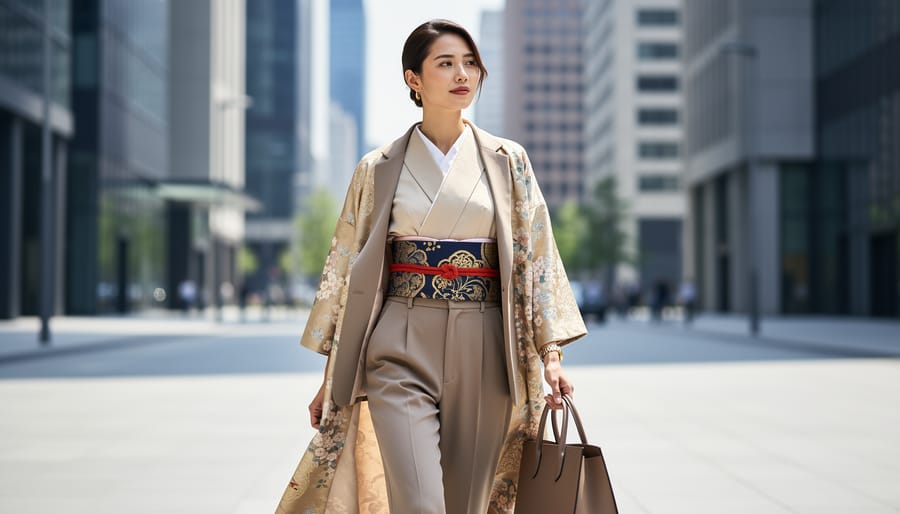
For client-facing days when you want to make an impression, consider a kimono-style jacket in muted tones worn over tailored trousers. It’s that perfect balance of respectful and revolutionary, proving that professional style doesn’t mean sacrificing your creative spirit. You’re not just dressed for success—you’re dressed with intention.
For Special Occasions
Ready to make a serious statement? Japanese traditional fabrics absolutely shine when it comes to special occasions. Think weddings, galas, or that event where you want everyone remembering your entrance long after you’ve left the room.
Silk brocade and luxurious chirimen crepe are your go-to fabrics here. These materials catch the light beautifully and drape like a dream, creating that effortless elegance we all crave. Look for pieces featuring dramatic motifs like cranes, peonies, or waves in metallic gold and silver threads. These bold patterns tell a story and celebrate centuries of craftsmanship while making you feel absolutely unstoppable.
A silk kimono jacket over a sleek evening dress creates incredible dimension and cultural fusion. Or go all in with a formal obi belt cinching a flowing gown at the waist for sculptural drama. The key is letting these statement pieces take center stage while keeping the rest of your look refined and intentional.
Don’t shy away from rich jewel tones like deep indigo, emerald, or burgundy. These colors photograph beautifully and exude confidence. Remember, wearing Japanese traditional fabrics to special occasions isn’t about costume—it’s about honoring heritage while expressing your unique style story.
Where to Find Your Perfect Piece
Ready to bring Japanese traditional fabric into your life? The good news: you have more options than ever, and you don’t need insider connections to find authentic pieces.
Start your journey online with dedicated retailers like Etsy’s Japanese vintage sellers, where independent artisans and collectors offer everything from antique kimono fabric to contemporary takes on traditional weaving. Search for specific terms like “chirimen crepe” or “kasuri ikat” to narrow your finds. Don’t sleep on eBay either—many sellers specialize in authentic vintage kimono cuts at surprisingly accessible prices, often ranging from $20 to $80 per panel.
For those craving the tactile experience, Japanese cultural centers and specialty fabric stores in major cities often stock authentic textiles. Think of these visits as mini-adventures where you can touch, compare, and really understand the quality differences.
When assessing fabric quality, look for tight, even weaving and vibrant colors that haven’t faded to dullness. Authentic pieces often have slightly irregular patterns—that’s the beauty of handwork, not a flaw. Natural fiber fabrics like silk and cotton should feel substantial but supple, never stiff or plasticky.
Price-wise, expect genuine vintage kimono fabric to start around $25 per yard, while museum-quality antique pieces can reach hundreds. Contemporary Japanese fabrics from traditional weavers typically fall in the $40-100 per yard range. Yes, it’s an investment, but you’re buying into centuries of craftsmanship and supporting artisan communities.
Remember, there’s no wrong way to enter this world. Whether you start with a $15 vintage scrap or a splurge-worthy bolt of indigo-dyed cotton, your perfect piece is the one that speaks to you and inspires your creative vision.
Caring for Your Investment
Here’s the truth: Japanese traditional fabrics aren’t as high-maintenance as you might think. Yes, they deserve respect and gentle handling, but caring for these beautiful pieces is totally manageable once you know the basics. Think of it as a small ritual that helps you connect with your investment and the incredible craftsmanship behind it.
The key is understanding what you’re working with. Silk pieces like those gorgeous kimono fabrics need the gentlest approach, while cotton yukata fabric is surprisingly forgiving. Here’s your go-to care routine:
- Check the fabric type first. Silk requires dry cleaning or hand washing in cold water with pH-neutral detergent, while cotton can handle gentle machine washing on delicate cycle.
- Always turn pieces inside out before washing to protect any decorative elements or prints from friction and fading.
- Skip the dryer completely. Lay flat or hang to air dry away from direct sunlight, which can fade those beautiful natural dyes.
- Store folded in breathable cotton bags or acid-free tissue paper, never plastic, which traps moisture and can damage fibers over time.
- Iron on low heat with a pressing cloth between the iron and fabric to prevent shine or scorching on silk and delicate materials.
The best part? Many contemporary pieces incorporating traditional fabrics come with modern care adaptations. Don’t let fear hold you back from exploring these stunning textiles. With a little mindfulness, your Japanese fabric pieces will stay beautiful for years, becoming treasured parts of your personal style story.
You’ve just taken an incredible journey through the world of Japanese traditional fabrics, and honestly? That’s something to celebrate. By exploring these beautiful textiles, you’re not just learning about fashion—you’re connecting with centuries of artistry, honoring skilled craftspeople, and discovering new ways to express who you truly are.
Here’s what makes this so empowering: there’s no single “right way” to wear these fabrics. Whether you’re drawn to the subtle elegance of silk chirimen or the bold graphic appeal of indigo kasuri, your choices are entirely your own. Maybe you’ll start with a small accessory, or perhaps you’ll go all in with a statement jacket. The beauty is in the experimentation, in finding what speaks to your personal style and makes you feel amazing.
Fashion has always been about more than just clothes. It’s about storytelling, cultural appreciation, and the confidence that comes from wearing something meaningful. Japanese traditional fabrics offer all of this in abundance, wrapped in stunning textures and patterns that truly stand out.
So go ahead—play with these textiles, mix them with your existing wardrobe, and discover the joy they bring. You’re not just getting dressed; you’re making bold choices that honor tradition while celebrating your own unique journey. And that’s incredibly beautiful.
You may also like
-
From Ancient Fibers to Fashion: How Traditional Textiles Shape Modern Style
-
Why Khadi is Fashion’s Most Sustainable Secret (And How to Style It)
-
How Ethiopian Fabric Patterns Are Redefining Modern Fashion’s DNA
-
How 60s Runway Fashion Shattered Fashion’s Glass Ceiling
-
Gothic Glamour Reborn: How Victorian Dark Romance is Reshaping Modern Fashion