

Your digital footprint is the trail of data you leave behind every time you browse, click, or purchase online, and in fashion and beauty shopping, it shapes everything from the ads that follow you across Instagram to the way brands personalize their sustainability claims just for you. Every product you view, every newsletter you sign up for, and every review you post creates a record that retailers use to predict what you’ll want next, and right now, that data is quietly steering your shopping choices in ways you might not even realize.
Here’s the empowering part: you’re already creating this footprint whether you know it or not, which means you’re already qualified to take control of it. Understanding your digital footprint isn’t about becoming a tech expert or abandoning online shopping altogether. It’s about recognizing that the same data trail shaping targeted ads can also guide you toward genuinely sustainable brands, help you avoid greenwashing, and build a more intentional wardrobe that reflects your actual values, not just an algorithm’s best guess.
The fashion and beauty industries have become exceptionally skilled at using your digital behavior to influence purchases, often prioritizing profit over planet. But when you understand what information you’re sharing and how it’s being used, you flip the script. You can curate a digital presence that attracts ethical brands, filters out fast-fashion noise, and connects you with communities making real change. Your online behavior becomes a tool for transformation rather than just another marketing opportunity, and that shift starts with knowing exactly what footprint you’re leaving and how to reshape it for the future you want to wear.
What Your Digital Footprint Really Means

Your digital footprint is the data trail you create every time you interact online, and if you’ve ever scrolled Instagram for outfit inspiration, searched “cruelty-free mascara,” or added a vintage blazer to your cart, you’ve already left one. It’s not something to fear. Think of it as a record of your interests, purchases, and values expressed through clicks, taps, and searches across fashion and beauty platforms.
Here’s the thing: your footprint comes in two forms. Active footprints are the ones you create deliberately, posting a #OOTD, writing a review for sustainable leggings, signing up for a brand’s newsletter, or sharing your favorite eco-conscious beauty finds. You control these. Passive footprints happen quietly in the background: websites tracking which product pages you linger on, apps noting how often you browse secondhand shops, algorithms recording the brands you follow. Both active and passive footprints shape what you see online and what brands learn about you.
In fashion and beauty, this data becomes incredibly powerful. Brands use your footprint to personalize your shopping experience, showing you midi dresses after you’ve browsed similar styles, or recommending refillable skincare because you’ve searched “low-waste beauty.” When done right, this feels helpful. But your footprint also tracks sustainability choices: which ethical brands you support, whether you read material sourcing details, how often you choose vintage over fast fashion.
That’s where transparency comes in. Brands that respect your data share how they use it and give you control. The most forward-thinking ones even show you the environmental impact of products before you buy, turning your footprint into a tool for conscious decision-making rather than just marketing data.
Your digital footprint isn’t static, and it isn’t permanent. Every search for “organic cotton” instead of synthetic fabrics, every follow of a circular fashion brand, every honest review you leave, these reshape your trail. You’re already creating it. The question is whether you’re steering it toward the fashion and beauty world you want to see.

Who Can Build a Sustainable Digital Footprint (And Why You Already Qualify)
If you’ve ever added a dress to your cart, scrolled through beauty reviews, or double-tapped an outfit post, congratulations, you already have a digital footprint. And here’s the empowering truth: you’re already qualified to reshape it toward sustainability. There’s no application process, no technical certification, and definitely no gatekeeping. Every woman who shops online has the power to redirect her digital presence toward choices that reflect her values.
The barrier to entry is beautifully simple. You need access to digital platforms where you already spend time, the websites and apps you browse for fashion finds and beauty must-haves. If you have basic online shopping accounts (think your go-to retailers or marketplace profiles), you’re in. An email address gets you started. A smartphone or computer gives you the tools. And curiosity about brand values? That’s the spark that turns passive scrolling into purposeful action.
Here’s what managing your sustainable digital footprint actually requires:
- Existing online shopping accounts on fashion or beauty platforms
- Email access to receive updates and manage account settings
- A smartphone or computer with internet connection
- Curiosity about brand values and willingness to explore transparency tools
Notice what’s not on that list: coding skills, a degree in environmental science, or a hefty budget. You don’t need to be a minimalist influencer or own an all-organic wardrobe. Your current shopping habits, whatever they are, are simply your starting point. Whether you’re drawn to eco-friendly cosmetic packaging or just beginning to question where your clothes come from, you belong in this conversation.
The inclusivity matters because sustainable consumer choices shouldn’t be exclusive. Your digital footprint is already shaping the industry, every search, every save, every brand you follow sends signals about what matters to shoppers. Now you get to make those signals intentional. You’re not learning to build something from scratch; you’re learning to steer what’s already yours.
How to Shape Your Digital Footprint for Sustainable Fashion and Beauty Choices
Start With a Digital Footprint Audit
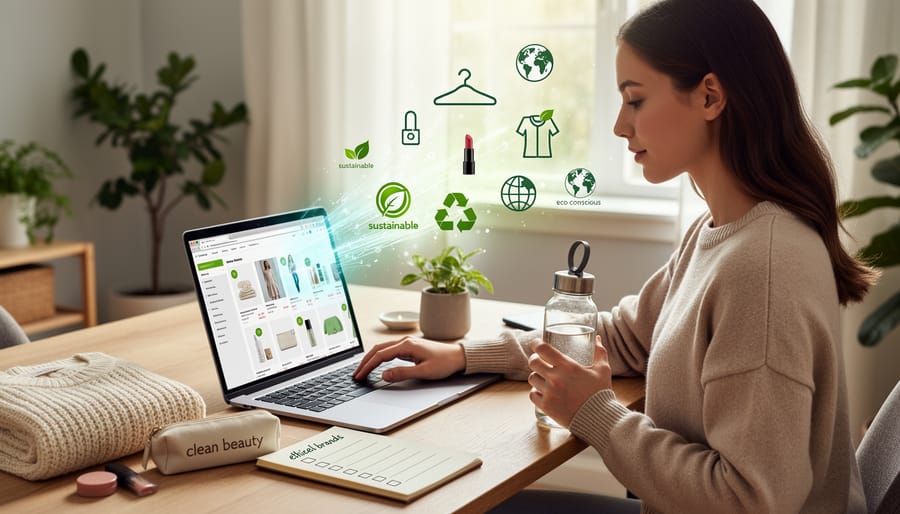
Before you reshape anything, you need to see what you’re working with. Think of a digital footprint audit as opening your closet to decide what stays and what goes, except this closet lives online.
Start by checking your browser history for the past few months. Which fashion and beauty sites do you visit most? Your patterns reveal what algorithms think you want more of. Next, scroll through your saved items and wish lists across platforms like ASOS, Sephora, or Instagram Shopping. These lists tell brands exactly what you’re considering, even purchases you never complete.
Now review your email subscriptions. Every newsletter signup adds to your footprint and signals interest. Look at which brands you follow on social media and which posts you’ve liked or shared. These interactions feed recommendation engines.
Finally, check your account settings on shopping apps. Many platforms track browsing behavior, location data, and purchase history by default. Note what permissions you’ve granted, these shape how deeply brands can profile your preferences. This snapshot shows you where your digital footprint currently leads, so you can decide where you want it to go instead.
Use Digital Tools to Track Sustainability
Technology makes tracking sustainability easier than ever. Instead of hours researching brands, you can let digital tools do the heavy lifting while you shop.
Good On You stands out as the go-to app for fashion ratings. Download it, scan a brand’s barcode in-store or search while browsing online, and instantly see its score across labor practices, environmental impact, and animal welfare. It covers thousands of brands and updates regularly based on third-party audits.
Browser extensions like Giki and Renoon work quietly in the background. When you visit an online retailer, they display sustainability badges and offer greener alternatives to items in your cart. This smart shopping goes green approach means you don’t have to leave your favorite websites to make informed choices.
For beauty products, Think Dirty and Beat the Microbead scan ingredient lists and flag potentially harmful chemicals, microplastics, and unsustainable palm oil derivatives. They explain why certain ingredients matter and suggest cleaner swaps.
Many major platforms now integrate sustainability filters directly into their interfaces. ASOS, Zalando, and Net-a-Porter let you sort by recycled materials, certified organic fabrics, or an ethical rating system they’ve vetted. Amazon’s Climate Pledge Friendly badge highlights lower-carbon options, though scrutinize those claims independently.
Set notifications in these apps for your most-shopped brands. When a company improves its practices or faces new controversy, you’ll know immediately and can adjust your purchasing accordingly.
Engage Authentically to Amplify Your Impact
Every like, comment, and review you leave isn’t just passive scrolling, it’s a data point that brands track, measure, and respond to. When you publicly praise a company’s ethical practices or ask questions about their sourcing in comments, you’re creating a searchable record that influences both algorithms and business decisions. Brands monitor social sentiment closely, and authentic engagement around sustainability tells them there’s real demand worth meeting.
Write honest reviews that mention specific sustainability features you valued: packaging materials, fabric choices, durability, or transparent labeling. These keywords become part of your digital footprint and help other shoppers discover ethical options through search. When you share a sustainable brand on your stories or feed, you’re not just recommending, you’re creating discoverable content that amplifies visibility for companies prioritizing supply chain transparency.
Ask questions directly on brand pages about materials, labor practices, or certifications. Public inquiries signal collective interest and often prompt companies to provide better information. Your engagement history becomes a portfolio of your values, one that platforms use to recommend similar brands and that companies reference when deciding which initiatives deserve investment. Authenticity matters more than frequency; thoughtful interactions carry more weight than performative posting.
Your Rights and What Brands Owe You

You have powerful legal protections over your digital footprint, and fashion and beauty brands are obligated to respect them. Whether you’re in Europe, California, or elsewhere, these rights put you in control of what data companies collect, how they use it, and what they must reveal about their practices, including claims about sustainable sourcing.
The right to erasure under GDPR allows you to request that platforms delete your personal data when you no longer want them holding it. The CCPA right to delete provides similar protections for California residents. In 2026, these standards have expanded globally, with more regions adopting consumer-first data laws that require brands to be transparent about what they collect and why.
| Your Right | What It Means | How to Exercise It |
|---|---|---|
| Access Your Data | See what information brands have collected about you, including purchase history and browsing behavior | Request a data report through account settings or privacy portals |
| Delete Your Footprint | Remove personal data from brand databases when you close an account or withdraw consent | Submit a deletion request via privacy settings or customer service |
| Data Portability | Download your data in a usable format to move it to another platform | Use the “download my data” feature in account settings |
| Transparency on Sustainability Claims | Brands must disclose how they measure environmental impact and substantiate green marketing | Check sustainability pages; report greenwashing to consumer protection agencies |
| Opt Out of Tracking | Decline cookies, personalized ads, and cross-site tracking that builds your profile | Adjust privacy preferences; use browser settings to block third-party trackers |
Platforms must disclose what data they collect, how it’s shared with third parties, and how long it’s retained. If a brand claims its products are sustainable, it owes you proof, vague statements aren’t enough under current advertising standards. You can ask for documentation, supply chain details, or certifications backing those claims.
Your responsibilities matter too. Read the terms of service before creating accounts so you understand what you’re agreeing to. Leave honest, accurate reviews that help other shoppers make informed decisions, not fake endorsements or attacks. Respect intellectual property by not copying brand images or content without permission.
Think of these rights as a contract. Brands get access to your data and the opportunity to earn your trust. You get transparency, control, and the power to walk away if they don’t deliver. That’s not just legal protection, it’s leverage to demand the ethical, sustainable fashion industry you deserve.
Why Your Digital Footprint Matters for Sustainable Fashion
Every time you click, search, save, or share a sustainable fashion piece, you’re casting a vote that brands are listening to. Your digital footprint isn’t just a record of what you’ve done, it’s a signal of what you want, and fashion and beauty companies are watching those signals more closely than ever. In 2026, algorithms don’t just track purchases; they analyze patterns across millions of users to predict what will sell, which trends deserve investment, and which values matter to their audience. When you consistently engage with ethical brands, read sustainability certifications, or search for organic beauty products, you’re teaching these systems that transparency and responsibility are non-negotiable.
The real magic happens when individual footprints merge into collective demand. When thousands of women search for “vegan leather handbags” or engage with posts about fair-trade beauty, brands notice. They shift product lines, adjust marketing budgets, and prioritize supply chain transparency because the data tells them that’s where their customers are heading. Your footprint also trains recommendation algorithms to surface more sustainable options, creating a feedback loop that makes conscious shopping easier for you and everyone who follows similar patterns.
This isn’t about perfection. It’s about direction. Every sustainable choice you make, whether it’s favoriting an eco-conscious brand, leaving a thoughtful review, or simply spending more time researching certifications, adds weight to a movement that’s fundamentally changing how fashion operates. Brands that ignore this shift risk becoming invisible in search results and irrelevant in feeds. Your digital footprint proves that style and sustainability aren’t competing values, they’re the future your generation is building together.
Where to Get Help and Support
When you’re ready to take control of your digital footprint or need guidance navigating privacy settings and sustainability claims, you don’t have to figure it out alone. A growing network of resources exists specifically to help you understand your rights, protect your data, and make informed sustainable choices.
Start with the platforms where you already shop. Most fashion and beauty retailers have dedicated privacy centers within their account settings where you can manage what data they collect, request copies of your information, or delete your footprint entirely. If you’re struggling with settings or want to understand how a specific platform uses your data, their customer service teams are required to help you exercise your privacy rights, don’t hesitate to reach out directly.
For broader support and advocacy, these resources can guide your journey:
- Platform help centers and privacy portals for managing your account data and preferences
- Consumer data protection agencies like the FTC or your state’s attorney general office for reporting violations
- Fashion Revolution for transparency advocacy and brand accountability campaigns
- Electronic Frontier Foundation for understanding your digital rights and privacy protections
- Good On You app and website for brand sustainability ratings and shopping guidance
- Reddit communities like r/ethicalfashion and r/privacy for peer support and real experiences
- Brand sustainability pages and annual impact reports for understanding company practices
- Digital literacy resources through libraries and nonprofits like Common Sense Media
If you encounter greenwashing or suspect a brand is misrepresenting its sustainability practices, you can report it to the FTC or organizations like the Advertising Standards Authority. Screenshots of misleading claims and your purchase history strengthen your report. Similarly, if a platform refuses to honor your data deletion request or shares your information without consent, consumer protection agencies take these violations seriously and can intervene on your behalf.
Community forums and social media groups focused on sustainable fashion also serve as informal support networks where you can ask questions, share concerns, and learn from others navigating the same challenges. Sometimes the most valuable help comes from someone who’s already walked the path you’re on.
How to Apply or Complete the Process
There isn’t a formal application process to manage your digital footprint, you’re already building one just by being online. What you can do is take control of the trail you’re leaving and redirect it toward sustainable choices. Think of this as a process you complete on your own terms, not paperwork you submit.
Start by setting up accounts on platforms that prioritize transparency, like Good On You or DoneGood. Most require only an email address and basic profile information. Review and adjust your privacy settings on existing shopping accounts, Facebook, Instagram, Amazon, and fashion retailer sites all have settings that control how your data is tracked and shared. This takes minutes per platform.
Next, opt into sustainability tracking features where available. Many platforms now offer carbon calculators or ethical ratings, enable these in your account preferences. Subscribe to newsletters from brands committed to transparency so you’re actively signaling interest in sustainable practices.
Finally, complete your profile authenticity: use real preferences, honest reviews, and genuine engagement. Brands can’t respond to anonymous noise, but they do react to real women making clear choices. There’s no deadline, no approval process, just ongoing decisions that shape the digital footprint you want to leave.
What to Watch For
Your digital footprint isn’t just about what you intentionally share, it’s also shaped by what you don’t realize you’re broadcasting. Pay attention to third-party trackers that follow you across fashion websites, collecting data on browsing patterns even when you don’t make a purchase. These invisible data collectors often sell your information to advertisers, which can lead to targeted ads that undermine your sustainable shopping intentions by constantly tempting you with fast fashion deals.
Watch for greenwashing signals in how brands use your data. If a company claims to value sustainability but bombards you with daily promotional emails pushing overconsumption, that’s a red flag. Genuine sustainable brands typically respect your inbox and digital space, sending thoughtful communications rather than aggressive sales tactics. Similarly, be cautious of platforms that make it difficult to access your data or delete your account, transparency should work both ways. If you notice your search history suddenly influencing prices (dynamic pricing based on your perceived interest), consider clearing cookies or using private browsing for major purchases. Your digital footprint has real financial implications, and savvy shoppers in 2026 know that managing visibility can protect both their values and their wallet.
Common Questions About Digital Footprints and Sustainable Shopping
Can I completely erase my old digital footprint?
You can delete or limit much of your footprint by removing accounts, requesting data deletion under privacy laws, and adjusting settings, but some data may persist in archives or third-party databases. The goal isn’t perfection, it’s steering your footprint in a direction that reflects your current values.
Do sustainable fashion platforms share less of my data?
Many sustainable brands prioritize transparency and ethical data practices, but policies vary widely. Always read privacy statements and check if platforms use your data for targeted ads or sell it to third parties, sustainable ethos doesn’t automatically mean minimal data sharing.
How long does my online shopping data actually stay visible?
Purchase history, browsing data, and social media activity can remain on company servers for years, sometimes indefinitely unless you request deletion. Search engines may cache pages, and archived snapshots can preserve content long after you think it’s gone.
Will brands really change their practices based on my individual choices?
One person’s footprint matters because it joins thousands of others creating measurable demand signals. Brands track engagement, reviews, and purchase patterns closely, when sustainable products consistently outperform, companies notice and shift resources accordingly.
These questions come up constantly because navigating the intersection of digital privacy and sustainable shopping feels overwhelming at first. You’re not alone in wondering whether your efforts make a difference or if your information is truly protected.
Here’s the reality: your payment details are generally secure when you shop with reputable platforms that use encryption and comply with payment card industry standards. Look for secure checkout indicators like padlock icons and “https” in the URL. However, security is only one piece of the puzzle. The bigger concern for many women is understanding which brands are genuinely committed to sustainability versus those just capitalizing on the trend.
Spotting greenwashing takes practice. Authentic sustainable brands provide specific, verifiable information about their supply chains, materials, and labor practices. They admit challenges and share measurable goals rather than making sweeping claims like “eco-friendly” without backup. Check for third-party certifications, detailed transparency reports, and willingness to answer tough questions. If a brand’s sustainability page feels vague or reads like a marketing brochure without substance, trust your instincts.
Your digital footprint becomes a tool for accountability when you engage critically. Leave honest reviews mentioning both what you love and what could improve. Ask brands direct questions about their practices on social media. Follow and amplify voices of sustainability advocates who hold companies accountable. When you build a footprint that consistently signals informed, values-driven choices, you’re not just shopping, you’re shaping the conversation around what fashion and beauty should prioritize in 2026 and beyond.
Every click, save, and share you make online is more than just a browsing habit, it’s a declaration of what you stand for. Managing your digital footprint isn’t about perfection or erasing every trace of yourself from the internet. It’s about intentionally shaping the story your data tells, so it reflects the values you carry into every other part of your life.
You don’t need to overhaul your entire online presence overnight. Start with one mindful purchase, one privacy setting adjusted, one authentic review that calls out what you truly believe. These small actions accumulate into powerful signals that brands cannot ignore. When enough of us redirect our digital footprints toward transparency, ethics, and sustainability, we collectively rewrite the rules of an industry that has long prioritized profit over people and planet.
Your digital footprint is your vote, cast continuously through the platforms you support, the searches you conduct, and the brands you engage with. It’s a tool for change that you already possess and can wield with confidence. You’re not just a consumer in this digital landscape, you’re a creator, shaping the future of fashion and beauty with every choice you make.
So own your digital presence boldly. Celebrate the progress you’re making, however incremental. Your footprint matters, and the industry you’re building with it will reflect the powerful, conscious woman you are.
You may also like
-
What Is Native American Textile Art (and How Indigenous Techniques Are Being Revived)?
-
What Is This Renewable Resource Made from Rotting Plant Material? (And How It’s Transforming Fashion)
-
12 Ethical Fashion Examples Leading the Sustainable Style Revolution
-
How to Start a Furniture Upcycling Business That Turns Vintage Finds Into Style Gold
-
What Is Intergenerational Cultural Dissonance (and How Does It Shape Fashion Today)?